

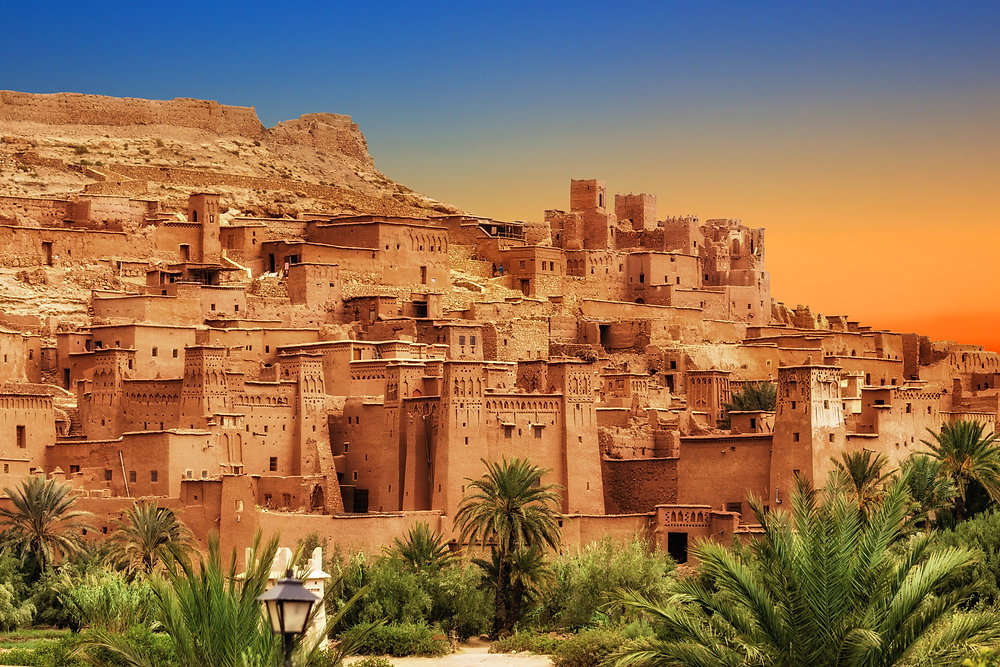
Aït Benhaddou
Introduction
Rising from the arid landscapes of southern Morocco, Aït Benhaddou stands as one of the most iconic and well-preserved ancient settlements in North Africa. With its towering mud-brick walls, narrow alleyways, and dramatic desert backdrop, this historic fortress village feels like a journey back in time.
Designated as a UNESCO World Heritage Site, Aït Benhaddou is a traditional “ksar”—a fortified village built using earth and clay materials. For centuries, it served as a vital stop along the trans-Saharan trade routes, connecting the Sahara Desert with the cities of Marrakesh and beyond.
Today, Aït Benhaddou is not only a cultural treasure but also a globally recognized filming location, featured in numerous movies and television series. Its timeless architecture and desert surroundings make it one of Morocco’s most fascinating destinations.
Geography and Environment
Aït Benhaddou is located in southern Morocco along the edge of the High Atlas Mountains, near the Ounila River valley. The region lies between the Sahara Desert and the historic city of Marrakesh, making it a key crossroads for ancient trade routes.
The surrounding landscape is characterized by arid hills, rocky plateaus, and desert plains. The climate is typically hot and dry, with very little rainfall throughout the year.
The ksar itself is built on a hillside overlooking the river, strategically positioned to provide protection and visibility. The earthen buildings blend seamlessly with the natural environment, creating a harmonious and visually striking landscape.
This unique setting contributes to the site’s enduring appeal and historical importance.
Architecture and Ancient Design
Aït Benhaddou is a masterpiece of traditional Moroccan architecture. The village is constructed almost entirely from rammed earth, adobe, and straw—materials that have been used in the region for centuries.
The buildings are designed as compact, multi-level structures with flat roofs and small windows, helping to regulate temperature in the desert climate. Defensive walls and corner towers surround the ksar, reflecting its original purpose as a fortified settlement.
Inside the village, narrow streets wind between houses, leading to courtyards, granaries, and communal spaces. At the top of the hill stands a historic granary and lookout point offering panoramic views of the surrounding desert.
One notable architectural feature is the Kasbah of Aït Benhaddou, a collection of fortified homes belonging to wealthy families, showcasing intricate decorative patterns and traditional design elements.
History and Cultural Significance
The history of Aït Benhaddou dates back to at least the 17th century, though the site may have been inhabited even earlier. It played a crucial role as a stop for caravans traveling across the Sahara, carrying goods such as salt, gold, and spices.
The ksar was home to a thriving community that relied on agriculture, trade, and craftsmanship. Over time, however, many residents moved to more modern settlements nearby, leaving the historic village largely preserved.
Today, only a small number of families still live within the ksar, maintaining traditional ways of life and preserving cultural heritage.
Aït Benhaddou remains an important symbol of Morocco’s history, showcasing the architectural and اجتماعی traditions of desert communities.
Film and Global Recognition
Aït Benhaddou has gained international fame as a filming location due to its authentic and untouched appearance. Its dramatic setting has made it a favorite backdrop for historical and fantasy productions.
The village has appeared in films such as Gladiator, The Mummy, and Game of Thrones.
These productions have introduced Aït Benhaddou to a global audience, boosting tourism and increasing its cultural visibility.
Despite its popularity, the village has retained much of its original charm, allowing visitors to experience a genuine piece of history.
Local Culture and Traditions
The culture of Aït Benhaddou reflects the traditions of Berber (Amazigh) communities that have inhabited the region for centuries.
Local residents maintain traditional crafts such as weaving, pottery, and handmade textiles. Visitors can often see artisans at work or purchase locally made goods.
Music and storytelling are also important cultural elements, preserving the history and identity of the المنطقة.
Traditional Moroccan cuisine can be enjoyed in nearby villages, featuring dishes such as tagine, couscous, and mint tea.
These cultural experiences add depth to a visit, allowing travelers to connect with the people and traditions of the region.
Exploration and Activities
Exploring Aït Benhaddou is a unique experience that combines history, architecture, and scenic beauty.
Visitors can walk through the narrow streets of the ksar, climb to the top for panoramic views, and explore the مختلف levels of the village.
Photography is especially popular, as the warm tones of the buildings contrast beautifully with the surrounding desert landscape.
Guided tours provide valuable insights into the history and cultural significance of the site, helping visitors understand its importance.
Nearby areas also offer opportunities for desert excursions, including camel rides and visits to traditional Berber villages.
Sustainability and Preservation
Preserving Aït Benhaddou is a priority due to its cultural and historical significance. The use of traditional البناء materials requires regular maintenance, as the structures are vulnerable to erosion from wind and rain.
Restoration efforts focus on maintaining authenticity while ensuring the safety and stability of the buildings.
Tourism plays a key role in supporting these efforts, providing funding for conservation projects and local communities.
Visitors are encouraged to respect the site, avoid damaging structures, and support local businesses.
These initiatives help ensure that Aït Benhaddou remains a living cultural heritage site.
Best Time to Visit Aït Benhaddou
The best time to visit Aït Benhaddou is during spring (March to May) and autumn (September to November), when temperatures are more comfortable for exploring.
Summer can be extremely hot, with temperatures often exceeding 40°C, making outdoor activities challenging during the day.
Winter offers cooler weather and fewer crowds, though temperatures can drop significantly at night.
Early morning and late afternoon are ideal times to visit, as the الضوء enhances the beauty of the village and creates stunning photographic opportunities.
Transport and Accessibility
Aït Benhaddou is accessible by road from Marrakesh, with a journey that takes approximately 3 to 4 hours through the scenic High Atlas Mountains.
The route passes through the famous Tizi n'Tichka Pass, offering breathtaking views of mountain landscapes and valleys.
The nearest major town is Ouarzazate, often referred to as the “Gateway to the Sahara,” which provides accommodation and transport options.
Visitors typically reach the ksar by crossing a small river or footbridge, adding to the sense of adventure and authenticity.
Why Visit Aït Benhaddou?
Aït Benhaddou offers a rare opportunity to step into a preserved piece of history. Its ancient architecture, desert setting, and cultural significance create a destination that feels both timeless and authentic.
Visitors can explore a UNESCO World Heritage Site, experience traditional Moroccan culture, and witness one of the most iconic landscapes in North Africa.
The combination of history, scenery, and cinematic fame makes Aït Benhaddou a must-visit destination for travelers exploring Morocco.
Conclusion
Aït Benhaddou stands as one of Morocco’s most remarkable cultural treasures. Its ancient mud-brick structures, rich history, and stunning desert surroundings make it a destination unlike any other.
From its role in historic trade routes to its modern fame as a filming location, the village continues to captivate visitors from around the world.
For travelers seeking a blend of history, culture, and breathtaking scenery, Aït Benhaddou offers an unforgettable journey into the heart of Morocco’s desert heritage—a timeless fortress that continues to tell its story across the centuries.
00 Comments
No comments yet.
Leave a Comment