

Batu Caves
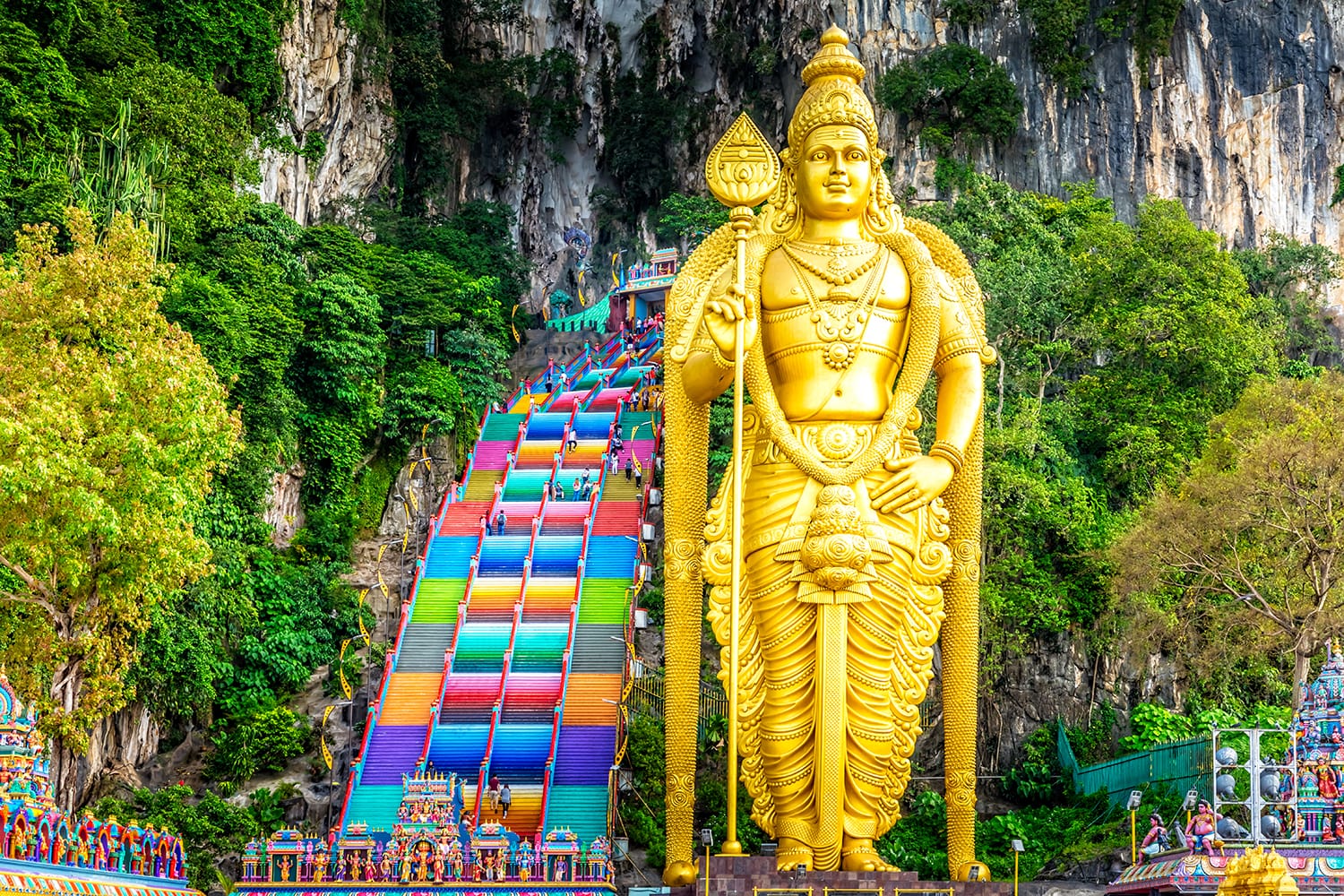
Near Kuala Lumpur in Malaysia, the breathtaking Hindu temple and natural wonder known as Batu Caves draws tourists from all over the world. This famous tourist destination is renowned for the enormous limestone caves that are home to a number of Lord Murugan temples and shrines, the Hindu god of war and triumph.
A 272-step staircase leads to each of the three main caves in the Batu Caves complex as well as a number of smaller ones. The 140-foot-tall, enormous golden monument of Lord Murugan welcomes guests and contributes to the breathtaking experience. In addition to its natural beauty, the Malaysian Hindu population values Batu Caves highly from a religious and cultural perspective.
Thousands of worshippers congregate there yearly to observe the Thaipusam festival, a ceremony honoring Lord Murugan's triumph over evil. In this article, we will provide you with a detailed overview of visiting Batu Caves, along with information on its history, cultural significance, and useful advice for having a fun and safe time there.
Batu Caves, Malaysia: History
The Batu Caves are a group of limestone hills that have naturally formed caves. The erosion brought on by water that seeped through the crevices in the hills is what gave rise to the development of these caverns, which have been around for more than 400 million years. Since the 1800s, Batu Caves has been a well-liked tourist destination; in 1891, it was converted into a Hindu temple complex.
Bat guano, a sort of fertilizer created from bat droppings, was extracted from the caves by Chinese settlers in the 1860s, beginning the history of Batu Caves. Then, an Englishman named William Hornaday leased the caves with the intention of converting them into a private zoo. However, his plans were unsuccessful, and the government of Selangor finally took control of the caves.
Exploring the Batu Caves in Malaysia
The Hindu temple complex known as Batu Caves is made up of several smaller caves in addition to the three main ones. Cathedral Cave, Art Gallery Cave, and Museum Cave are the names of the three principal caverns. The Cathedral Cave, the biggest and most magnificent of the caves, is home to a number of Lord Murugan shrines and temples.
While the Museum Cave contains a collection of Hindu artwork and antiques, the Art Gallery Cave is full of beautiful Hindu statues and carvings. Shrines and temples devoted to numerous Hindu deities can be found in the smaller caverns.
Cathedral Cave
Of all the Batu Caves, the Cathedral Cave is the most well-known and magnificent. This enormous cave has a dramatic, awe-inspiring vibe to it because of its high ceiling and natural apertures that let light in. It serves as Batu Caves' primary temple and is home to numerous Hindu temples honoring Lord Murugan, Lord Shiva, and other Hindu deities. The 42.7-meter-tall monument of Lord Murugan, the tallest of its sort in the world, is the Cathedral Cave's main attraction.
Art Gallery Cave
Below the Cathedral Cave, in the Art Gallery Cave, are numerous beautiful Hindu figures and carvings. A variety of colorful statues and murals inside this cave portray scenes from Hindu mythology. The artwork can be viewed while taking a leisurely stroll inside the cave, or visitors can sit and contemplate in the serene atmosphere.
Museum Cave
The smallest of the three main caves, the Museum Cave, is home to a collection of Hindu art and relics. This cave has artifacts including traditional attire, musical instruments, and paintings that illustrate the history and culture of Hinduism in Malaysia. The Museum Cave is a fantastic resource for information on the Hindu religion's history and importance in Malaysia.
Tips for visiting the Batu Caves
Popular tourist destination Batu Caves can get extremely busy, especially during the summer months. It's advisable to go either early in the morning or late in the afternoon to escape the throng. As there are multiple steps to climb in order to access the caves, make sure you are wearing comfortable shoes.
Additionally, it's essential to wear appropriate clothing when visiting Batu Caves. Visitors must wear modest clothing and take off their shoes before entering the caves because it is a Hindu shrine. Women must also cover their legs and shoulders.
How to get to the Batu Caves in Malaysia
There are various ways to go to Batu Caves from Kuala Lumpur, making it simple to travel there. Taking the KTM Komuter train from KL Sentral to Batu Caves is the most straightforward method to get there. The 30-minute train travel only costs a small amount of money.
If you want to ride in a cab, make sure to negotiate the fee before entering. Buses are another option for getting to Batu Caves from Kuala Lumpur, although they can be packed and uncomfortable.
Entry Fees and Opening Hours
Visitors can visit Batu Caves every day from 6:00 AM to 9:00 PM. Although there is no charge for entry, there are several parts of the complex that cost money to enter. While the Ramayana Cave trip is RM5 per person, the Dark Cave tour is RM35 for adults and RM25 for kids.
Conclusion
A unique and captivating location, Batu Caves provides a window into Malaysia's rich history and culture. For everyone visiting Kuala Lumpur and seeking an amazing experience, it is a must-see. Batu Caves is a veritable treasure trove of natural and cultural delights with its towering limestone cliffs, magnificent Hindu shrines, and distinctive natural habitat. Everyone may find something to enjoy at Batu Caves, regardless of their interests—whether they are history buffs, nature lovers, or just looking for a breathtaking experience.
00 Comments
No comments yet.
Leave a Comment