

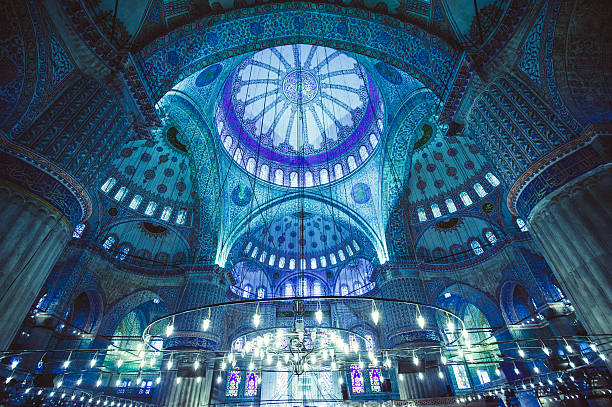
Blue Mosque
The Blue Mosque, which is adored by both local and foreign tourists to Istanbul, Turkey, is located right across from the Hagia Sophia Museum, one of Istanbul's most important historical sites. This remarkable structure was one of the most important works given to Istanbul under the Ottoman Empire. It is a historical imperial mosque from the Ottoman Empire. The Blue Mosque in Istanbul is also known by its formal name the Sultan Ahmed Mosque.
The mosque, which was constructed in the first half of the 17th century, is renowned for its beautiful blue tiles, six minarets, and remarkable structure. The Blue Mosque in Istanbul continues to be a representation of Ottoman architecture with its imposing dome and elaborate decorations.
It is a working mosque and receives a lot of tourist traffic. This article will explore the Blue Mosque's background, design, and cultural significance to learn why it is still one of the most stunning structures on the planet.
The Blue Mosque, which is adored by both local and foreign tourists to Istanbul, Turkey, is located right across from the Hagia Sophia Museum, one of Istanbul's most important historical sites. This remarkable structure was one of the most important works given to Istanbul under the Ottoman Empire. It is a historical imperial mosque from the Ottoman Empire. The Blue Mosque in Istanbul is also known by its formal name the Sultan Ahmed Mosque.
The mosque, which was constructed in the first half of the 17th century, is renowned for its beautiful blue tiles, six minarets, and remarkable structure. The Blue Mosque in Istanbul continues to be a representation of Ottoman architecture with its imposing dome and elaborate decorations.
It is a working mosque and receives a lot of tourist traffic. This article will explore the Blue Mosque's background, design, and cultural significance to learn why it is still one of the most stunning structures on the planet.
The mosque gets its name from its blue tile work and six prominent minarets. More than 20,000 blue tiles are used to decorate the mosque's interior, which results in an amazing and peaceful environment. Turkish ceramic art at its finest can be seen in the tiles' elaborate geometric designs and calligraphic writing.
A stunning architectural achievement, the Blue Mosque's central dome has a 23-meter diameter and a height of 43 meters. Its interior is roomy and light because to the four substantial pillars that support it. Additionally, the mosque has 200 windows that let in natural light and ventilation.
In addition to being a place of worship, Istanbul's Blue Mosque is a popular tourist destination. Its beauty and history draw tourists from all over the world. The mosque welcomes guests of all faiths and serves as a symbol of the Turkish people's openness and tolerance.
History of the Blue Mosque, Turkey
Sultan Ahmed I decided to construct a big mosque in Istanbul in order to regain Ottoman dominance following the Peace of Zsitvatorok and the devastating defeat in the 1603–18 war with Persia. It would be more than 40 years before there was an imperial mosque.
Ahmed I obtained money from the Treasury because he had not achieved any notable conquests, unlike his predecessors who had paid for their mosques with war loot. The building process began in 1609 and was finished in 1616.
It infuriated the ulama, the Muslim jurists; because it was paid from the public coffers rather than the sultan's war plunder, as was customary. The mosque was constructed on the site of the Byzantine emperors' palace, in front of the hippodrome and the basilica Hagia Sophia, which at the time served as Istanbul's main imperial mosque.
This location had special symbolic significance because it dominated the city's skyline from the south. Large portions of the mosque's south shore are supported by the former Grand Palace's vaults and foundations.
Fascinating details about Istanbul's Blue Mosque
The Blue Mosque in Istanbul, also known as the Sultan Ahmed Mosque, is a magnificent architectural wonder that has mesmerized tourists for decades. You will be amazed by these amazing facts about this mosque:
1. Name: The blue tiles that cover the mosque's inner walls gave it its name. The mosque's distinctive and spectacular appearance is a result of the bright blue tiles, which were imported from the town of Iznik in contemporary Turkey.
2. Age: The mosque is more than 400 years old and dates back to the early 1600s. The mosque, which has stood as a testament to the Ottoman Empire's architectural and cultural accomplishments for centuries despite its advanced age, has received good maintenance over the years.
3. Architecture: To build a distinctive and majestic structure, architect Mehmed Agha merged Islamic and conventional Ottoman architectural styles. The central dome and six minarets of the mosque are very stunning and have come to represent both Istanbul and the mosque.
1. Size: With a seating capacity of more than 10,000 worshipers, the mosque is among the biggest in the world. One of the largest domes in the world, the mosque's central dome measures 43 meters in diameter and rises to a height of 56 meters.
2. Lighting: The mosque's 260 windows, which let in natural light during the day and provide a dazzling show of color and light at night, illuminate the interior. The mosque's exquisite tile work and complex features are further accentuated by the natural light that enters the structure.
3. Beautiful calligraphy: The Calligraphy which is regarded as a type of Islamic art, is shown on the walls of the mosque. The mosque's walls and ceilings are covered in exquisite calligraphy in the classic Ottoman alphabet, which gives the space a serene atmosphere.
The Blue Mosque is one of the most stunning and significant structures in the entire world and here are just a few of the amazing features that contribute to this. Whether you enjoy Islamic art, history, or architecture, a trip to the Blue Mosque is sure to leave you speechless.
Architecture of the Blue Mosque
A masterpiece of Ottoman architecture, the Blue Mosque in Istanbul, Turkey, combines Islamic, Byzantine, and Persian design elements. The salient characteristics of it are:
· Incredible interior architecture
The decorations of the Blue Mosque in Iznik (Islamic art) style, which included about 20 thousand tiles with 50 various tulip patterns. These wonderful tiles included flowers, fruits, and cypresses. All of these tiles work together to produce a deep blue, serene, and gorgeous environment.
It used 12 varieties of marble, acoustic, and the walls and columns employed in the interior and décor reveal that it has a specific acoustic structure owing to the mosque's marble coverings having a special shape and positioning.
· Six tower blocks
The Blue Mosque was the first mosque built by the Ottoman Sultans to have six minarets. The Mecca Mosque was the only mosque with six minarets prior to the construction of this mosque. Sultan Ahmet I constructed a seventh minaret to the Mecca Mosque for protect its prestige. The Blue Mosque's six minarets have 16 balconies. The architect chose 16 cheers for the minarets to emphasize Sultan Ahmet I's status as the 16th Sultan of the Ottoman Empire's.
· A strong iron rope at the entrance
The courtyard's west entrance is guarded by a strong iron rope. The sultan had to bend his head to avoid striking when he entered the courtyard on his horse. This was seen as a symbolic step to demonstrate that even the Sultan should tidy himself before entering the mosque.
Best time to visit the Blue Mosque in Istanbul
The Blue Mosque is open all year round, but between June and August, when the weather is more pleasant than in the winter, is the best time to visit the Blue Mosque. It is advised to avoid the winter months in Istanbul because of the extreme temperature decreases.
Since it is a functioning mosque, visitors are not allowed inside during prayer times. Due to enough lighting and illumination, scheduling a visit during the evening will enable one to fully appreciate the location.
Timing: It is open all year except for 90 minutes for prayer every day except Friday. Every Friday, it is closed to visitors for over two hours for lunchtime prayers. Please dress appropriately when visiting. You must cover your legs and shoulders.
The Best Way to Get to Blue Mosque
From the Istanbul airport to the Blue Mosque, transportation is easily available. To get to the location, one can use a vehicle, rail, tram, bus, or even a cab.
By Train: The trip takes around 58 to 60 minutes by taking the train from Ataturk Airport Havalimani to Zeytinburnu, followed by a tram from Zeytinburnu to Sultanahmet.
Conclusion
The Blue Mosque is a magnificent structure with exquisite architecture that has a rich history. It is an imperial mosque situated in the Sultanahmet neighborhood of Istanbul's Old City, where visitors are curious to learn more about the area's history. It frequently tops any list of things to do in the city because it is one of the best buildings in the world. Despite being Istanbul's most popular tourist destination, with over 5 million visits each year, the Blue Mosque is still the number one functioning mosque in Istanbul.
00 Comments
No comments yet.
Leave a Comment