

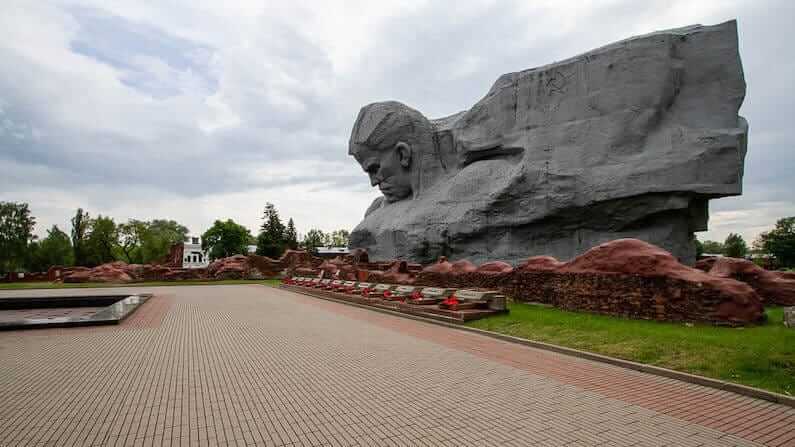
Brest Fortress
Located in the city of Brest, Belarus, the Brest Fortress is a war monument to commemorate the brave soldiers who fought for their homeland during World War II. The fortress has been restored and stands as a witness to the past, with its imposing walls and towering turrets making it an impressive sight to behold.
This travel guide will delve into the history surrounding this incredible fortress, exploring its cultural importance, what you can expect to see there, and how you can plan your visit. You can read on to learn about what makes this war monument in Belarus such a special place.
A Brief Introduction of Brest Fortress in Belarus
Brest Fortress is a 19th-century citadel in Brest, Belarus. The fortress was built to defend the Russian Empire's western border against Napoleon's invading French army. The fortress remained in Russian hands until the German Empire took control of it during World War I. Today, Brest Fortress is a war memorial and a tourist attraction in Belarus.
The central island created by the two branches of the Mukhavets River and the Bug River contained the Citadel, which served as the fortress's administrative center. A ring of two-story barracks with four semi-towers encircled the island.
With 500 chambers and thick walls made of extremely durable red bricks, the 1.8 kilometers long barrack could house 12,000 soldiers. The Citadel used to have four gates for entry. Only the Kholm and Terespol gates remain visible today; most of the barrack is in ruins.
Ten-meter-high earthworks with redbrick casemates inside served as the bridgeheads for three fortifications surrounding the citadel. These fortifications were constructed from tributaries of the Mukhavets River and moats.
It is also one of Belarus' most popular tourist destinations. Visitors can explore the ruins of the fortress, visit the war memorials, and see firsthand the damage caused by the battle.
History of the Brest Fortress
The Brest Fortress was crucial in numerous battles during both world wars. After the Russians left the citadel in 1915, Germany took control of it, and after three years, the Brest-Litovsk treaty was signed there. Poland seized control of the fortification at Brest following the Soviet-Polish conflict.
Following the USSR's invasion of Poland in 1939, it was seized by Soviet forces, who turned it into a Soviet fortification. The fortification played a key role in World War II as Soviet forces defended it against the German army during the early days of Operation Barbarossa.
What to See at the Brest Fortress
There are many different things to see at the Brest Fortress, including the main castle, several museums, and several historical monuments. The castle is the most impressive fortress sight and is worth a visit.
The fortress has a complex system of fortifications and comprises several buildings, including barracks, casemates, powder magazines, offices, and baths. The main attraction of the fortress is its citadel, which houses a museum dedicated to the history of the fortress.
The major thing is the open-air monument complex. And there are numerous essential elements to this. It was formally referred to as the "Brest Hero Fortress." The "Bayonet" obelisk is the tallest part of the complex. The tip of a Red Army rifle is meant to be represented by the dazzling silver needle nearly 100 meters high.
Inside the Citadel, there are three museums. The Museum of the Defense of the Brest Fortress is the oldest. It is located inside a renovated old barracks in the northeastern section of the Citadel.
How to Get to the Brest Fortress, Belarus
The Brest Fortress is close to the Polish border and situated on Brest's western outskirts. The fortress is easily accessible by automobile from the 2 or P17 highways, and parking is available along vulica Zubacova. Although there are several gates through which you can access the fortress, the main entrance is at the end of praspekt Maserava. A portion of the region forms the Belarus-Poland boundary.
Conclusion
Brest Fortress is a stunningly beautiful and unforgettable war memorial in Belarus. Traveling to the fortress will be an amazing experience that you will never forget. From visiting the remains of the old citadel to learning about its history, exploring the numerous museums and monuments, and taking part in special events like concerts held inside, there are plenty of things to do while at Brest Fortress. Make sure to add this incredible place to your next European trip!
00 Comments
No comments yet.
Leave a Comment