

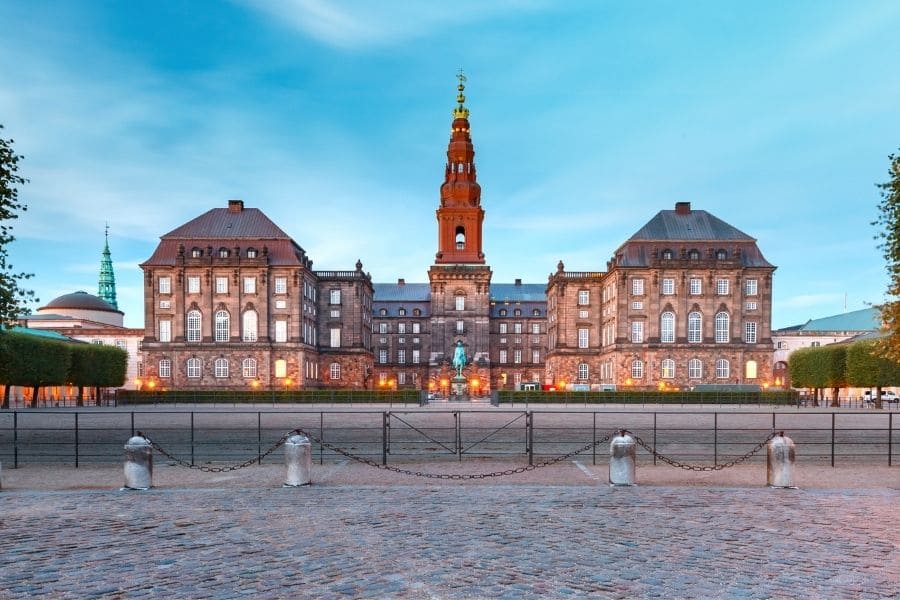
Christiansborg Palace
Christiansborg Palace is the heart of Denmark's political power and a stunning architectural masterpiece! With its impressive size and grandeur, it's hard not to be in awe of this magnificent palace. Located on the small island of Slotsholmen in the center of Copenhagen, Christiansborg Palace is a must-visit destination for anyone interested in Danish history and culture.
This blog helps you to plan a visit to Christiansborg Palace in Copenhagen, Denmark, which should definitely be on your itinerary. This iconic landmark is steeped in history and culture, offering visitors a unique glimpse into Danish heritage. From its stunning architecture and beautiful grounds to its impressive collection of art and artifacts, there's something for everyone to see and explore at Christiansborg Palace.
Why Is Christiansborg Palace Famous?
Christiansborg Palace is well-known for a number of reasons. For example, it is the headquarters of Denmark's government, as well as the country's parliament, supreme court, and prime minister's office, making it the focal point of Danish political power. The palace has played an important part in Danish history, holding major official events and festivities.
Second, Christiansborg Palace is a spectacular architectural marvel that has been restored and remodeled several times throughout the years, adding to its majesty and history with each iteration. The palace's vastness and magnificence make it a must-see for everyone interested in Danish history and culture.
Finally, Christiansborg Palace is a cultural gem. The palace's spectacular royal reception halls, which have held some of Denmark's most important state occasions, are open to visitors. The palace's magnificent collection of Danish art, dating back to the 17th century, is available to art connoisseurs. In addition, the remnants of earlier castles that have existed on the site may be examined, providing tourists with an insight into Denmark's rich past.
Christiansborg Palace is a famous and iconic monument in Denmark due to its political, architectural, and cultural significance.
What Is The History Of Christiansborg Palace?
Christiansborg Palace's history began in the early 18th century when King Frederick IV planned to construct a large palace on the site of two existing castles, the Bishop's Palace and Copenhagen Castle. The palace was finished in 1745 and has served as the seat of Denmark's government for nearly two centuries, holding significant official events and festivities.
However, the palace has not always had a smooth history. It has been damaged by fires and rebuilt multiple times, with each renovation adding to its grandeur and history. The first major fire occurred in 1794, which destroyed the palace's original dome and several state rooms. The palace was rebuilt, but in 1884, another fire destroyed the entire palace, except for the chapel.
The palace was rebuilt once again, and in the 20th century, it became the center of Danish political power, housing the country's parliament, supreme court, and prime minister's office. In recent years, the palace has undergone significant renovations and upgrades to modernize its facilities and improve accessibility for visitors.
Christiansborg Palace is now an icon of Danish history and culture, with centuries of political, architectural, and cultural significance. Its royal reception chambers, art collection, and medieval ruins make it a popular tourist and local site, offering an insight into Denmark's rich and storied history.
What Are The Facts About Christiansborg Palace?
Here are some interesting facts about Christiansborg Palace:
· Christiansborg Palace is located on the small island of Slotsholmen in the heart of Copenhagen, Denmark.
· The palace was built in the early 18th century on the site of two existing castles, the Bishop's Palace and Copenhagen Castle.
· Christiansborg Palace is the only building in the world to house all three branches of a country's government: the parliament, supreme court, and prime minister's office.
· The palace has been damaged by fires several times throughout history, with the most recent fire occurring in 1884, which destroyed the entire palace except for the chapel.
· The palace has undergone significant renovations and upgrades in recent years, with the most recent renovation completed in 2019.
· Christiansborg Palace is home to an impressive collection of Danish art, including works by artists such as Christen Købke and Vilhelm Hammershøi.
· The palace's royal reception rooms have hosted some of Denmark's most important state events, including royal weddings and receptions.
· The palace's historic ruins, including those of the Bishop's Palace and Copenhagen Castle, can also be explored, providing a glimpse into Denmark's rich history.
· Christiansborg Palace is a popular tourist attraction, drawing visitors from all over the world who come to see its stunning architecture and learn about Denmark's political and cultural history.
· The palace is also home to several restaurants and cafes, where visitors can enjoy traditional Danish cuisine and take in the palace's beautiful surroundings.
What To See At The Christiansborg Palace?
There are several things to see at Christiansborg Palace in Copenhagen, Denmark. Here are some highlights:
· The Royal Reception Rooms: These rooms have hosted many of Denmark's most important state events, including royal weddings and receptions. Visitors can see the ornate decor and furnishings, including chandeliers, tapestries, and sculptures.
· The Royal Stables: Located in the palace courtyard, the Royal Stables house the horses and carriages used by the royal family for official events. Visitors can see the horses and learn about their care and training.
· The Ruins of Bishop's Palace and Copenhagen Castle: These historic ruins are located beneath the palace and can be explored on guided tours. Visitors can learn about the history of the buildings and see artifacts that were discovered during excavations.
· The Danish Art Collection: Christiansborg Palace has an impressive collection of Danish art, including works by artists such as Christen Købke and Vilhelm Hammershøi. Visitors can see paintings, sculptures, and other artworks that reflect Danish culture and history.
· The Royal Kitchen: Visitors can see the kitchen where meals are prepared for the royal family and guests. The kitchen has been restored to its 18th-century appearance, with copper pots, pans, and utensils on display.
· The Parliament: Christiansborg Palace is the seat of Denmark's parliament, and visitors can take guided tours of the parliament building. Visitors can learn about the history of the building and see where the country's laws are debated and passed.
· The Tower: The tower of Christiansborg Palace offers stunning views of Copenhagen and the surrounding area. Visitors can take an elevator to the top and enjoy the panoramic views.
Overall, Christiansborg Palace offers a fascinating glimpse into Danish history, culture, and politics and is a must-visit destination for anyone interested in these topics.
How To Get There?
Christiansborg Palace is located in the heart of Copenhagen, Denmark, and is easily accessible by public transportation. Here are some ways to get there:
By metro: The palace is located near the Kongens Nytorv metro station, which is served by the M1 and M2 lines.
By train: The palace is located near the Copenhagen Central Station, which is served by regional trains and the S-train network.
By car: you can drive to the palace and park in one of the nearby parking garages or on-street parking spots, although parking in the city center can be expensive and difficult to find.
Conclusion
Christiansborg Palace is a must-visit destination for anyone traveling to Copenhagen, Denmark. With its rich history, stunning architecture, and impressive collection of art and artifacts, the palace offers a unique glimpse into Danish culture and heritage.
Visitors can explore the palace's various attractions, including the Royal Reception Rooms, the Royal Stables, and the ruins of the previous palace, while also enjoying the surrounding area with its beautiful parks, canals, and historic buildings. So, make sure to add Christiansborg Palace to your itinerary and experience the grandeur and elegance of this iconic Danish landmark.

00 Comments
No comments yet.
Leave a Comment