

Churches of Lalibela
Introduction
High in the rugged mountains of northern Ethiopia lies one of the world’s most extraordinary religious and architectural achievements: the rock-hewn churches of Lalibela. Carved entirely out of solid volcanic rock, these monolithic churches are not merely buildings but living monuments of faith, history, and artistic genius. Unlike conventional structures constructed stone by stone, the churches of Lalibela were sculpted downward and inward from massive rock formations, creating self-contained sacred spaces that have endured for more than eight centuries.
Recognized as a UNESCO World Heritage Site, Lalibela is often described as the “Eighth Wonder of the World.” It stands as a powerful testament to Ethiopia’s ancient Christian tradition and to the devotion of generations who have preserved these holy sites through worship, pilgrimage, and ritual. Today, Lalibela remains a center of spiritual life, attracting pilgrims from across Ethiopia and visitors from around the globe.
This article explores the historical background, architectural brilliance, religious significance, cultural importance, and enduring legacy of the Lalibela rock-hewn churches.
Historical Background
Origins of Lalibela
The town of Lalibela was formerly known as Roha and became prominent during the late 12th and early 13th centuries under the Zagwe dynasty. The churches are traditionally attributed to King Lalibela, after whom the town is now named. According to Ethiopian tradition, King Lalibela envisioned creating a “New Jerusalem” in Ethiopia after Muslim conquests made pilgrimage to Jerusalem difficult for Christians.
Legend holds that King Lalibela received divine inspiration—and even angelic assistance—to build the churches. While such accounts belong to religious tradition, historians agree that the construction of the churches represented a remarkable political, spiritual, and cultural undertaking during the Zagwe period.
Christianity in Ethiopia
Christianity reached Ethiopia in the 4th century CE, making it one of the oldest Christian nations in the world. The Ethiopian Orthodox Tewahedo Church developed its own unique theology, liturgy, language (Ge’ez), and artistic traditions. By the time of King Lalibela, Christianity was deeply rooted in Ethiopian society, and monumental religious architecture served both devotional and political purposes.
The churches of Lalibela symbolized not only religious devotion but also royal legitimacy, reinforcing the king’s role as a divinely appointed ruler.
Architectural Genius of the Rock-Hewn Churches
Monolithic Construction
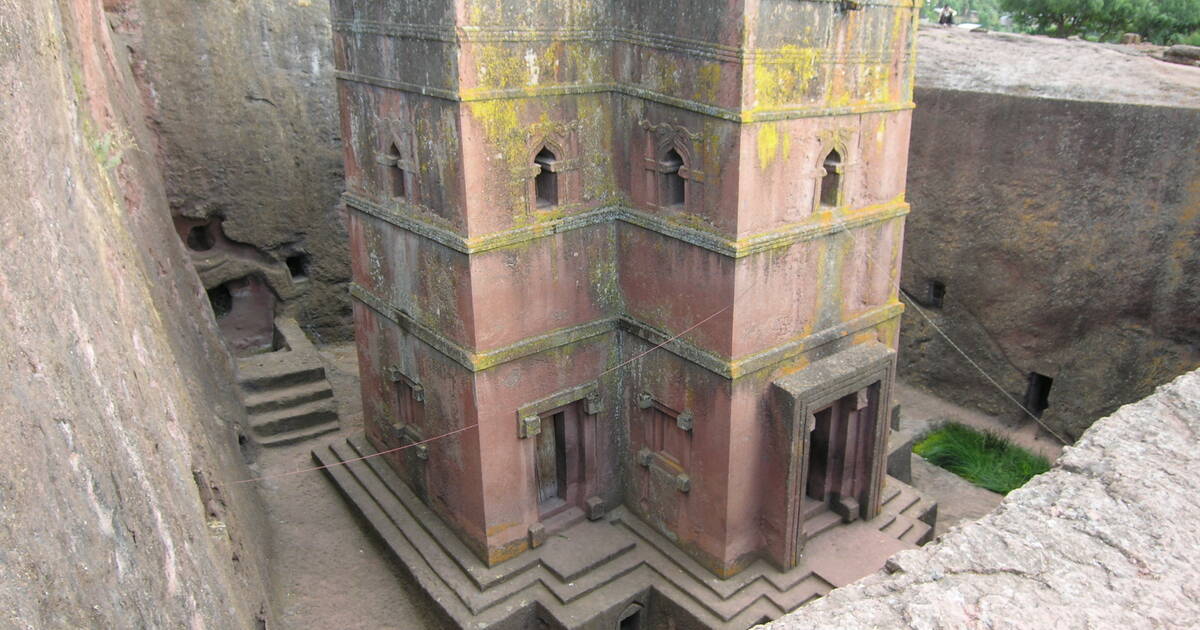
The most astonishing aspect of the Lalibela churches is their construction technique. Rather than being built from assembled stones, each church was carved from a single block of rock. Builders first excavated a trench around the rock, isolating it from the surrounding stone. Then, artisans carved the roof, walls, windows, doors, and interior spaces by chiseling downward.
This method required extraordinary precision. A single error could damage the entire structure. The level of planning, engineering, and craftsmanship involved remains a mystery, especially considering the limited tools available at the time.
Organization into Church Groups
The churches are traditionally divided into three main groups, connected by trenches, tunnels, and passageways:
- Northern Group
- Eastern Group
- The Church of Saint George (Bete Giyorgis)
This layout is believed to symbolically represent Jerusalem, with features named after biblical locations such as the River Jordan.
The Northern Group of Churches
The Northern Group includes some of the oldest and most architecturally complex churches.
Bete Medhane Alem (House of the Savior of the World)
Bete Medhane Alem is considered the largest monolithic church in the world. Supported by massive rectangular pillars, it resembles a Greek temple in form. The interior contains rows of columns and a solemn atmosphere that emphasizes grandeur and stability.
Bete Maryam (House of Mary)
Often regarded as the most beautifully decorated church, Bete Maryam features intricate carvings, symbolic artwork, and painted ceilings. It remains one of the most important churches for worship and pilgrimage.
Bete Maskal and Bete Denagel
These smaller churches are connected to Bete Maryam and demonstrate the diversity of architectural styles within the Lalibela complex.
The Eastern Group of Churches
The Eastern Group includes churches with more experimental designs and symbolic importance.
Bete Amanuel
Bete Amanuel is believed to have served as a royal chapel. Its architectural precision and Axumite-style features, such as recessed windows and horizontal bands, reflect earlier Ethiopian building traditions.
Bete Abba Libanos
Uniquely attached to the rock face on one side, Bete Abba Libanos is said to have been constructed by King Lalibela’s wife, emphasizing the role of royal patronage in the project.
Bete Gabriel-Rufael
This structure may have served a defensive or administrative purpose before becoming a church. Its fortress-like appearance sets it apart from the others.
Bete Giyorgis: The Crown Jewel
The Church of Saint George (Bete Giyorgis) is the most iconic of all the Lalibela churches. Carved in the shape of a perfect Greek cross, it stands isolated from the others and is accessed by a long trench.
Bete Giyorgis is often considered the architectural and spiritual masterpiece of Lalibela. Its harmonious proportions, clean lines, and symbolic form represent the culmination of the rock-hewn tradition. For many visitors, this church alone justifies Lalibela’s reputation as one of the world’s greatest sacred sites.
Religious and Spiritual Significance
A Living Place of Worship
Unlike many ancient monuments, the Lalibela churches are not relics of a lost civilization. They remain active centers of worship within the Ethiopian Orthodox Church. Priests conduct daily services, and pilgrims gather for prayer, fasting, and celebration.
Pilgrimage and Holy Festivals
Lalibela is especially significant during major religious festivals such as Genna (Ethiopian Christmas) and Timkat (Epiphany). During these events, thousands of pilgrims dressed in white garments fill the courtyards and passageways, chanting ancient hymns and carrying processional crosses.
The continuity of worship over centuries has helped preserve the spiritual identity of Lalibela and reinforces its role as a living sacred landscape.
Art, Symbolism, and Theology
Symbolic Geography
The layout of Lalibela is rich in symbolism. Features are named after biblical locations, creating a spiritual map of Jerusalem. This allowed Ethiopian Christians to experience a symbolic pilgrimage without leaving their homeland.
Crosses and Carvings
Stone-carved crosses adorn walls, windows, and ceilings, each with distinct Ethiopian designs. These crosses are not merely decorative but carry deep theological meaning, representing salvation, protection, and divine presence.
Liturgical Objects and Manuscripts
The churches house ancient manuscripts, ceremonial umbrellas, drums, and crosses. Many of these objects are still used during services, linking past and present religious practices.
Cultural and National Importance
Identity and Continuity
For Ethiopians, Lalibela is more than a tourist destination—it is a symbol of national identity, resilience, and faith. The churches embody a civilization that developed independently while maintaining deep spiritual traditions.
UNESCO World Heritage Status
In 1978, Lalibela was designated a UNESCO World Heritage Site, recognizing its universal value. This status has helped raise global awareness and support preservation efforts.
Preservation Challenges
Environmental Threats
Over time, erosion, water damage, and climate factors have threatened the structural integrity of the churches. Temporary shelters have been installed to protect them from rain, though these solutions remain controversial.
Tourism and Conservation Balance
As Lalibela gains international attention, balancing tourism with preservation is a major challenge. Protecting the churches while allowing visitors to experience them requires careful management and community involvement.
Modern Relevance and Global Recognition
Today, Lalibela stands as a bridge between the ancient and the modern world. Scholars study its architecture, engineers marvel at its construction, and believers continue to worship within its sacred walls.
The churches inspire discussions about sustainable architecture, spiritual heritage, and the role of faith in shaping civilizations. They also challenge assumptions about Africa’s historical contributions to world culture, highlighting Ethiopia’s place in global history.
Conclusion
The rock-hewn churches of Lalibela are among humanity’s most extraordinary achievements. Carved from living stone, they reflect a profound union of faith, art, engineering, and devotion. For more than 800 years, these churches have stood as symbols of spiritual aspiration and cultural identity.
Lalibela is not merely a site to be visited; it is a place to be experienced and contemplated. Its churches invite the world to witness the power of belief made tangible in stone and to recognize Ethiopia’s enduring contribution to human civilization.

00 Comments
No comments yet.
Leave a Comment