

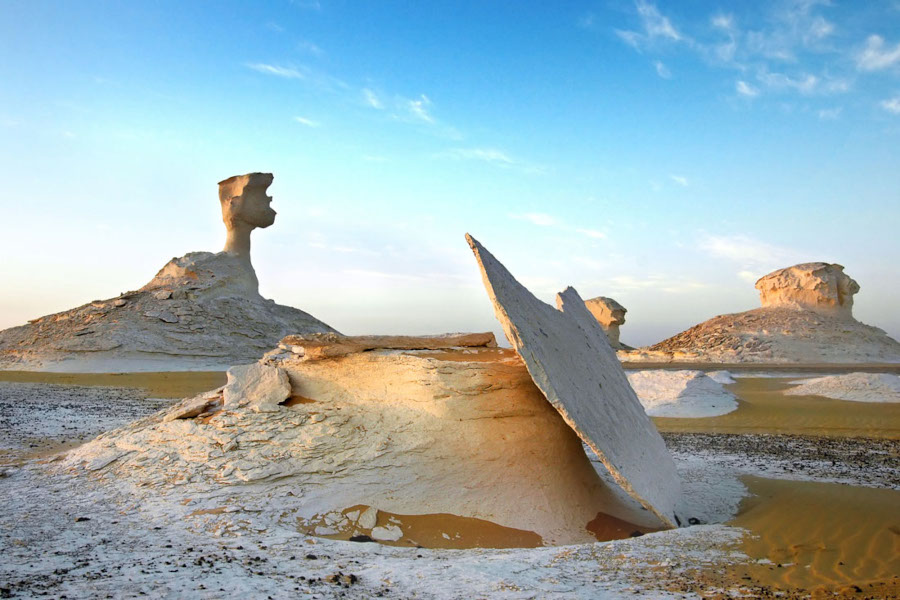
Farafra White Desert
Introduction
Hidden within the vast expanses of Egypt’s Western Desert lies one of the most surreal and otherworldly landscapes on Earth—the White Desert. Known for its striking white rock formations sculpted by wind and time, this природal wonder feels like stepping onto another planet.
Located near the Farafra Oasis, White Desert National Park is famous for its ghostly الأبيض الصخور that resemble mushrooms, animals, and abstract sculptures. These formations, created from chalk and limestone, stand in dramatic contrast to the surrounding golden الرمال.
For travelers seeking unique desert experiences, the White Desert offers a magical combination of silence, vastness, and artistic natural beauty that is unlike any other destination in the world.
Geography and Environment
The White Desert is located in the Western Desert of Egypt, approximately 500 kilometers southwest of Cairo. It lies near the small settlement of Farafra, one of Egypt’s most remote and least populated oases.
This region is part of the greater Sahara Desert, specifically within the Sahara Desert, which spans much of North Africa.
The landscape consists of vast sand plains, rocky المناطق, and striking white chalk formations that have been shaped over thousands of years. The climate is extremely arid, with minimal rainfall and significant temperature differences between day and night.
Despite these harsh conditions, the White Desert’s unique geology creates a visually stunning environment that continues to attract explorers and photographers from around the world.
Chalk Formations and Natural Sculptures
The defining feature of the White Desert is its incredible collection of chalk الصخور, which have been carved into unusual shapes by wind erosion.
These formations resemble giant mushrooms, icebergs, towers, and even animals. Some of the most famous formations include shapes that look like camels, chickens, and giant fungi, making the landscape feel like a natural sculpture gallery.
The الأبيض color of the rocks comes from their high chalk content, which reflects sunlight and creates a glowing effect, especially under the bright desert sky.
At sunrise and sunset, the landscape transforms dramatically as the colors shift to shades of orange, pink, and gold, adding depth and contrast to the white formations.
At night, the desert becomes even more magical under a sky filled with stars, offering one of the most serene and unforgettable experiences in nature.
Black Desert and Surrounding Landscapes
Near the White Desert lies another fascinating region known as the Black Desert, characterized by dark volcanic hills and black الصخور.
The contrast between the white chalk formations and the dark volcanic terrain creates a unique visual experience, showcasing the geological diversity of Egypt’s desert landscapes.
Other nearby natural features include crystal mountains and desert valleys that add to the overall beauty of the region.
Exploring both the White Desert and surrounding areas provides a deeper understanding of the geological processes that have shaped this extraordinary environment.
Wildlife and Desert Life
Although the White Desert appears barren, it supports a range of الحياة adapted to extreme desert conditions.
Small mammals such as desert foxes can occasionally be seen, along with reptiles and insects that have evolved to survive in the harsh climate.
Bird species also pass through the region, especially during migration periods.
Vegetation is sparse, consisting mainly of hardy plants that can survive with minimal water.
The ecosystem, while limited, demonstrates the resilience of life in one of the most extreme environments on Earth.
Cultural and Oasis Life
The nearby Farafra Oasis provides a glimpse into life in the desert. This small community relies on agriculture, supported by underground water sources.
Local traditions reflect a deep connection to the desert environment, with سكان maintaining simple lifestyles adapted to the conditions.
Visitors can experience traditional hospitality, taste local dishes, and learn about the culture of Egypt’s oasis communities.
The oasis serves as a base for exploring the White Desert and offers a contrast to the vast emptiness of the surrounding landscape.
Adventure and Exploration
Exploring the White Desert is an adventure that typically involves guided desert safaris using 4x4 vehicles.
Camping overnight in the desert is one of the most popular experiences. Sleeping under the stars, surrounded by white formations, creates a truly unforgettable journey.
Activities include dune bashing, sandboarding, and guided walks through the chalk formations.
Photography is a major highlight, as the unique shapes and lighting conditions provide endless opportunities for capturing stunning images.
The peaceful silence and vast open spaces make the experience both exciting and meditative.
Sustainability and Conservation
The White Desert is a protected area, and efforts are in place to preserve its fragile ecosystem and unique geological formations.
Visitors are encouraged to follow responsible tourism practices, including not damaging الصخور, avoiding littering, and respecting the environment.
Guided tours help ensure that exploration is conducted safely and sustainably.
Conservation initiatives aim to protect the desert’s natural beauty while supporting local communities through tourism.
Best Time to Visit the White Desert
The best time to visit the White Desert is between October and April, when temperatures are cooler and more comfortable for exploration.
During these months, daytime temperatures are moderate, while nights can be cold, especially in winter.
Summer months (May to September) can be extremely hot, making travel more challenging.
Sunrise and sunset are the best times to experience the desert’s beauty, as the changing light enhances the colors and shapes of the formations.
Transport and Accessibility
The White Desert is typically accessed from Cairo via road, with most यात्राएं organized as guided tours.
Travelers usually pass through the oasis town of Farafra before entering the desert.
Due to the remote nature of the region, independent travel is not recommended. Guided tours provide transportation, equipment, and experienced drivers familiar with the terrain.
Despite its isolation, the journey to the White Desert is part of the adventure, offering scenic views of Egypt’s vast desert landscapes.
Why Visit the White Desert?
The White Desert offers a travel experience that is truly unique. Its surreal chalk formations, vast open spaces, and peaceful atmosphere create a destination unlike any other.
Visitors can explore natural sculptures shaped by time, experience desert الحياة, and enjoy one of the most tranquil environments on Earth.
The combination of природal beauty, adventure, and cultural insight makes the White Desert a must-visit destination for those seeking something extraordinary.
Conclusion
The White Desert of Farafra stands as one of the most remarkable natural landscapes in the world. Its surreal chalk formations, shaped by wind and الزمن, create a scene that feels both mysterious and magical.
From the glowing white rocks to the silent desert nights filled with stars, every moment in the White Desert offers a sense of wonder and discovery.
For travelers looking to experience a truly unique environment, the White Desert provides an unforgettable journey into one of Earth’s most extraordinary desert landscapes—a place where nature becomes art in its purest form.
00 Comments
No comments yet.
Leave a Comment