

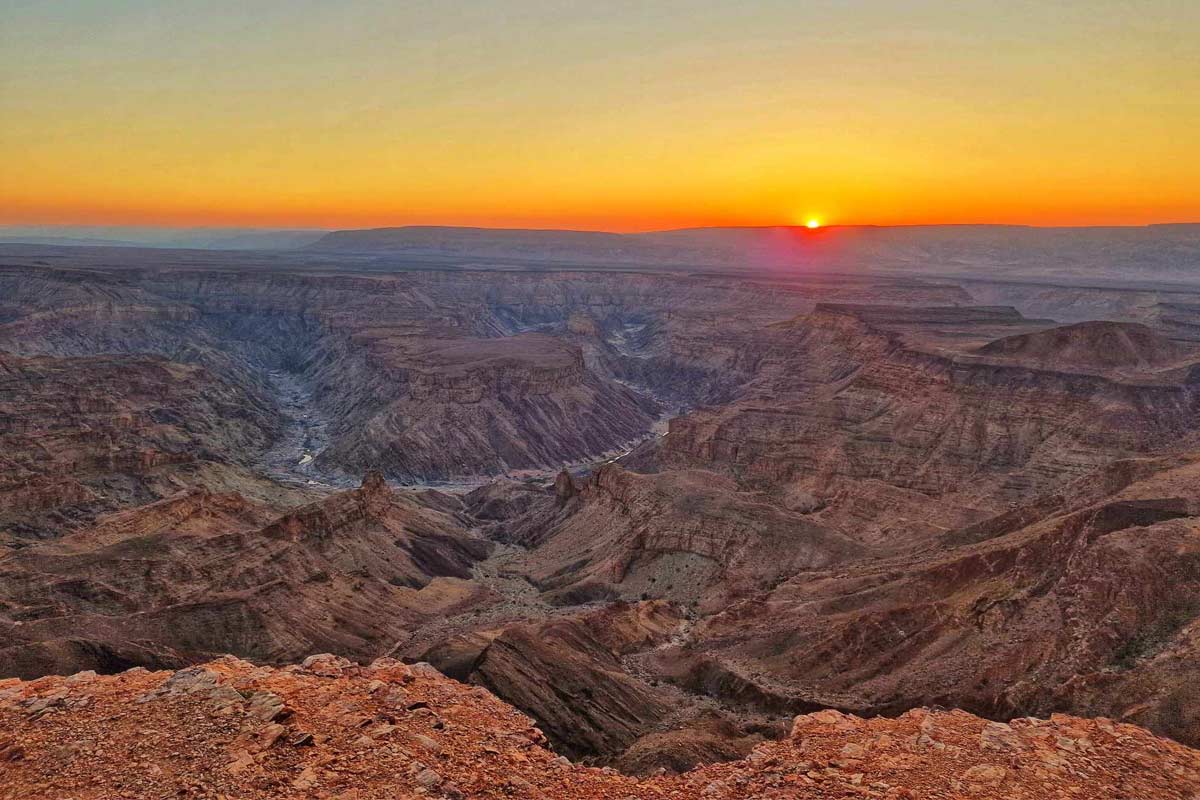
Fish River Canyon
Introduction
In the heart of southern Namibia lies one of Africa’s most dramatic and awe-inspiring natural wonders—Fish River Canyon. Carved over hundreds of millions of years by geological forces and the relentless flow of water, this colossal canyon is the largest in Africa and one of the most impressive canyon systems on Earth.
Often compared to the Grand Canyon in the United States, Fish River Canyon stretches across a vast desert landscape of rugged cliffs, rocky plateaus, and winding riverbeds. Yet despite its immense scale and extraordinary beauty, it remains one of the least crowded major natural attractions in the world.
For travelers seeking dramatic scenery, remote wilderness, hiking adventures, and unforgettable photography opportunities, Fish River Canyon offers an authentic African experience far from the usual tourist routes.
As one of Namibia’s most iconic landmarks, the canyon showcases the raw power of nature and the timeless beauty of one of the world's oldest deserts.
Geography and Environmental Significance
Fish River Canyon is located in southern Namibia, within the vast arid landscapes of the Namibian interior.
The canyon measures approximately 160 kilometers in length, up to 27 kilometers in width, and reaches depths of more than 550 meters in some areas.
It was formed through a combination of tectonic activity, erosion, and the gradual cutting action of the Fish River, Namibia’s longest inland river.
The canyon forms part of the Ai-Ais/Richtersveld Transfrontier Park, a unique conservation area shared between Namibia and South Africa.
Its geological history spans hundreds of millions of years, making it one of the oldest and most significant landscapes on the African continent.
The Largest Canyon in Africa
Fish River Canyon is widely recognized as the largest canyon in Africa and one of the largest canyons in the world.
The scale of the landscape is difficult to comprehend until visitors stand on the canyon rim and look across the immense network of cliffs, valleys, and winding river channels.
From elevated viewpoints, layers of rock formations reveal the region’s geological history, while the canyon floor appears far below in the distance.
Unlike heavily developed tourist destinations, Fish River Canyon remains largely untouched, preserving its wild and remote character.
Its vastness creates a profound sense of solitude that appeals to travelers seeking authentic wilderness experiences.
A Geological Masterpiece Millions of Years in the Making
The story of Fish River Canyon begins hundreds of millions of years ago.
Ancient tectonic shifts created fractures in the Earth’s crust, while glaciers and rivers gradually shaped the canyon into its present form.
Over time, the Fish River carved deeper into the landscape, exposing layers of rock that tell a geological story spanning several eras of Earth's history.
Today, visitors can observe colorful rock strata, weathered formations, and dramatic cliff faces that showcase the canyon’s complex evolution.
For geology enthusiasts, Fish River Canyon serves as an open-air museum revealing the forces that shaped southern Africa over vast periods of time.
Spectacular Viewpoints and Scenic Beauty
The canyon’s rim offers numerous viewpoints that provide breathtaking panoramic vistas.
One of the most popular locations is Hobas Viewpoint, where visitors can admire sweeping views of the canyon's dramatic curves and towering cliffs.
At sunrise, the first light paints the canyon walls in shades of gold, orange, and red.
Sunset transforms the landscape once again, creating dramatic contrasts between shadows and illuminated rock formations.
The constantly changing colors make Fish River Canyon a dream destination for photographers and nature lovers.
Every season and time of day reveals a different aspect of the canyon’s beauty.
The Famous Fish River Canyon Hiking Trail
One of the canyon’s greatest attractions is the legendary Fish River Canyon Trail, considered one of Africa’s premier hiking experiences.
The trail stretches approximately 85 kilometers through the canyon and typically takes four to five days to complete.
Hikers descend into the canyon and follow the riverbed through remote landscapes, rocky terrain, and natural hot springs.
The journey provides a unique perspective of the canyon's immense scale and geological diversity.
Because of its challenging conditions, the trail is recommended for experienced hikers with good physical fitness.
Completing the hike is often regarded as one of Africa’s greatest outdoor achievements.
Desert Wildlife and Adaptation
Although Fish River Canyon appears harsh and barren, it supports a surprising variety of wildlife adapted to desert conditions.
Animals commonly found in the region include mountain zebras, springbok, kudu, baboons, and various reptiles.
Bird species such as eagles, falcons, and vultures frequently soar above the canyon cliffs.
Vegetation consists mainly of drought-resistant shrubs, succulents, and hardy desert plants capable of surviving in extreme conditions.
The resilience of life within this challenging environment highlights the remarkable adaptability of Namibia’s ecosystems.
Ai-Ais Hot Springs – Nature’s Desert Oasis
At the southern end of the canyon lies Ai-Ais Hot Springs, one of Namibia’s most popular natural attractions.
The name "Ai-Ais" means "burning water" in the local Nama language.
These naturally heated mineral-rich springs emerge from deep underground and provide a relaxing contrast to the surrounding desert environment.
Many travelers choose to unwind in the hot springs after completing the Fish River Canyon hiking trail.
The oasis-like setting adds another dimension to the canyon experience.
Adventure and Outdoor Activities
Fish River Canyon offers much more than sightseeing.
Adventure travelers can enjoy hiking, photography, wildlife observation, camping, and scenic drives along the canyon rim.
The region’s vast open spaces and minimal light pollution also make it one of the best locations in Africa for stargazing.
Night skies above the canyon reveal countless stars, planets, and sections of the Milky Way visible to the naked eye.
The sense of isolation and connection to nature creates an unforgettable adventure for visitors.
Cultural and Historical Significance
The canyon region has long been inhabited by indigenous communities, including the Nama people.
Their traditions, knowledge of the desert environment, and cultural heritage remain important aspects of the region’s identity.
Ancient trade routes and seasonal migration patterns once crossed parts of southern Namibia, linking communities throughout the region.
Today, cultural tourism provides opportunities to learn about local history and the enduring relationship between people and the desert landscape.
Sustainability and Conservation
Conservation efforts play a vital role in protecting Fish River Canyon’s fragile ecosystems and geological heritage.
The protected status of the surrounding region helps preserve wildlife habitats, natural landscapes, and cultural resources.
Sustainable tourism initiatives encourage visitors to minimize environmental impact and respect local regulations.
Maintaining the balance between tourism and conservation is essential for safeguarding this extraordinary wilderness area.
Responsible travel ensures that future generations can continue to experience one of Africa’s greatest natural wonders.
Best Time to Visit Fish River Canyon
The best time to visit Fish River Canyon is during Namibia’s cooler months between May and September.
Temperatures are more comfortable for hiking and outdoor activities, and clear skies provide excellent visibility.
The famous Fish River Canyon hiking trail is generally open only during this cooler season due to safety concerns associated with extreme summer heat.
Sunrise and sunset remain the most rewarding times for photography throughout the year.
How to Reach Fish River Canyon
The nearest access point is the small settlement of Hobas, which serves as the primary gateway to the canyon.
Most travelers reach the area by road from Windhoek, Namibia’s capital, or from other destinations within southern Namibia.
Self-drive travel is popular due to the country's excellent road network and stunning desert scenery.
Many visitors combine Fish River Canyon with trips to the Namib Desert, Sossusvlei, and the Atlantic coast.
Why Visit Fish River Canyon?
Fish River Canyon offers one of Africa’s most extraordinary wilderness experiences. Its immense scale, dramatic geological formations, remote location, and world-class hiking opportunities create a destination unlike any other on the continent.
Visitors can witness breathtaking desert scenery, explore ancient landscapes, relax in natural hot springs, and experience the profound silence of one of the world's most remote natural environments.
For adventurers, photographers, geologists, and nature lovers, Fish River Canyon is an unforgettable destination that showcases the very best of Namibia’s natural beauty.
Conclusion
Fish River Canyon stands as one of Earth’s greatest geological masterpieces and Africa’s largest canyon. Shaped by millions of years of natural forces, it offers a spectacular combination of rugged cliffs, winding river valleys, desert wildlife, and unparalleled wilderness.
From panoramic viewpoints and legendary hiking trails to hot springs and star-filled skies, every aspect of the canyon inspires awe and admiration.
For travelers seeking adventure, solitude, and some of the most dramatic landscapes in Africa, Fish River Canyon truly deserves its reputation as Africa’s Greatest Canyon.
00 Comments
No comments yet.
Leave a Comment