

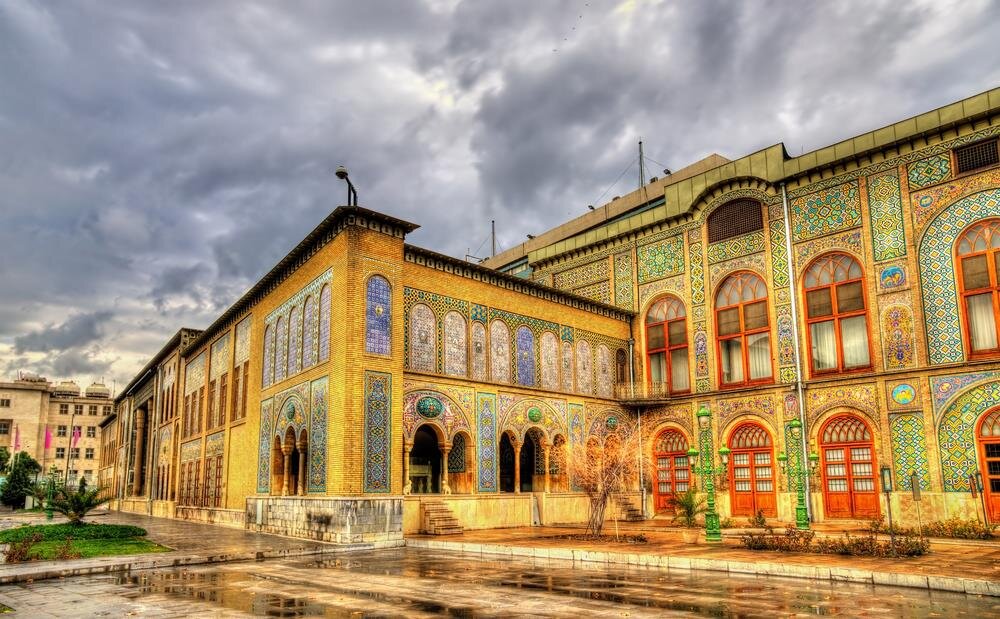
Golestan Palace
Golestan Palace is located in the heart of Tehran, Iran, and it is a spectacular monument that showcases the opulence and grandeur of the Qajar era. The palace complex is a fusion of Persian and European architectural styles and is considered a masterpiece of Iranian art and craftsmanship. The palace, built during the 18th and 19th centuries, is now a UNESCO World Heritage Site and a famous tourist destination.
In this article, we will learn why Golestan Palace is regarded as one of Iran's most important sites and examine its rich history and distinctive architectural element.
Why Is Golestan Palace Famous?
Golestan Palace is famous for its magnificent architecture, stunning tilework, intricate carvings, and beautiful gardens. Built during the Qajar era, the palace complex served as the residence of Persian royalty and was the center of political power in Iran for over a century. Its gardens and artwork make it more beautiful and a top tourist attraction in Iran.
Gardens: The palace complex includes several beautifully landscaped gardens, each with its own unique style and features. The gardens are a tranquil oasis in the heart of Tehran and are a popular spot for visitors to relax and enjoy the natural beauty of the surroundings.
Artwork: The palace is home to an impressive collection of Persian art and decorative objects, including paintings, ceramics, and textiles. Many of these items are on display in the palace's various halls and rooms, offering visitors a glimpse into Iran's rich artistic heritage.
Golestan Palace was awarded the prestigious status of a UNESCO World Heritage site in 2013, acknowledging its cultural and historical significance. This recognition has played a crucial role in raising global awareness about the palace's unique beauty and importance, further emphasizing the need for its preservation for the benefit of future generations.
As a result, Golestan Palace is now an even more popular destination for visitors who come from all around the world to experience its architectural splendor and learn about its fascinating history.
What Is The History Of Golestan Palace?
Golestan Palace has a rich and storied history that spans several centuries. As the residence of Persian royalty, Golestan Palace played a significant role in Iranian history. It was the site of many important events, including the coronation of the last Shah of Iran in 1967.
Here is an overview of its key historical events:
1. The original Golestan Palace was built during the Safavid era (1501-1722), but it was largely destroyed during the Afsharid era (1736-1796).
2. In the early Qajar era (1785-1925), the palace was rebuilt and expanded by the order of Fath Ali Shah, who made it his official residence.
3. The palace was further expanded and renovated by subsequent Qajar monarchs, including Nasser al-Din Shah and Mozaffar al-Din Shah.
4. During the Pahlavi era (1925-1979), the palace was used for various purposes, including as a government office and a museum.
5. In 1967, the last Shah of Iran, Mohammad Reza Pahlavi, was crowned at Golestan Palace in a lavish ceremony attended by dignitaries from around the world.
6. Following the Islamic Revolution in 1979, the palace was briefly used as a museum before being closed to the public.
7. In the years that followed, efforts were made to restore and preserve the palace, and it was eventually reopened to the public in the 1990s.
8. In 2013, Golestan Palace was designated as a UNESCO World Heritage site in recognition of its cultural and historical significance.
9. Today, Golestan Palace is one of the most popular tourist attractions in Iran and is a symbol of the country's rich cultural heritage.
Today, visitors can explore the palace's many halls and rooms, which are filled with historical artifacts and treasures.
Architecture Of Golestan Palace
Golestan Palace is renowned for its stunning architecture, which is a unique blend of Persian and European styles. The palace complex is made up of several buildings, halls, and courtyards, each with its own distinct design and features.
Here are some key architectural highlights of Golestan Palace:
Tilework: The palace is adorned with intricate tilework, which covers the walls, ceilings, and floors of many of the halls and rooms. The tiles feature a range of geometric and floral patterns and scenes from Persian mythology and history.
Mirror work: Another distinctive feature of the palace is its intricate mirror work, which is used to create stunning decorative designs on the walls and ceilings of many of the rooms.
Carvings: The palace is also home to various intricate carvings, including those made of wood, stone, and plaster. The carvings feature a range of designs, from delicate floral motifs to more intricate scenes from Persian history and mythology.
European influence: In addition to its traditional Persian elements, Golestan Palace also incorporates European design features, such as chandeliers, mirrors, and stained glass windows. This reflects the influence of European architecture on the Qajar era, during which the palace was built and expanded.
Courtyards: The palace complex includes several beautifully landscaped courtyards, which are designed to provide natural light and ventilation to the surrounding buildings. The courtyards feature fountains, pools, gardens, pavilions, and seating areas for visitors to relax and enjoy the surroundings.
What To See At Golestan Palace?
Are you planning a trip to Golestan Palace in Tehran and wondering what you can see there? Don’t worry; we have covered everything for you.
Here are the main attractions of the palace that must be explored during your visit:
· Main entrance: The main entrance to the palace is a grand gate known as the "Talar-e Aineh" or Mirror Hall. It is decorated with intricate tile work and is flanked by two towering stone pillars.
· Marble Throne Hall: This hall features a stunning marble throne, which was used for coronations and other important ceremonies. The hall is also decorated with intricate tile work and mirror work.
· Shams-ol-Emareh: This four-story tower was built by Nasser al-Din Shah that features a blend of Persian and European architectural styles. Visitors can climb to the top of the tower for panoramic views of the surrounding area.
· Museum of Gifts: This museum displays gifts given to Iranian royalty by foreign dignitaries over the years, including jewelry, weaponry, and other decorative objects.
· Diamond Hall: This hall features a collection of dazzling gems and jewelry, including a 182-carat pink diamond known as the "Sea of Light.”
· Negar Khaneh: This hall was used for artistic and cultural activities, including music and poetry recitals. It features beautiful tile work and paintings.
· Ivory Hall: This hall is decorated with intricate ivory carvings, which Iranian and Indian artisans made.
· Mirror Hall: This hall features exquisite mirror-work covering the walls and ceiling. It is considered one of the most beautiful and iconic parts of the palace.
· Golestan Palace Library: This library features a collection of rare and ancient books, as well as manuscripts and documents related to Iranian history and culture.
What Is The Entrance Fee For Golestan Palace?
The entrance fee for Golestan Palace is approximately 4 USD for Iranian citizens and approximately 10 USD for foreign tourists.
How To Get There?
Golestan Palace is located in the heart of Tehran, the capital city of Iran, and it is easily accessible by various modes of transportation. Here are some ways to get there:
Metro: The closest metro station to Golestan Palace is Panzdah-e-Khordad station, located on Line 1 (Red Line) of the Tehran Metro. From the station, it is a short walk to the palace.
Bus: Several bus routes pass by Golestan Palace, including routes 12, 18, 27, 42, and 126.
Taxi: Taxis are widely available in Tehran and can be used to reach Golestan Palace. Using official taxis with meters or negotiating the fare before getting in the taxi is recommended.
Walking: If you are staying nearby, you can easily walk to Golestan Palace. The palace is located in a central part of the city and is easily accessible on foot.
Bicycle: If you prefer to cycle, bike rental services are available in Tehran that you can use to get to the palace.
Conclusion
Golestan Palace is a must-see attraction in Tehran, Iran. With its rich history, stunning architecture, and beautiful artwork, the palace offers visitors a glimpse into the opulent lifestyle of Iran's royalty in the past. From the Marble Throne Hall to the Mirror Hall, the Diamond Hall to the Negar Khaneh, there are many sites to explore at Golestan Palace. So, if you are planning a visit to Tehran, don't miss the opportunity to experience the beauty and grandeur of Golestan Palace.
00 Comments
No comments yet.
Leave a Comment