

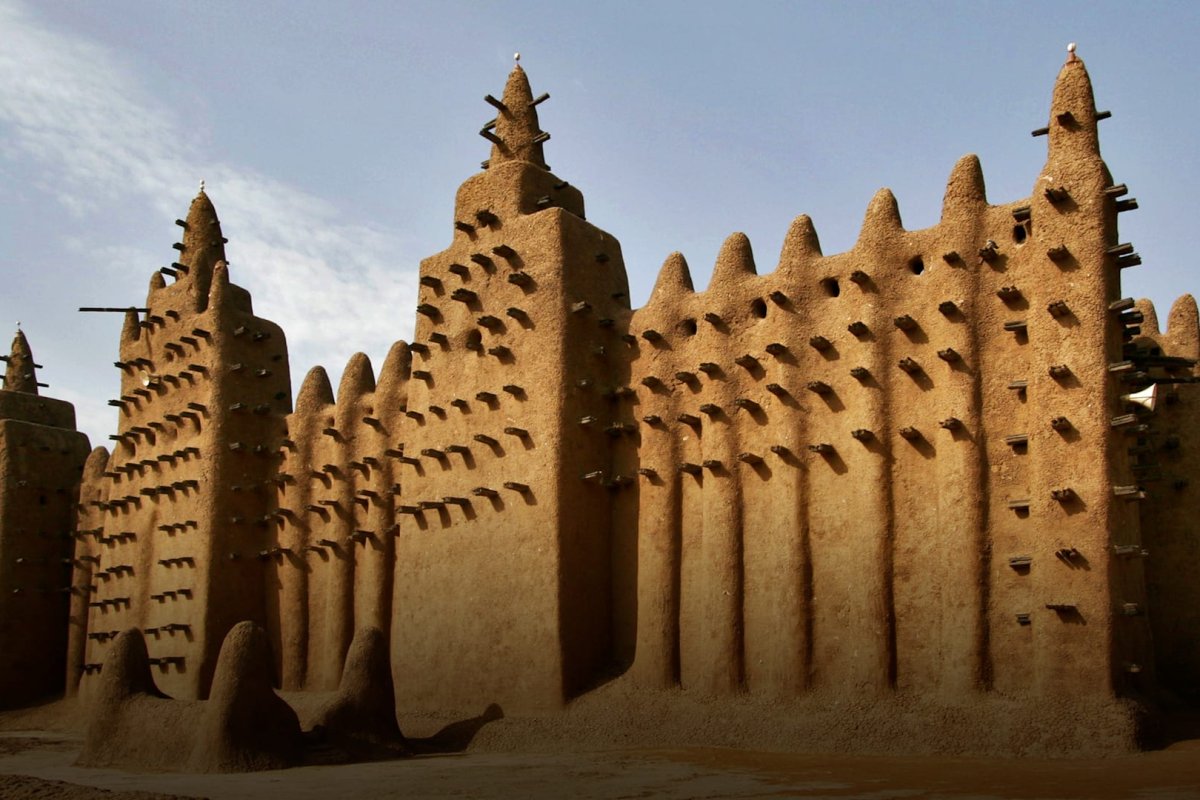
Great Mosque Of Djenne
The Great Mosque of Djenne is a UNESCO World Heritage site and one of the most iconic buildings in Africa. Built in the 13th century, it is the largest mud brick structure in the world and a masterpiece of Sudano-Sahelian architecture.
Every year, the mosque attracts thousands of visitors from all over the world. Many come to admire its beautiful architecture and learn about its rich history. Others come to experience the vibrant atmosphere of the weekly markets in its courtyard.
Whether you are a history buff or simply looking for a unique tourist destination in Mali, the Great Mosque of Djenne is sure to impress. Keep reading to learn more about this fascinating place!
The History of the Great Mosque of Djenne
The Great Mosque of Djenne is one of the Africa’s most iconic buildings. The mosque is located in the city of Djenne, Mali, and is the largest mud brick structure in the world. It is also one of the most visited tourist destinations in Mali and the finest example of Sudanese architecture.
The Great Mosque of Djenne was built in the 13th century and has undergone numerous renovations over the centuries. The most recent major renovation was completed in 1907.
Between 1200 and 1300, the first mosque on this property was constructed. According to some earlier records, al-Sadi’s Tarikh al-Sudan, written down in the 17th century, describes the mosque. This text details the mosque's construction and Sultan Kunburu's conversion to Islam. The sultan initially constructed a mosque and surrounding walls to the east, and afterward, his successor expanded the mosque with towers.
The mosque's current construction was constructed in the year 1907. Ismalia Traore oversaw the mosque's construction, and the exterior walls were fashioned like those constructed in the 13th century.
The Design and Architecture of the Great Mosque of Djenne in Mali
The Great Mosque of Djenne is a masterpiece of Islamic architecture and one of Africa's most iconic buildings. The mosque was made entirely of mud bricks, making it unique worldwide.
The design of the mosque is based on the traditional Islamic courtyard mosque, with a large central courtyard surrounded by an arcade of columns. The Great Mosque has a rectangular floor design and is enclosed by a wall on the outside.
The walls of the Great Mosque of Djenne are made of mud bricks plastered with mud to give the structure a smooth appearance. Toron, or palm tree sticks, are used as wall decorations. The platform of the mosque is around 3 meters high and 75 meters broad. From the northern side, one enters the mosque.
The roof includes several holes covered with terra-cotta lids, which let fresh air into the inner sections even on the hottest number of holes covered with terra-cotta lids, which let fresh air into the inner sections even on hottest of days.
The prayer wall of the mosque faces east and has three huge minarets. Here, the eastern wall is 3 feet thick and strengthened by adding 18 pillars. The irregularly shaped windows of the prayer hall let light into the room.
If you are looking for a truly unique and beautiful place to visit, then the Great Mosque of Djenne is a place you must see.
What to see and do at the Great Mosque of Djenne
Non-Muslims are not allowed inside the mosque, yet even from the outside, it is a magnificent sight. A stroll through the small, scenic streets reveals that the town hasn't changed much since the 14th and 15th centuries.
Djenne holds a market every Monday, and the entire town is busy with visitors and locals. There is an astonishing variety of local goods, but few tourist souvenirs are available. It is, nevertheless, a fascinating view into West African life and culture.
Despite its age, the Great Mosque of Djenne is still actively used today and is one of the most popular tourist attractions in Mali.
Conclusion
The Great Mosque of Djenne is a beautiful and historic landmark in Mali. It is the largest mud brick structure in the world and is a UNESCO World Heritage Site. The mosque is a popular tourist destination, and Visitors can explore the mosque's history and beauty by taking a guided tour.

00 Comments
No comments yet.
Leave a Comment