

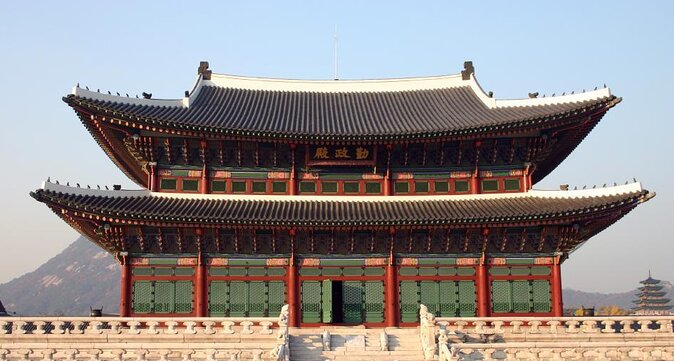
Gyeongbokgung Palace
One must-see Gyeongbokgung Palace, located in the heart of Seoul, South Korea. Gyeongbokgung Palace is a spectacular Seoul site that you shouldn't miss. Visit the magnificent location that stood as the Joseon dynasty's main royal residence. This royal palace is full of secrets and stories that will fascinate any visitor.
Are you looking for a unique and extraordinary travel experience? Then look no further than Gyeongbokgung Palace, the grand palace of South Korea. This article will provide an overview of the historical significance of this royal tourist attraction, as well as tips on how to plan your visit to Gyeongbokgung Palace. Join us as we explore the fascinating history and culture behind this majestic palace!
Gyeongbokgung Palace: Joseon Dynasty’s Main Royal Palace
Situated in the heart of Seoul, Gyeongbokgung Palace was the main royal palace of the Joseon Dynasty. First built in 1395, it was destroyed by Japanese invaders in 1592 and rebuilt in 1867. The palace is renowned for its beautiful architecture, landscaping, and rich history.
Gyeongbokgung Palace was the home of the royal family and the site of important state ceremonies and functions. The main hall, Gwanghwamun, was where the king held court and received foreign envoys. The adjacent buildings were used for various other purposes, such as government offices, the royal library, and even an armory.
The palace grounds are expansive, covering over 40 hectares. In addition to Gwanghwamun Square, several other courtyards and halls are open to visitors. Some notable features include the Heungnyemun Gate, Geumcheongyo Bridge, and Jondae (the main entrance to Gwanghwamun).
Despite being ravaged by war and neglect over the centuries, Gyeongbokgung Palace has been beautifully restored and is now a symbol of Seoul's rich heritage. Today, Gyeongbokgung Palace is a popular tourist destination, with over 3 million visitors yearly.
No visit to Gyeongbokgung Palace would be complete without seeing a traditional Korean performance. Several performances take place on the palace grounds, including traditional music concerts, dance performances, and more. Check the schedule in advance, so you don't miss out on any of the action!
The History of Gyeongbokgung Palace
The Gyeongbokgung Palace is a Korean imperial palace located in northern Seoul, South Korea. The palace was built in 1395 by the Joseon dynasty and served as its main seat of government until the country's capital was moved to Sejong in 1422. The palace was then abandoned for nearly two centuries before being restored in 1867 by the order of Emperor Gojong.
In 1867, King Gojong rebuilt the palace complex and added new structures, including Gwanghwamun Gate, now the main entrance to the palace. Much of it was demolished during Japan's occupation of Korea from 1910 to 1945. In 1997, a major restoration project began that brought Gyeongbokgung back to its original glory. Gyeongbokgung Palace is considered one of the most important cultural heritage sites in South Korea.
The Layout of Gyeongbokgung Palace in South Korea
Gyeongbokgung Palace is the oldest and largest of the Five Grand Palaces built by the Joseon Dynasty. It is situated in Seoul's northern region. The palace complex has more than 500 buildings with 7,500 rooms and covers an area of over 40 hectares. The layout of the palace is designed to reflect the Confucian principle of yin and yang.
The main entrance to the palace is through Gwanghwamun Gate, which is located on the north side of the complex. To the south of Gwanghwamun Gate is Geumcheongyo Bridge, which leads to Geumcheongyo Gate. This gate gives access to the Inner Court, where the king resided. To the north of Gwanghwamun Gate is Jongmyo Shrine, which houses the spirit tablets of past kings and queens.
The Outer Court is located to the west of Gwanghwamun Gate and contains various administrative buildings such as Sejongno, Hyangwonjeong Pavilion, and Jejamakgi House. The National Museum of Korea is also located in this area.
To the east of Gwanghwamun Gate is Jogugwon, a building that was used for storing grains. This building now houses a library and exhibition hall. North of Jogugwon is Changdeokgung Palace, another one of Seoul's Five Grand Palaces.
Overall, Gyeongbokgung Palace is laid out in a symmetrical grid pattern, with each building located in its own specific area based on its purpose and status. Although some buildings have been destroyed or renovated over time, much of the palace remains true to its original design.
What to see at Gyeongbokgung Palace in South Korea
Today, Gyeongbokgung is one of Seoul's most popular tourist destinations. Visitors can explore various buildings and pavilions, such as Geunjeongjeon (the main hall), Gwanghwamun (the main gate), and Hyangwonjeong (a royal pleasure pavilion). They can also see traditional Korean performances, such as Gugak (traditional music) and Jangdae (traditional dance).
There is so much to see and do at the palace, from exploring the ancient buildings and gardens to learning about the Korean royal family. Here are some of the best things to do when visiting Gyeongbokgung Palace:
· Take a guided tour of the palace grounds. This is a great way to learn about the history of the palace and see all of the amazing architecture up close.
· Visit the National Folk Museum of Korea. This museum is located inside the palace grounds and has exhibits on traditional Korean culture and history.
· Watch a traditional Korean performance. There are often traditional music and dance performances taking place in front of the palace, which are free to watch.
· Admire the views from atop Namsan Mountain. You can take a short hike up to the top of Namsan Mountain, which offers stunning views over Seoul and Gyeongbokgung Palace.
· Explore Insadong district. This nearby district is full of traditional shops selling everything from paintings and calligraphy to pottery and tea cups. It's a fantastic location to buy gifts!
One interesting feature of Gyeongbokgung Palace is its use of sunlight and shadows to create an aesthetically pleasing environment. The buildings are designed to get plenty of sunlight during the day, but they also have large overhangs to provide shade from the hot Korean sun. This design helps keep the palace cool during summer while allowing plenty of light to enter.
How To Visit Gyeongbokgung Palace in South Korea
Seoul's center is home to an old palace, Gyeongbokgung Palace. Gyeongbokgung is accessible from any place in Seoul and is situated in the city's center close to Gwanghwamun Square.
· Subway
If you are already in Seoul, the best method to get to Gyeongbokgung Palace is to use the metro. Gyeongbokgung is accessible by two subway lines. The distance from the stations is merely short.
· Bus
There can be traffic due to its central location. Gyeongbokgung Palace is easiest to get to by using the subway, as previously stated. However, the bus can be a practical means to get there from Incheon Airport or from outside of Seoul. Take bus #6011 from Incheon Airport.
Conclusion
Gyeongbokgung Palace is a majestic reminder of South Korea’s rich history and culture. Whether you are visiting the palace as part of a Royal Tourist Attraction or just for sightseeing, Gyeongbokgung Palace is worth exploring.
From its splendid architecture to its beautiful gardens and exhibits, there is so much in store for visitors who make the trip. With this guide, you won’t miss any magnificent sights that Gyeongbokgung offers!

00 Comments
No comments yet.
Leave a Comment