

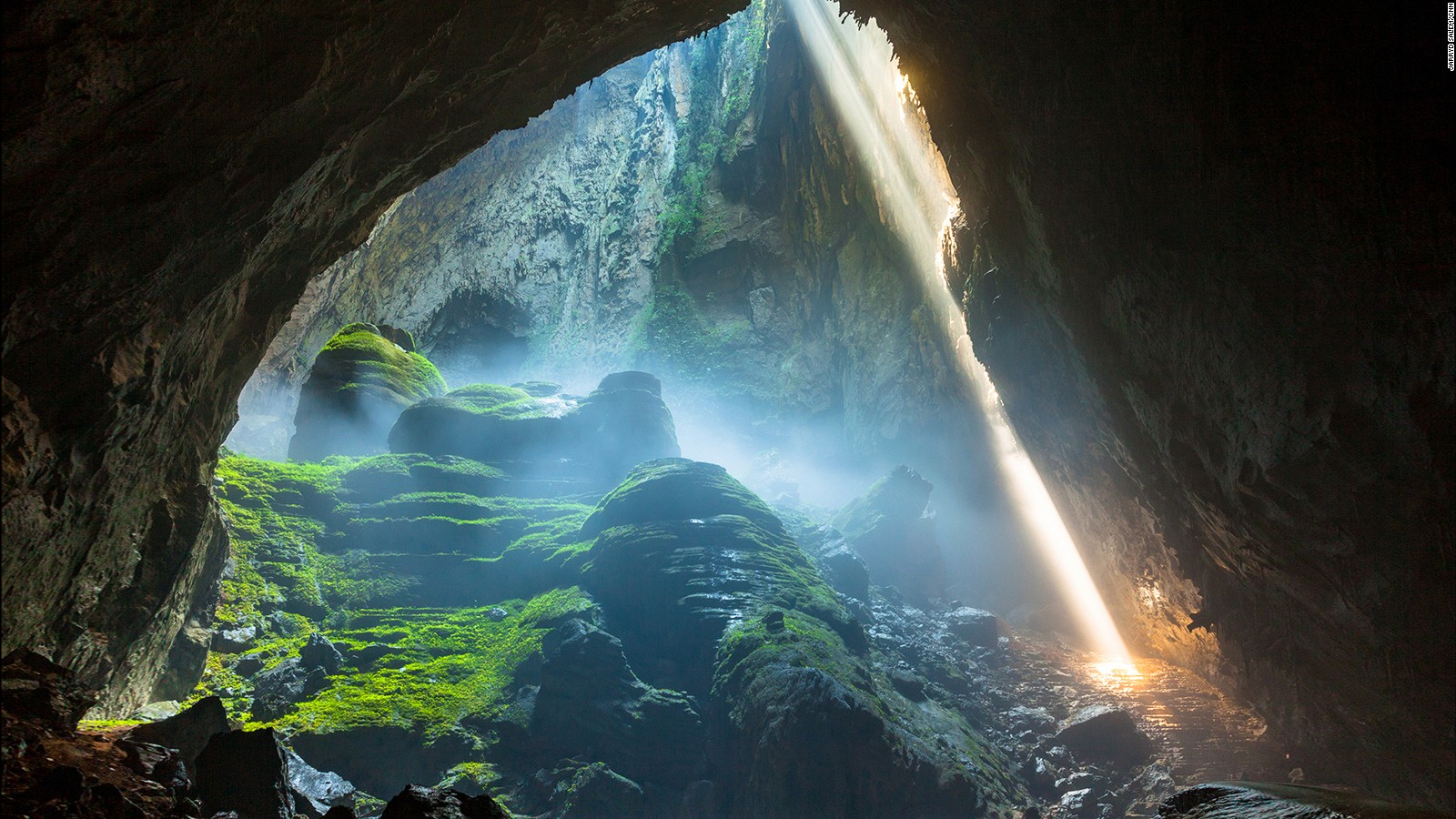
Hang Son Doong Cave
Hang Son Doong Cave, located in the heart of the Phong Nha-Ke Bang National Park in Vietnam, is the world’s largest cave. It is a magical underground paradise filled with mysteries and secrets yet to be revealed. This spectacular attraction has been explored by a few adventurers ever since its discovery in 1991.
It wasn’t until 2009 that a group of British explorers made it into Hang Son Doong, uncovering its wonders and exposing its grandeur to the world. This article will explore this magnificent Hang Son Doong Cave in Vietnam and all you need to know before planning a trip.
What is the Hang Son Doong Cave?
The Hang Son Doong Cave is a natural cave located in Phong Nha-Ke Bang National Park in the Bo Trach District of Quang Binh Province, Vietnam. The cave is situated near the border with Laos and is considered the largest cave in the world.
The cave is believed to be around 2-3 million years old and was created as a solutional cave in soluble limestone. The cave has its own climate and ecosystem and is home to several unique species of plants and animals.
The Discovery of Hang Son Doong Cave
Son Doong cave's entrance was first uncovered in 1991 due to a local named Ho Khanh, who enjoys exploring the national park's forests in seek of food and wood to supplement his little income.
He noticed a gap, and when he looked inside, he heard a river gurgling softly and saw clouds. He returned home out of caution rather than continuing his investigation. He then forgot where he had found it.
Ho Khanh then rediscovered it in 2008, after several years had passed. After making a note of the route, he led two members of the British Cave Association on the first excursion to the cave.
The public was allowed access to the cave in 2013. Only one business, Oxalis, which holds a valid tour operator's license, is authorized to conduct expeditions. They conduct a high-end, five-day adventure unsuitable for weak people. Even though a tour costs USD 3,000, the money is well spent.
Interesting Facts about the Son Doong Cave
Did you know that the world's largest cave is located in Vietnam? It is called the Hang Son Doong Cave and is truly a sight to behold. This massive cave is so big that it has its own weather system and even its own mini-ecosystem!
Here are some more interesting facts about this incredible Hang Son Doong Cave:
· The Hang Son Doong Cave is about 5.6 miles long, making it the largest known cave in the world.
· The cave was only discovered in 1991 by a local man named Ho Khanh. He initially thought it was just a small hole in the ground, but he later realized that it was much more than that.
· The cave gets its name from the nearby Hang Son River. "Doong" actually means "cave" in Vietnamese.
· The inside of the cave is huge – it is big enough to fit an entire city block! And because of its size, the cave has its own microclimate and ecosystem.
· There are stalactites and stalagmites inside the cave that are up to 80 meters tall.
Exploring Hang Son Doong Cave
Hang Son Doong Cave is the world's largest cave, located in Quang Binh province, Vietnam. The cave is so large that it has its own climate and ecosystem. Hang Son Doong Cave was first discovered in 1991 by a local farmer, but it was not until 2009 that a team of British cavers explored the cave.
With a volume of 3.84 x 10⁷ cubic meters (1.36 x 10⁹ cubic feet), the main cave passage in Son Doong is the world's largest cave passage. It measures over 5 kilometers (3.1 miles) in length, 200 meters (660 feet) in height, and meters (490 feet) in width. According to estimates, it has a cross-section that is twice as large as the next largest corridor in Malaysia's Deer Cave.
The cave is approximately 9 kilometers long and is broken up by two major dolines, places where the cave ceiling has fallen. The development of trees and other vegetation results from the dolines, which lets sunlight into some cave chambers.
The cave features some of the longest rock formations in the world that can reach heights of up to 70 meters (230 feet). Baseball-sized cave pearls were discovered hidden below the Vietnam Great Wall, which is an unusually huge size.
The interior of the cave is so big that a Boeing 747 could fly inside it without its wings striking either side or a full New York City block with towers fitting inside.
Visitors to the Son Doong Cave can take guided tours that last for several days. During these tours, visitors will camp inside the cave and explore its many chambers. Tours typically include hikes through the jungle, rafting trips downriver, and visits to some of the caves' more unique features.
How to get to the Son Doong Cave
You must pass through the village inside Phong Nha Ke-Bang National Park to get to Hang Son Doong. Since it is encircled by thick jungle, the Ban Doong tribal minority community can only be reached on foot.
As there is plenty to learn from the residents, exploring this area and engaging with them is an interesting aspect of the adventure.
You will next go on your difficult journey to Hang Son Doong Cave. Reaching the entrance will require two days of river crossings and difficult forest trekking.
Best time to visit the Hang Son Doong Cave
The greatest time to visit Son Doong is between February and August when the Hang Son Doong cave trip is available. The remaining months are wet, which is risky for travelers.
In Son Doong, the winter months of February through April are cool. Due to the lack of exhaustion caused by the heat and darkness inside the cave, it is now the ideal time to discover the cave.
Conclusion
Hang Son Doong Cave is an incredible natural wonder located in Vietnam. It's the world's largest cave and features its own climate, river, and ecosystem. Exploring Hang Son Doong Cave can be a dangerous but rewarding experience.
Whether you are visiting Vietnam for a once-in-a-lifetime adventure or just looking for something different to do on your vacation - Hang Son Doong Cave is worth checking out! You should plan your trip carefully and have the proper equipment and safety gear before you venture into this magnificent cave.
00 Comments
No comments yet.
Leave a Comment