

Jeju Island
Introduction
Rising from the sparkling waters south of the Korean Peninsula, Jeju Island is a destination where volcanic landscapes, dramatic coastlines, lush forests, and cascading waterfalls come together to create one of Asia’s most beautiful natural escapes. Often referred to as the “Hawaii of South Korea,” Jeju offers a unique blend of geological wonders, rich cultural heritage, and breathtaking scenery that attracts millions of visitors every year.
Known as the “Island of Volcanoes and Waterfalls,” Jeju Island is South Korea’s largest island and one of the country's most beloved travel destinations. Its volcanic origins have shaped a landscape filled with lava tubes, crater lakes, basalt cliffs, and towering mountains, while its mild climate supports diverse ecosystems and vibrant greenery.
Recognized as a UNESCO World Heritage Site, Jeju Island is a paradise for nature lovers, hikers, photographers, and travelers seeking a perfect combination of adventure and relaxation.
Geography and Environment
Jeju Island is located in the Korea Strait, approximately 85 kilometers south of mainland South Korea.
Formed entirely through volcanic activity millions of years ago, the island covers an area of roughly 1,850 square kilometers and features some of East Asia’s most remarkable geological formations.
The island's landscape is dominated by Hallasan, a dormant shield volcano that rises 1,947 meters above sea level and serves as the highest mountain in South Korea.
The climate is generally milder than the Korean mainland, allowing subtropical vegetation to flourish alongside temperate forests.
Jeju’s combination of mountains, coastlines, forests, waterfalls, and lava formations creates an extraordinary variety of natural environments within a relatively compact area.
Hallasan – The Volcanic Heart of Jeju
At the center of Jeju Island stands Hallasan, a majestic volcano that defines the island’s geography and identity.
The mountain was formed through repeated volcanic eruptions over hundreds of thousands of years and remains one of South Korea’s most treasured natural landmarks.
At its summit lies Baengnokdam Crater Lake, a stunning crater lake surrounded by dramatic volcanic scenery.
Several hiking trails lead to the summit, passing through forests, alpine vegetation zones, and breathtaking viewpoints.
The mountain is especially beautiful during spring wildflower blooms, autumn foliage seasons, and winter snowfalls.
For outdoor enthusiasts, climbing Hallasan is one of the most rewarding experiences on the island.
Spectacular Waterfalls and Coastal Beauty
Jeju Island is renowned for its magnificent waterfalls, many of which flow directly toward the ocean.
One of the island’s most famous natural attractions is Jeongbang Waterfall, one of the few waterfalls in Asia that cascades directly into the sea.
Another popular destination is Cheonjiyeon Waterfall, surrounded by lush vegetation and illuminated beautifully at night.
The island’s coastline is equally impressive, featuring dramatic basalt cliffs, hidden coves, volcanic rock formations, and scenic beaches.
The rugged shoreline reflects Jeju’s volcanic origins and offers spectacular ocean views throughout the island.
Volcanic Landscapes and Lava Tubes
Jeju's volcanic heritage is visible across nearly every part of the island.
One of the most remarkable geological attractions is the Manjanggul Lava Tube, one of the longest lava tubes in the world.
This underground cave system features enormous tunnels, lava stalactites, and unique geological formations created during ancient volcanic eruptions.
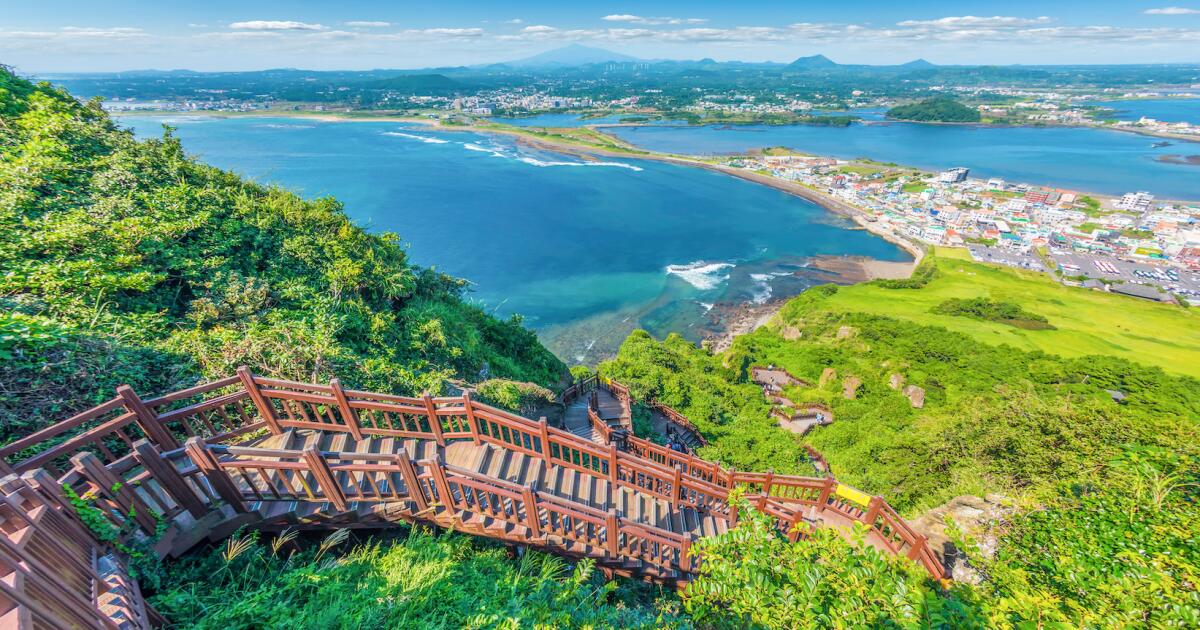
Another iconic site is Seongsan Ilchulbong, also known as Sunrise Peak. This volcanic tuff cone rises dramatically from the sea and offers one of the island’s most famous sunrise views.
These geological wonders have earned Jeju global recognition as a UNESCO Global Geopark and World Natural Heritage Site.
Culture and Traditional Island Life
Beyond its natural beauty, Jeju Island possesses a distinct cultural identity that differs from mainland Korea.
One of the island’s most fascinating traditions is that of the Haenyeo, legendary female divers who harvest seafood without oxygen tanks using techniques passed down through generations.
Their remarkable skills and cultural significance have earned international recognition as part of UNESCO’s Intangible Cultural Heritage.
Traditional stone houses, volcanic rock walls, and local folklore contribute to Jeju’s unique atmosphere.
The island’s culture reflects resilience, independence, and a deep connection to the surrounding sea.
Wildlife and Natural Ecosystems
Jeju Island supports diverse ecosystems ranging from coastal habitats to alpine environments.
The forests around Hallasan contain numerous plant species, many of which are unique to the Korean Peninsula.
Migratory birds frequently visit the island, while marine ecosystems support dolphins, fish, and various coastal species.
The island's ecological diversity makes it an important center for conservation and environmental research.
Protected areas throughout Jeju help preserve its rich biodiversity and natural heritage.
Adventure and Outdoor Activities
Jeju is a paradise for travelers who enjoy outdoor adventures.
Hiking Hallasan is among the island’s most popular activities, while coastal trails provide stunning ocean views and access to hidden beaches.
Cycling routes circle much of the island, allowing visitors to explore volcanic landscapes and charming villages.
Water sports such as kayaking, diving, surfing, and snorkeling are also popular along the coast.
Photography enthusiasts are drawn to Jeju’s dramatic scenery, vibrant sunsets, waterfalls, and unique geological formations.
The island offers outdoor experiences suitable for both casual visitors and serious adventurers.
Sustainability and Conservation
Jeju Island has made significant efforts to balance tourism growth with environmental conservation.
Protected national parks, UNESCO designations, and sustainable tourism initiatives help preserve the island’s ecosystems and geological landmarks.
Visitors are encouraged to respect hiking trails, reduce waste, and support local conservation programs.
The preservation of Jeju’s natural and cultural heritage remains a priority as tourism continues to expand.
Responsible travel ensures that future generations can enjoy the island’s extraordinary beauty.
Best Time to Visit Jeju Island
Jeju Island is a year-round destination, but spring and autumn are often considered the best times to visit.
Spring brings colorful flowers and pleasant temperatures, while autumn offers clear skies and spectacular foliage.
Summer attracts beachgoers and outdoor enthusiasts, though it can be humid and occasionally affected by typhoons.
Winter transforms Hallasan into a snowy wonderland and offers a quieter travel experience.
Each season reveals a unique aspect of Jeju’s charm and beauty.
Transport and Accessibility
Jeju Island is easily accessible via Jeju International Airport, one of the busiest domestic airports in the world.
Frequent flights connect the island with major South Korean cities, including Seoul and Busan.
Rental cars, buses, and organized tours provide convenient transportation around the island.
The well-developed tourism infrastructure makes exploring Jeju both comfortable and accessible.
Why Visit Jeju Island?
Jeju Island offers one of the most diverse and rewarding travel experiences in Asia. Its volcanic mountains, lava caves, dramatic coastlines, waterfalls, and unique cultural traditions create a destination unlike any other in South Korea.
Visitors can hike volcanic peaks, explore underground lava tunnels, witness breathtaking waterfalls, and immerse themselves in a culture shaped by the sea.
For nature lovers, adventure travelers, photographers, and cultural explorers, Jeju Island is a destination that consistently exceeds expectations.
Conclusion
Jeju Island stands as one of Asia’s most remarkable natural destinations. Shaped by ancient volcanic forces and enriched by centuries of cultural tradition, the island offers a perfect balance of adventure, relaxation, and discovery.
From the summit of Hallasan and the depths of lava caves to the beauty of coastal waterfalls and the resilience of the Haenyeo divers, every corner of Jeju tells a fascinating story.
For travelers seeking extraordinary landscapes and authentic experiences, Jeju Island truly deserves its reputation as the Island of Volcanoes and Waterfalls.
00 Comments
No comments yet.
Leave a Comment