

Kjerag
Introduction
Rising dramatically above the deep blue waters of Lysefjord in southwestern Norway, Kjerag is one of Scandinavia's most spectacular mountain destinations. Famous for its enormous vertical cliffs, sweeping fjord views, and the legendary Kjeragbolten boulder wedged high above the valley, this extraordinary landscape has become an icon of Norwegian adventure travel.
At approximately 1,110 meters above Lysefjord, Kjerag offers an unforgettable combination of rugged mountains, sheer cliffs, waterfalls, and panoramic views. The mountain is part of the dramatic landscape surrounding Stavanger and attracts hikers, photographers, climbers, and adventure seekers from around the world.
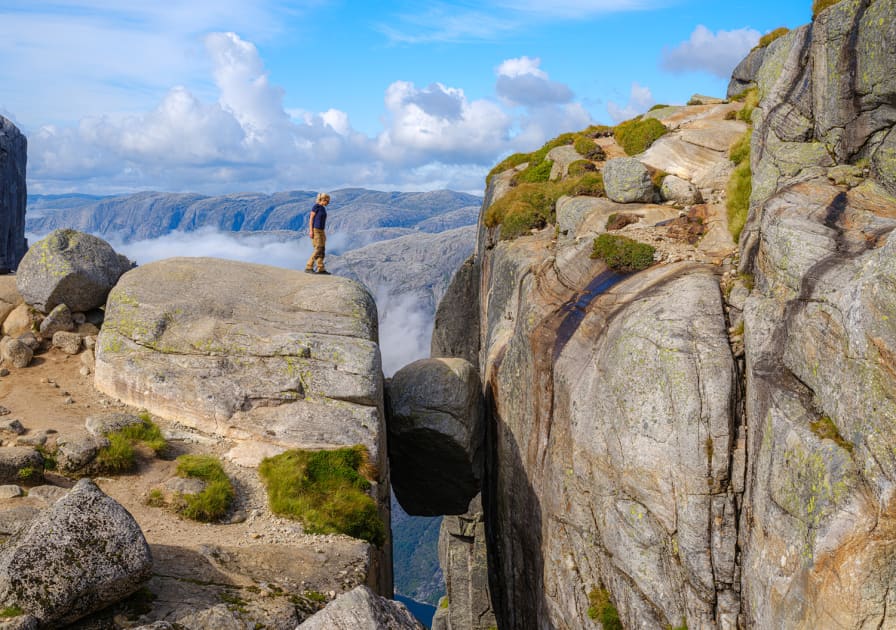
The most famous attraction is Kjeragbolten, a massive boulder suspended between two cliffs. Standing on the rock creates the illusion of floating above the fjord hundreds of meters below, making it one of Norway's most recognizable adventure photographs.
But Kjerag is much more than one famous boulder. The hike itself passes through rocky valleys, steep mountain sections, small lakes, and breathtaking viewpoints. From the summit, travelers can look across Lysefjord and the surrounding mountains, experiencing one of Norway's most dramatic natural panoramas.
For travelers searching for spectacular Norwegian landscapes and challenging outdoor adventures, this Kjerag travel guide explores the geography, hiking trail, Kjeragbolten, wildlife, best time to visit, transportation, safety, sustainability, and everything that makes Kjerag one of Norway's most unforgettable destinations.
Where Is Kjerag? Geography and Mountain Landscape
Kjerag is located at the head of Lysefjord in Rogaland County, southwestern Norway.
The mountain rises approximately 1,110 meters above the fjord, creating an enormous vertical landscape of cliffs, plateaus, valleys, and rock formations.
The surrounding region is characterized by:
- Deep fjords
- Sheer granite cliffs
- Mountain plateaus
- Waterfalls
- Alpine lakes
- Rocky valleys
- Green summer landscapes
- Snow-covered peaks
Kjerag's dramatic topography was shaped largely by glacial activity. During the Ice Age, enormous glaciers carved deep valleys through the Norwegian mountains, creating the spectacular fjord landscapes seen today.
The result is one of Norway's most impressive combinations of mountain and ocean scenery.
Why Is Kjerag Famous?
Kjerag is best known for its dramatic mountain landscape and the famous Kjeragbolten.
The destination is famous for:
- Kjeragbolten
- Spectacular Lysefjord views
- High mountain cliffs
- Challenging hiking trails
- Base jumping
- Mountain photography
- Norwegian fjord landscapes
- Glacial geology
- Outdoor adventure
Together with Preikestolen and Trolltunga, Kjerag forms part of Norway's most famous collection of dramatic cliffside hiking destinations.
Kjeragbolten - Norway's Famous Suspended Boulder
The most recognizable landmark on Kjerag is Kjeragbolten, a giant boulder wedged into a narrow mountain crevice.
The rock sits approximately 1,000 meters above Lysefjord, creating one of the most dramatic natural viewpoints in Norway.
Unlike many mountain viewpoints, Kjeragbolten does not require technical climbing equipment to reach under normal conditions, but the surrounding terrain can be steep and exposed.
Visitors often carefully step onto the boulder for photographs.
However, standing on Kjeragbolten should never be treated casually. Wind, rain, ice, and slippery rock can make the area hazardous.
The famous photograph may look simple, but reaching the boulder requires a demanding mountain hike.
The Kjerag Hiking Trail
The hike to Kjerag is one of Norway's most rewarding mountain adventures.
The trail begins near Øygardstøl, where hikers can access the main route toward Kjerag.
The round-trip hike is approximately 11 kilometers, although the difficulty is significantly greater than the distance might suggest.
The trail includes:
- Steep climbs
- Rocky surfaces
- Chains for assistance
- Descents
- Mountain plateaus
- Uneven terrain
- Exposed sections
Several steep sections require hikers to use chains installed along the route.
The trail typically takes around 5 to 6 hours round trip, depending on fitness, weather, trail conditions, and how long visitors spend at viewpoints.
The Journey to Kjerag
One of the best things about Kjerag is that the entire hike provides spectacular scenery.
The trail climbs sharply from the starting point before reaching higher mountain terrain.
As the elevation increases, the landscape changes from green valleys to exposed rock and alpine terrain.
Along the way, hikers can enjoy views of:
- Lysefjord
- Surrounding mountain peaks
- Deep valleys
- Waterfalls
- Alpine lakes
- Rocky plateaus
The final approach toward Kjerag provides increasingly dramatic views before reaching the famous boulder.
Lysefjord - The Fjord Below Kjerag
The spectacular Lysefjord is the centerpiece of the landscape below Kjerag.
Stretching for approximately 40 kilometers, the fjord is surrounded by towering cliffs and mountains.
Its name is often translated as "Light Fjord", referring to the pale granite cliffs that surround its waters.
A boat journey through Lysefjord offers an entirely different perspective of Kjerag.
Travelers who have already completed the hike can take a fjord cruise afterward and look back toward the enormous cliffs they have just explored.
Kjerag and Base Jumping
Kjerag has become internationally known among base jumpers because of its enormous cliffs.
Experienced jumpers have traveled to the mountain from around the world to launch from the cliffs above Lysefjord.
However, base jumping is an extreme sport with serious risks and should only be undertaken by properly trained and authorized participants following local regulations.
For ordinary visitors, hiking and sightseeing provide more than enough adventure.
Wildlife and Natural Environment
Kjerag's mountain environment supports wildlife adapted to Norway's rugged climate.
Visitors may encounter:
- Reindeer
- Mountain hare
- Red foxes
- Golden eagles
- Ptarmigans
- Various mountain birds
- Small mammals
During summer, alpine vegetation adds color to the otherwise rocky landscape.
The higher elevations are relatively sparse, while lower areas contain grasses, mosses, lichens, and hardy mountain plants.
Early morning hikers may have the best chance of encountering wildlife before the trails become busier.
Best Things to Do at Kjerag
Kjerag offers a range of experiences for outdoor travelers.
Popular activities include:
- Hiking to Kjeragbolten
- Landscape photography
- Fjord sightseeing
- Mountain photography
- Wildlife watching
- Camping in designated areas
- Exploring nearby Lysefjord
- Scenic road trips
- Boat tours
The destination is especially appealing to travelers who enjoy combining physical adventure with dramatic scenery.
Local Culture and Norwegian Mountain Heritage
The landscapes around Lysefjord are deeply connected to Norway's outdoor culture.
Norwegians have a strong tradition of friluftsliv, or open-air life, which emphasizes spending time in nature through hiking, skiing, camping, and other outdoor activities.
Kjerag represents this culture perfectly.
The mountain is not simply a tourist attraction but part of a wider landscape where hiking and wilderness experiences have become an important part of Norwegian life.
Visitors can combine a Kjerag trip with exploration of nearby Stavanger, traditional villages, fjord communities, and other hiking destinations.
Norwegian Cuisine Around Kjerag
A trip to southwestern Norway provides plenty of opportunities to experience traditional Norwegian food.
Popular regional dishes and ingredients include:
- Fresh seafood
- Norwegian salmon
- Cod
- Shrimp
- Lamb
- Brown cheese
- Potatoes
- Rye bread
- Waffles
- Cloudberries
The Stavanger region is also known for its excellent food scene, making it easy to combine a Kjerag hiking trip with a culinary experience.
After a demanding mountain hike, a warm Norwegian meal can be especially rewarding.
Sustainable Tourism and Conservation
Kjerag's fragile mountain environment receives heavy visitor traffic during the summer season.
Hikers can help protect the landscape by:
- Staying on marked trails
- Carrying all rubbish back with them
- Avoiding damage to vegetation
- Respecting wildlife
- Using designated facilities
- Following local safety instructions
- Avoiding unnecessary shortcuts
Mountain vegetation grows slowly in Norway's harsh environment, so leaving the established trail can cause long-lasting damage.
Responsible hiking helps ensure that Kjerag remains accessible for future generations.
Best Time to Visit Kjerag
The best time to hike Kjerag is generally from June to September, when mountain roads and hiking trails are usually more accessible.
June
Early summer brings long daylight hours, although snow can remain at higher elevations.
July and August
These are generally the most popular hiking months, with longer days and more favorable trail conditions.
September
Autumn brings fewer visitors and beautiful seasonal colors, but weather can become increasingly unpredictable.
October to May
Snow, ice, short daylight hours, and difficult mountain conditions make the trail unsuitable for most casual hikers.
Always check current weather, trail, and road conditions before starting the hike.
How to Get to Kjerag
The closest major city is Stavanger.
From Stavanger, travelers can reach the Kjerag trailhead at Øygardstøl by road, seasonal bus services, or organized tours, depending on the time of year.
The journey itself is scenic, passing through mountainous terrain and rural communities.
Another option is to explore Lysefjord by boat and combine the fjord experience with a hiking itinerary.
Because mountain weather can change quickly, travelers should allow extra time when planning transportation.
Essential Travel Tips for Visiting Kjerag
The Kjerag hike requires more preparation than its popularity might suggest.
- Wear sturdy hiking boots.
- Bring waterproof and windproof clothing.
- Carry enough water and snacks.
- Check weather forecasts before starting.
- Allow several hours for the round trip.
- Avoid hiking in poor visibility or severe weather.
- Be extremely cautious around cliff edges.
- Never underestimate wet or icy rock.
- Start early during busy periods.
The most important rule is simple: do not take unnecessary risks for a photograph on Kjeragbolten.
The mountain will always be more important than the perfect picture.
Why Visit Kjerag?
Kjerag offers one of the most dramatic combinations of mountain and fjord scenery in Norway.
Standing high above Lysefjord, surrounded by enormous cliffs and rugged peaks, creates a sense of scale that photographs cannot fully capture.
The journey is also part of the attraction. Unlike viewpoints accessible directly by road, Kjerag requires a genuine mountain hike, making the final panorama feel earned.
For adventure travelers, photographers, hikers, and anyone fascinated by Norway's fjords, Kjerag provides an unforgettable experience.
Conclusion
Kjerag is far more than a famous boulder - it is one of Norway's most spectacular mountain landscapes. Its dramatic cliffs, deep Lysefjord views, rugged hiking trails, alpine scenery, and legendary Kjeragbolten create an experience that combines adventure with extraordinary natural beauty.
From trekking across the mountain plateau to carefully stepping onto Kjeragbolten and looking across the vast fjord below, every part of the journey offers something memorable.
For travelers seeking dramatic landscapes, challenging hikes, and an authentic Norwegian outdoor adventure, Kjerag truly deserves its reputation as the Giant Rock Above Lysefjord.
00 Comments
No comments yet.
Leave a Comment