

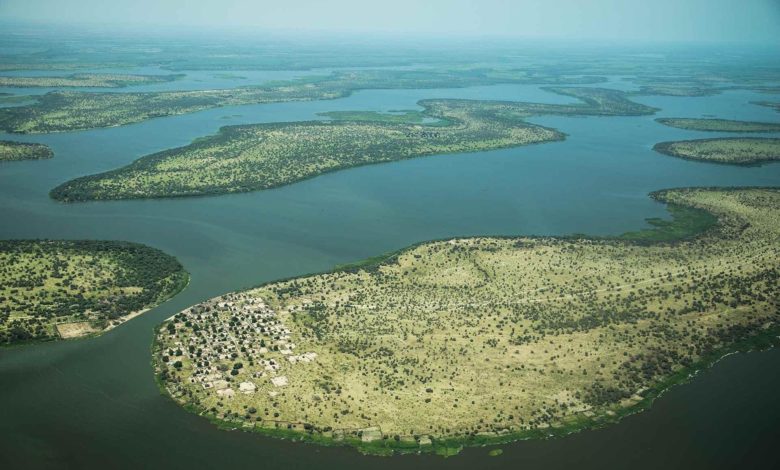
Lake Chad
Lake Chad, a spectacular natural wonder that can be found in the center of Africa, gives tourists the chance to see the country's rich cultural history and breathtaking landscapes. This stunning lake, which spans across Chad, Niger, Cameroon, and Nigeria, is the largest lake in the Sahel area and a crucial water source for millions of people and wildlife.
Due to its unique flora and wildlife, fascinating cultural legacy, and stunning beauty, Lake Chad has recently gained popularity among eco-tourists, birdwatchers, and history aficionados. There is something for everyone in Lake Chad, whether you want to go birdwatching, explore the lake's numerous islands, or just take in the serene beauty of the surroundings.
Despite its numerous attractions, Lake Chad is also subject to a number of environmental hazards, such as overfishing, pollution, and climate change. In this travel guide, we'll look more closely at this stunning lake, its history, culture, flora, and fauna, as well as the difficulties it faces and the initiatives being taken to conserve and safeguard its ecology. Pack your luggage and get ready to go on a discovery expedition as we look at Lake Chad's beauty and past.
Facts about Lake Chad
Here are a few interesting Lake Chad-related facts:
· Central African nations Chad, Cameroon, Nigeria, and Niger surround Lake Chad.
· Previously, Lake Chad was the largest lake that has ever existed in all of Africa.
· Over the past few decades, the lake has substantially diminished, with water levels dropping by more than 90% since the 1960s.
· The lake is home to a wide variety of flora and fauna.
· Thousands of birds migrate to the lake's wetlands each year from Europe and Asia, making it a significant location for migratory birds.
· Armed groups and terrorist organizations have been active in the area, making the lake a focal focus of conflict and political unrest recently.
History of Lake Chad
According to theory, Lake Chad is the last remaining portion of an ancient inland sea that fluctuated in size over the course of 13,000 years as a result of climatic changes. This lake is thought to have covered an area of 400,000 square kilometers at its maximum, sometime about 4000 BC. Around 8500 BC, 5500 BC, 2000 BC, and 100 BC, the lake nearly dried up, according to lake sediments.
When Europeans conducted their initial survey of the lake in 1823, it was one of the largest in the world, but it has since significantly diminished. Over the past 40 years, the lake's shrinkage has been hastened by climate change, which is partly the result of global warming, and growing water demand.
Since the 1960s, Lake Chad's size has significantly decreased. At that time, the lake's surface was the fourth largest in Africa, with a shoreline that was about 286 meters above sea level and a size of more than 26,000 square kilometers.
The flooding of the wetlands areas causes a significant seasonal variation in the size of Lake Chad. According to reports from 1983, Lake Chad had a surface area of between 10,000 and 25,000 square kilometers (3,900 and 9,700 square miles), a maximum depth of 11 meters (36 feet), and a volume of 72 cubic kilometers. Its size had shrunk to less than 1,500 square kilometers by 2000. In the course of the twenty-first century, it appears likely that the lake will continue to shrink and possibly even vanish entirely.
Flora and Fauna of Lake Chad
The vegetation around Lake Chad is primarily composed of marsh grasses (Echinochloa Pyramidalis, Vetiveria Nigritana), together with more than 44 different species of algae.
More than 80 fish species, including 25 endemic species that can only be found in the lake basin, may be found in the Lake Chad basin, which is a well-known fishing location among locals. From the lake, 60,000 to 85,000 tons of fish are taken in a single year. The two most favored fish in Lake Chad are Charachin and Nile perch.
Chad is home to a diverse range of wildlife because of the numerous floating islands, with birds making up the biggest populations and being a popular resting place for migrating birds. The river Prinia, red lark, ducks, ruffs, marbled teal, garganey, glossy ibis, crested cranes, and pintails are a few of the most significant.
The hippopotamus, red-fronted gazelles, patas monkeys, striped hyenas, and cheetahs are among the creatures that frequent the lake shoreline; however, their numbers are declining as the waters recede. Crocodiles live along lakeshores.
Threats and preservation of Lake Chad
Like many other natural wonders, Lake Chad is threatened by pollution, overfishing, and climate change, among other environmental factors. The lake's environment is being preserved and protected, but more needs to be done to guarantee its long-term viability.
· The lake's water levels are changing as a result of climate change, which has an adverse effect on the nearby people that depend on the lake for their livelihood.
· Many fish species in the lake are in danger of going extinct as a result of overfishing and unsustainable fishing methods, which pose a serious threat to the ecology.
· Agriculture, industry, and urbanization pollution all pose serious threats to the lake's biodiversity and water quality.
To combat these dangers, actions are being taken such as promoting ethical fishing methods, enhancing water management, and lowering lake pollution levels.
Exploring Lake Chad
Exploring the lake's numerous islands and waterways by boat is one of the greatest ways to experience Lake Chad. In the nearby wetlands, visitors can participate in various activities. The activities you can do at Lake Chad are:
· Visitors can take boat trips to explore the lake's numerous islands and canals.
· Birdwatching tours are a popular activity because they offer the chance to see a variety of migratory bird species.
· Visitors can also engage in eco-tourism activities including hiking, camping, and nature walks.
· Cultural heritage sites, like the Kanem-Bornu Empire, provide a window into the region's rich history.
Conclusion
Visitors can discover the natural splendor and extensive cultural heritage of Chad at Lake Chad, a hidden jewel. Everyone will find something to enjoy in this stunning region of Africa, which offers everything from boat tours on the lake to birdwatching tours, ecotourism activities, and cultural heritage sites.
Despite numerous environmental challenges, the lake's ecosystem is being preserved and protected in order for future generations to continue to appreciate its beauty and richness. Therefore, if you want to have a unique vacation experience, make sure to include Lake Chad on your list of must-see places.
00 Comments
No comments yet.
Leave a Comment