

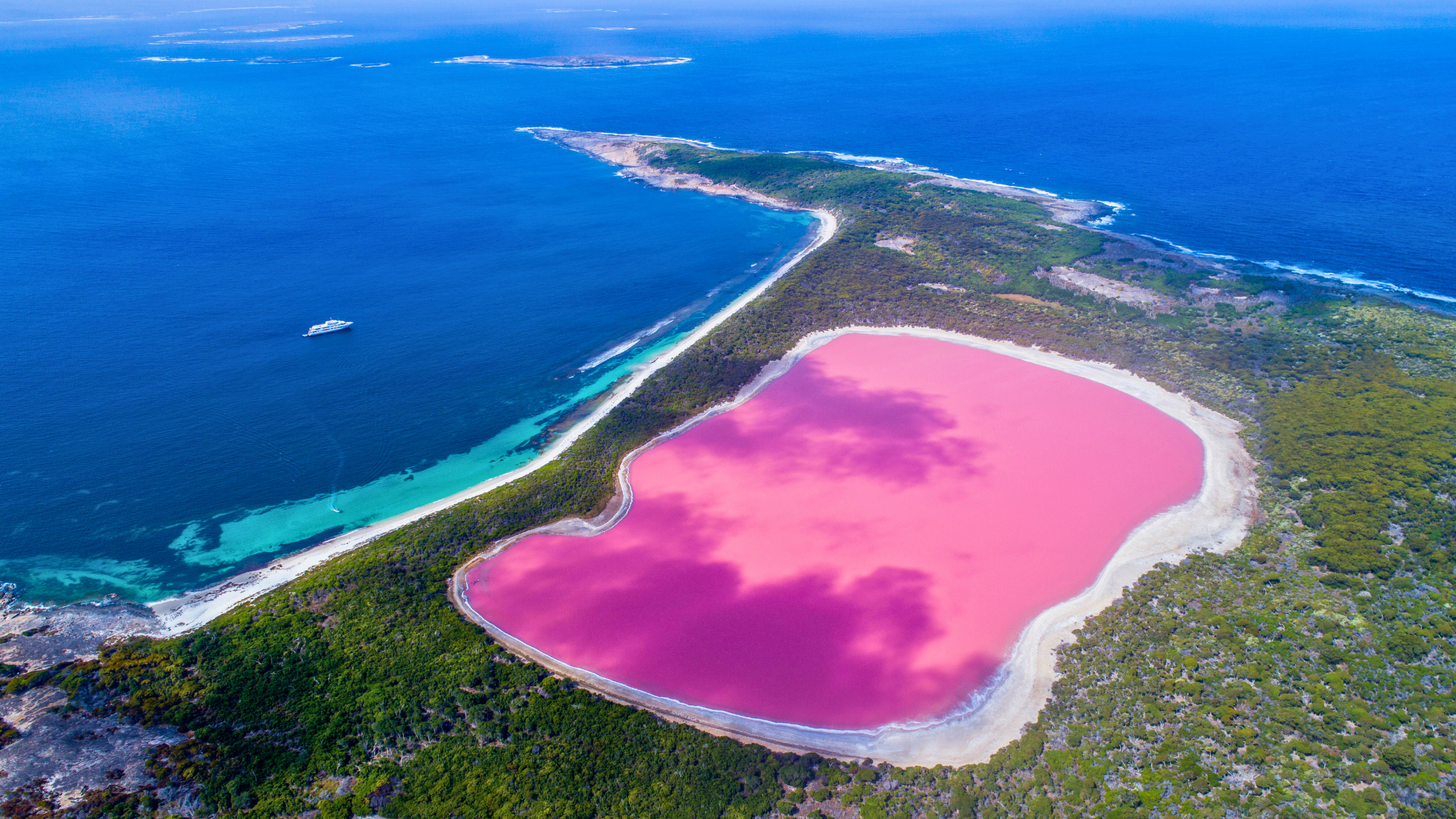
Lake Hillier
Introduction
Hidden off the southern coast of Western Australia, Lake Hillier is one of the world’s most extraordinary natural wonders. Famous for its vibrant pink color, this surreal lake looks almost unreal—like a scene painted by an artist rather than shaped by nature. Often described as a “pink gem” of Australia, Lake Hillier continues to fascinate scientists, travelers, and photographers alike.
What makes Lake Hillier truly remarkable is that its pink hue remains permanent throughout the year, unaffected by changes in weather or seasons. Surrounded by lush green forest and bordered by the deep blue waters of the Southern Ocean, the lake creates a stunning contrast that is best appreciated from above. For those seeking unique destinations and rare natural phenomena, Lake Hillier is a bucket-list location unlike any other.
Geographical and Environmental Significance
Lake Hillier is located on Middle Island, the largest island in the Recherche Archipelago, off the coast of Esperance, Western Australia. The lake measures approximately 600 meters long and 250 meters wide and lies just a short distance from the ocean, separated by a narrow strip of sand and dense eucalyptus forest.
The island’s isolation has helped preserve Lake Hillier’s pristine condition. The surrounding environment features native vegetation, unspoiled beaches, and rich marine life. The contrast between the pink lake, green forest, and blue ocean makes the area one of the most visually striking landscapes in Australia.
The lake’s high salt concentration creates a unique ecosystem where only specially adapted microorganisms can survive. This delicate environment is closely monitored and protected, emphasizing the importance of conservation and sustainable tourism.
Why Is Lake Hillier Pink?
The pink color of Lake Hillier has long intrigued scientists and visitors. Research suggests that the coloration is caused by a combination of salt-loving algae called Dunaliella salina and pink-hued bacteria that thrive in the lake’s hypersaline conditions. These microorganisms produce pigments, particularly carotenoids, which give the lake its vivid pink appearance.
What sets Lake Hillier apart from other pink lakes around the world is the stability of its color. Even when water is removed from the lake and placed in a container, it retains its pink shade. This phenomenon makes Lake Hillier one of the most scientifically fascinating lakes on Earth.
Historical Discovery and Scientific Interest
Lake Hillier was first documented in 1802 by British explorer Matthew Flinders, who noted its unusual color during his exploration of Australia’s southern coastline. Since then, the lake has attracted scientists from around the world who continue to study its microbial ecosystem and chemical composition.
Modern research has expanded interest beyond tourism, as the microorganisms found in Lake Hillier may have applications in biotechnology, medicine, and environmental science. This blend of beauty and scientific value makes the lake an important natural asset.
How to Visit Lake Hillier
Due to its remote location and protected status, Lake Hillier is not easily accessible. There are no roads or ferry services to Middle Island. The most popular and practical way to see the lake is through scenic flights or helicopter tours departing from Esperance.
These aerial tours offer breathtaking views and are considered the best way to fully appreciate the lake’s vibrant color and surrounding landscapes. Landing on the island is rare and usually limited to research or special eco-tourism expeditions.
Best Time to Visit
The best time to visit Lake Hillier is between October and April, when weather conditions are favorable and visibility is high. Clear skies enhance the lake’s pink coloration, making it ideal for photography and sightseeing. During this period, the surrounding ocean and forests also appear more vivid, creating a spectacular natural palette.
Environmental Protection and Conservation
Lake Hillier is part of a protected area, and conservation efforts play a crucial role in preserving its fragile ecosystem. Strict regulations help prevent pollution and minimize human impact. Scientists continue to study the lake to better understand its unique properties while ensuring it remains undisturbed for future generations.
Why Lake Hillier Belongs on Your Travel Bucket List
Lake Hillier is more than just a pink lake—it is a symbol of nature’s creativity and mystery. Its rare coloration, remote beauty, and scientific significance make it one of the most unique travel destinations in the world. Whether you are a nature enthusiast, photographer, or curious traveler, witnessing Lake Hillier from above is an unforgettable experience.
Conclusion
Lake Hillier stands as one of Australia’s most remarkable natural wonders, captivating the imagination of all who learn about it. From its striking pink waters to its untouched island setting, the lake represents the extraordinary diversity of our planet. While it may be difficult to reach, the awe-inspiring beauty of Lake Hillier makes it a destination truly worth discovering.
00 Comments
No comments yet.
Leave a Comment