

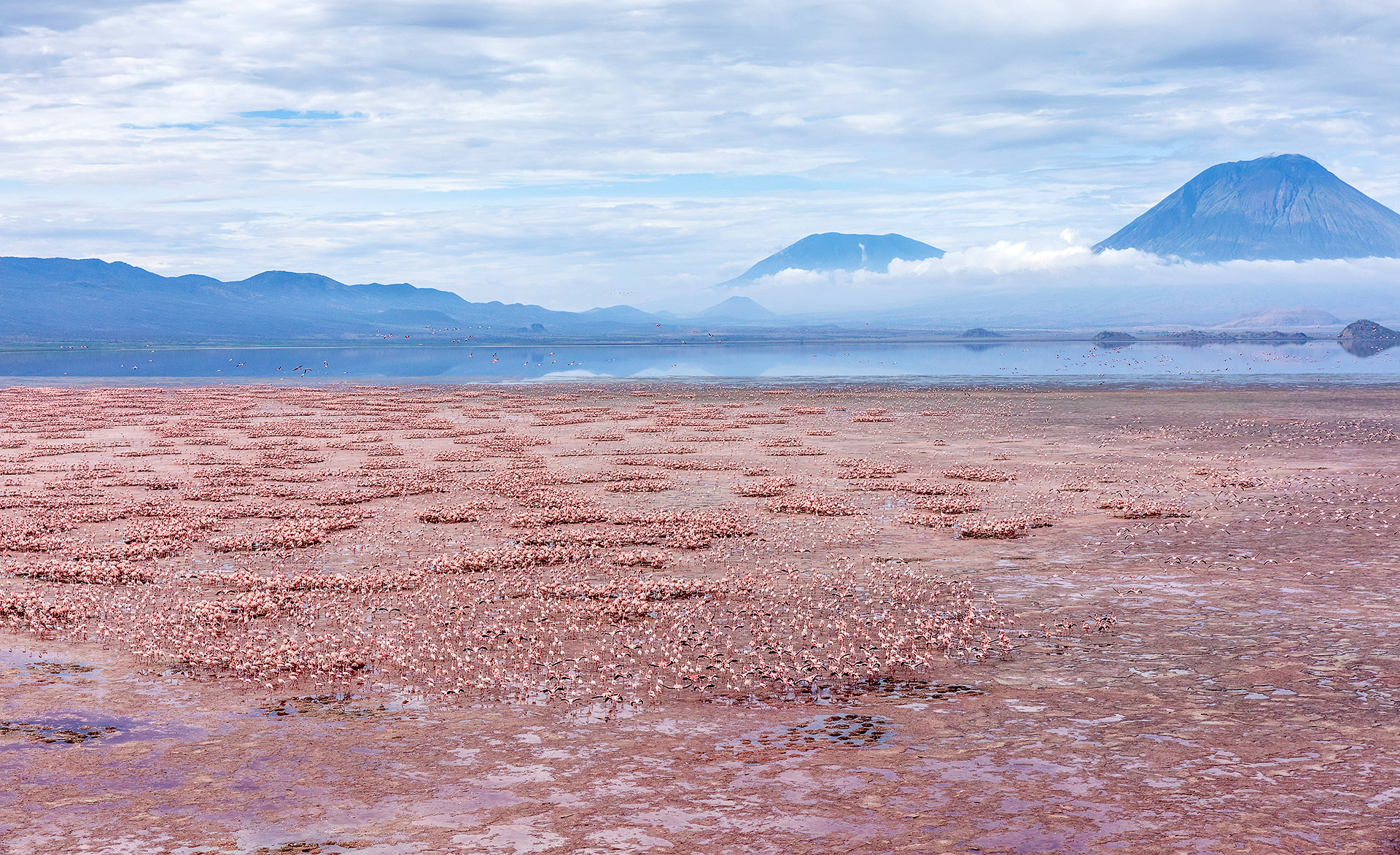
Lake Natron
Introduction
Lake Natron, located in northern Tanzania, is one of the most unusual and visually striking lakes in the world. Known for its vivid red and orange waters, extreme alkalinity, and dramatic volcanic surroundings, Lake Natron feels almost otherworldly. Unlike typical freshwater lakes, Natron’s harsh chemical composition creates a landscape that appears surreal, mysterious, and hauntingly beautiful.
Situated near the Kenyan border within the Great Rift Valley, Lake Natron is not just a geological wonder—it is also an ecological treasure. Despite its extreme environment, the lake serves as one of the most important breeding grounds for lesser flamingos in the world. For adventurous travelers seeking remote destinations and rare natural phenomena, Lake Natron offers a truly unique African experience.
Geographical and Environmental Significance
Lake Natron lies within the eastern branch of the Great Rift Valley, a massive geological fault system stretching across East Africa. The lake is shallow, often less than three meters deep, and its water levels fluctuate depending on rainfall and evaporation.
What makes Lake Natron extraordinary is its high alkalinity. The water contains sodium carbonate and other minerals washed down from surrounding volcanic hills, particularly from Ol Doinyo Lengai, an active volcano located south of the lake. Often called the “Mountain of God” by the Maasai people, this volcano contributes to the lake’s mineral-rich composition.
The intense red coloration of the lake is caused by salt-loving microorganisms and algae that thrive in its alkaline conditions. During dry seasons, evaporation increases salinity, intensifying the lake’s crimson hues and creating salt crust patterns along the shoreline.
Landscapes and Natural Features
The scenery surrounding Lake Natron is dramatic and raw. Vast salt flats stretch across the basin, reflecting sunlight and creating shimmering mirages. In the distance, volcanic mountains and escarpments frame the horizon, enhancing the lake’s striking visual contrast.
The combination of red waters, white salt crusts, and dark volcanic rock gives Lake Natron a surreal aesthetic rarely found elsewhere on Earth. Photographers are particularly drawn to the lake’s reflective surfaces during sunrise and sunset, when colors become even more vibrant.
Waterfalls and gorges hidden within nearby escarpments provide a refreshing counterbalance to the lake’s arid environment. These lush pockets of greenery reveal the surprising diversity of the surrounding ecosystem.
Wildlife and Ecological Importance
Despite its extreme chemical composition, Lake Natron plays a vital ecological role. It is the primary breeding ground for the lesser flamingo, hosting millions of birds during nesting season. The lake’s high alkalinity protects flamingo eggs from predators, creating a safe environment for reproduction.
In addition to flamingos, the region supports various bird species, small mammals, and reptiles adapted to harsh conditions. The lake’s ecosystem demonstrates nature’s remarkable ability to thrive in environments that appear inhospitable.
Lake Natron’s fragile ecological balance makes conservation efforts essential. Any significant environmental disruption could impact flamingo populations across East Africa.
Cultural Significance and Maasai Heritage
The region surrounding Lake Natron is home to the Maasai people, one of East Africa’s most well-known indigenous communities. The Maasai have lived in harmony with this challenging environment for generations, relying on livestock herding and maintaining strong cultural traditions.
Ol Doinyo Lengai, visible from much of the lake area, holds spiritual importance for the Maasai. They consider it sacred and central to their belief systems. Visiting Lake Natron offers travelers not only natural beauty but also insight into Maasai culture, traditional dress, and community life.
Respectful cultural engagement enhances the travel experience while supporting local livelihoods.
Adventure and Outdoor Experiences
Lake Natron is a destination for adventurous travelers seeking remote and off-the-beaten-path experiences. Guided walks across salt flats allow visitors to observe flamingos from a safe distance and appreciate the lake’s unusual terrain.
Climbing Ol Doinyo Lengai is a challenging but rewarding experience for experienced hikers. As one of the few volcanoes in the world that erupts natrocarbonatite lava, it offers a rare geological phenomenon.
Exploring nearby waterfalls, such as those hidden in the Ngare Sero gorge, provides opportunities for swimming and relaxation amid rugged surroundings. The remote nature of the region adds to its sense of discovery and exclusivity.
Sustainability and Environmental Protection
Lake Natron’s ecosystem is extremely delicate. Conservation initiatives focus on protecting flamingo breeding grounds and maintaining the region’s natural integrity. Sustainable tourism practices are essential to prevent habitat disruption.
Visitors are encouraged to travel with responsible tour operators, avoid disturbing wildlife, and respect Maasai land rights. Eco-conscious travel ensures that Lake Natron remains a sanctuary for both wildlife and local communities.
Best Time to Visit Lake Natron
The best time to visit Lake Natron is during the dry season, from June to October, when water levels are lower and the red coloration is most intense. Flamingo breeding typically occurs between September and March, offering exceptional birdwatching opportunities.
Temperatures can be extremely high, often exceeding 40°C (104°F), so travelers should prepare for heat and bring adequate hydration. Early mornings and late afternoons provide the most comfortable exploration conditions.
How to Get There and Around
Lake Natron is accessible by road from Arusha, Tanzania’s primary safari gateway. The journey involves traveling on rough dirt roads, making a 4x4 vehicle essential.
Due to its remote location, guided tours are recommended. Basic eco-lodges and campsites provide accommodation near the lake, maintaining a low environmental footprint while offering immersive wilderness experiences.
Why Lake Natron Belongs on Your Travel Bucket List
Lake Natron offers something rare in modern travel—an untouched landscape that feels completely different from conventional tourist destinations. Its crimson waters, volcanic backdrop, and massive flamingo populations create a visual and ecological spectacle unlike anywhere else in Africa.
For photographers, nature enthusiasts, and adventurous explorers, Lake Natron delivers a powerful sense of isolation and wonder. It is a destination that challenges perceptions of beauty while showcasing nature’s adaptability.
Conclusion
Lake Natron, Tanzania, stands as one of the most unique and extreme natural environments on Earth. From its vivid red waters and volcanic surroundings to its critical role in flamingo conservation, the lake embodies both fragility and resilience. Visiting Lake Natron is not simply a sightseeing trip—it is an exploration of nature’s most unusual creations and a journey into one of Africa’s least conventional landscapes.
00 Comments
No comments yet.
Leave a Comment