

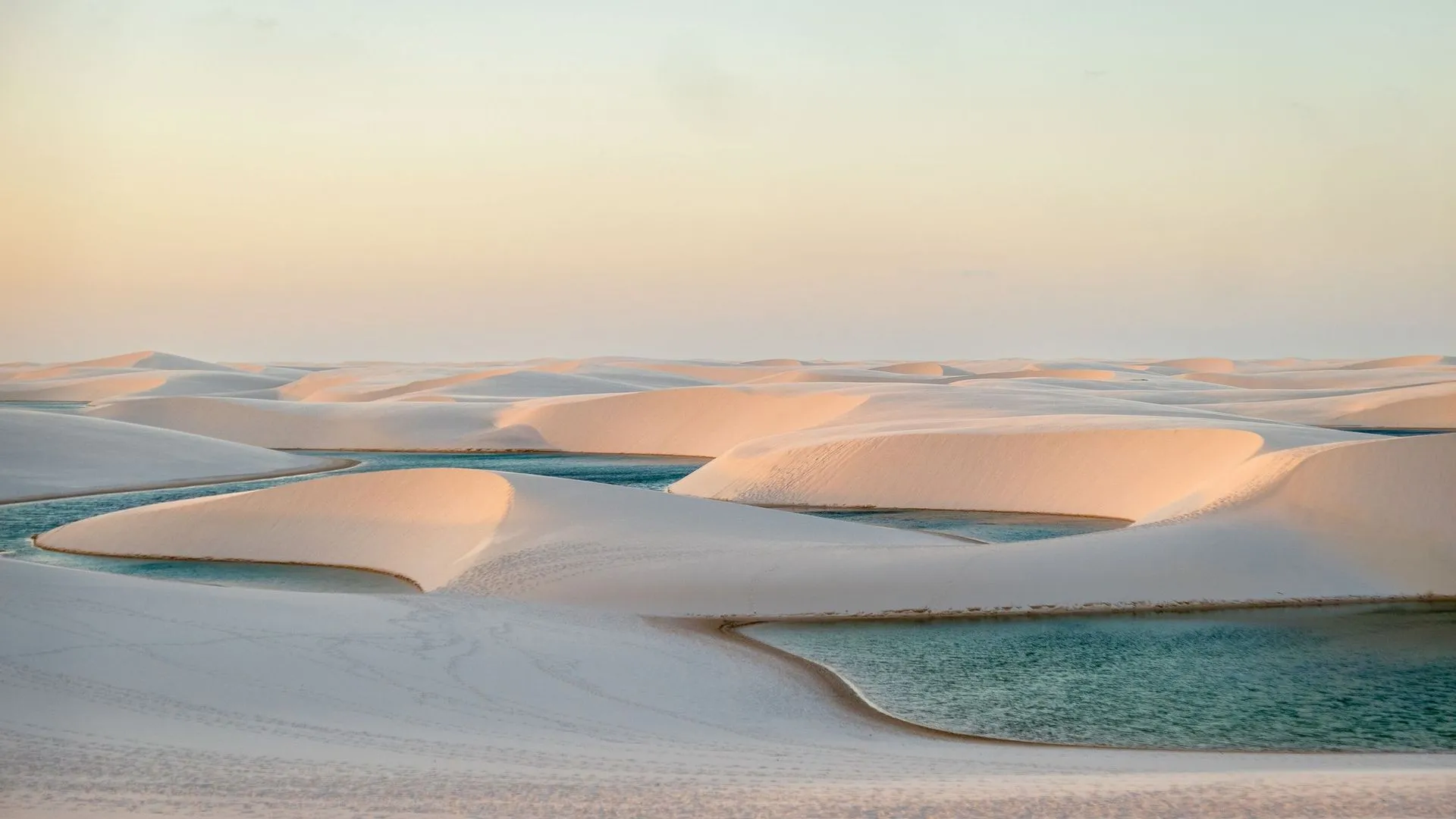
Lençóis Maranhenses National Park
Introduction
Unlike any desert landscape on Earth, Lençóis Maranhenses National Park in Brazil presents a breathtaking natural phenomenon where vast white sand dunes are interspersed with crystal-clear lagoons. This extraordinary destination defies expectations—despite its desert-like appearance, it receives significant rainfall, transforming the dunes into a seasonal paradise of freshwater pools.
Located in northeastern Brazil, Lençóis Maranhenses National Park is one of South America’s most unique and visually stunning природal attractions. The name “Lençóis Maranhenses” translates to “Bedsheets of Maranhão,” inspired by the rolling white dunes that resemble flowing fabric stretching endlessly toward the horizon.
For travelers seeking surreal landscapes, vibrant natural beauty, and a truly unique ecosystem, Lençóis Maranhenses offers an unforgettable experience where desert and water coexist in perfect harmony.
Geography and Environment
Lençóis Maranhenses National Park is located in the state of Maranhão along Brazil’s northeastern coast, near the Atlantic Ocean. The park covers an area of over 1,500 square kilometers, consisting primarily of sweeping sand dunes that can reach heights of up to 40 meters.
Despite its desert-like appearance, the region is not a true desert. Seasonal rainfall fills the valleys between dunes, creating thousands of freshwater lagoons. These lagoons form between June and September, depending on rainfall levels, and gradually evaporate during the dry season.
The park is influenced by nearby ecosystems, including the Atlantic Ocean, which contributes to the region’s climate and moisture patterns.
The unique combination of sand, water, and climate makes Lençóis Maranhenses one of the most unusual landscapes on the planet, often described as a “desert with lagoons.”
Dunes and Seasonal Lagoons
The defining feature of Lençóis Maranhenses is its endless expanse of white sand dunes, sculpted by strong coastal winds. These dunes create a dynamic landscape that constantly shifts and changes over time.
Between the dunes lie the park’s famous lagoons, filled with rainwater that is remarkably clear and often tinted in shades of blue and green. Two of the most popular lagoons are Lagoa Azul and Lagoa Bonita, both known for their stunning beauty and accessibility.
During the peak season, visitors can swim in these lagoons, creating a rare experience of bathing in freshwater pools surrounded by desert-like dunes.
At sunrise and sunset, the landscape becomes even more magical as the light casts soft shadows across the dunes and reflects off the water, creating a dreamlike atmosphere.
Wildlife and Unique Ecosystem
Despite its seemingly harsh conditions, Lençóis Maranhenses supports a surprising variety of life. The lagoons provide temporary habitats for fish, which survive the dry season by laying dormant eggs in the sand until the rains return.
Bird species are also abundant, especially during the wet season when the lagoons attract migratory birds. Reptiles, insects, and small mammals inhabit the surrounding areas and dunes.
The park’s ecosystem is closely linked to nearby mangroves, rivers, and coastal regions, creating a diverse and interconnected природal environment.
This unique ecological system demonstrates how life can adapt to extreme and changing conditions.
Culture and Local Communities
The region surrounding Lençóis Maranhenses is home to small communities that have adapted to the unique environment. These communities rely on fishing, agriculture, and tourism for their livelihoods.
One of the main gateways to the park is Barreirinhas, a lively town where most visitors begin their journey. Another smaller and more remote village is Atins, known for its relaxed atmosphere and proximity to quieter lagoons.
Local guides play an important role in helping visitors explore the park safely while sharing knowledge about the region’s природal and cultural heritage.
The culture of Maranhão reflects a blend of indigenous, African, and Portuguese influences, which can be experienced through local traditions, music, and cuisine.
Adventure and Exploration
Lençóis Maranhenses offers a wide range of adventure activities for travelers. Exploring the dunes and lagoons by 4x4 vehicles is one of the most popular ways to experience the park.
Guided tours often include stops at multiple lagoons, allowing visitors to swim, relax, and enjoy the stunning scenery.
Hiking across the dunes is another unforgettable experience. Walking barefoot on the soft white sand while discovering hidden lagoons creates a strong connection with the landscape.
For those seeking a more immersive experience, multi-day treks between villages offer the opportunity to explore remote areas of the park and experience local culture.
Photography is a major highlight, as the contrast between white sand and blue lagoons creates striking visual compositions.
Sustainability and Conservation
Lençóis Maranhenses National Park is a protected area dedicated to preserving its unique природal environment. Strict regulations are in place to ensure that tourism does not damage the fragile ecosystem.
Visitors are required to explore the park with authorized guides and follow designated routes to minimize environmental impact.
Conservation efforts focus on protecting the dunes, lagoons, and surrounding ecosystems while supporting local communities through sustainable tourism.
These initiatives help maintain the balance between природal preservation and economic development.
Best Time to Visit Lençóis Maranhenses
The best time to visit Lençóis Maranhenses is between June and September, when the lagoons are at their fullest following the rainy season.
During this period, the contrast between the white dunes and blue-green lagoons is at its most spectacular, offering the best conditions for swimming and photography.
The dry season (October to May) sees the lagoons gradually disappear, leaving behind a more traditional desert-like landscape.
Timing your visit is essential to fully experience the park’s unique природal beauty.
Transport and Accessibility
The main access point to Lençóis Maranhenses is the city of São Luís, which is well connected by air to other major cities in Brazil.
From São Luís, travelers can reach Barreirinhas by road, a journey that typically takes around four hours. From there, guided tours transport visitors into the park using specially adapted 4x4 vehicles.
Access to remote areas may require additional travel by boat or on foot, depending on the itinerary.
Despite its remote location, the park is relatively accessible and well-organized for tourism.
Why Visit Lençóis Maranhenses?
Lençóis Maranhenses offers a truly unique travel experience that cannot be found anywhere else in the world. Its combination of desert-like dunes and freshwater lagoons creates a landscape that feels almost surreal.
Visitors can swim in crystal-clear lagoons, explore vast الرمال dunes, and witness one of nature’s most unusual ecosystems.
The park’s beauty, diversity, and seasonal transformation make it one of Brazil’s most extraordinary destinations.
Conclusion
Lençóis Maranhenses National Park stands as one of the most fascinating природal wonders on Earth. Its endless white dunes and seasonal lagoons create a landscape that challenges traditional definitions of a desert.
From the shimmering المياه pools to the rolling sand dunes shaped by wind and time, every part of the park offers a sense of wonder and discovery.
For travelers seeking something truly unique, Lençóis Maranhenses delivers an unforgettable journey into a landscape where sand and water coexist in perfect harmony—a natural masterpiece unlike any other in the world.
00 Comments
No comments yet.
Leave a Comment