

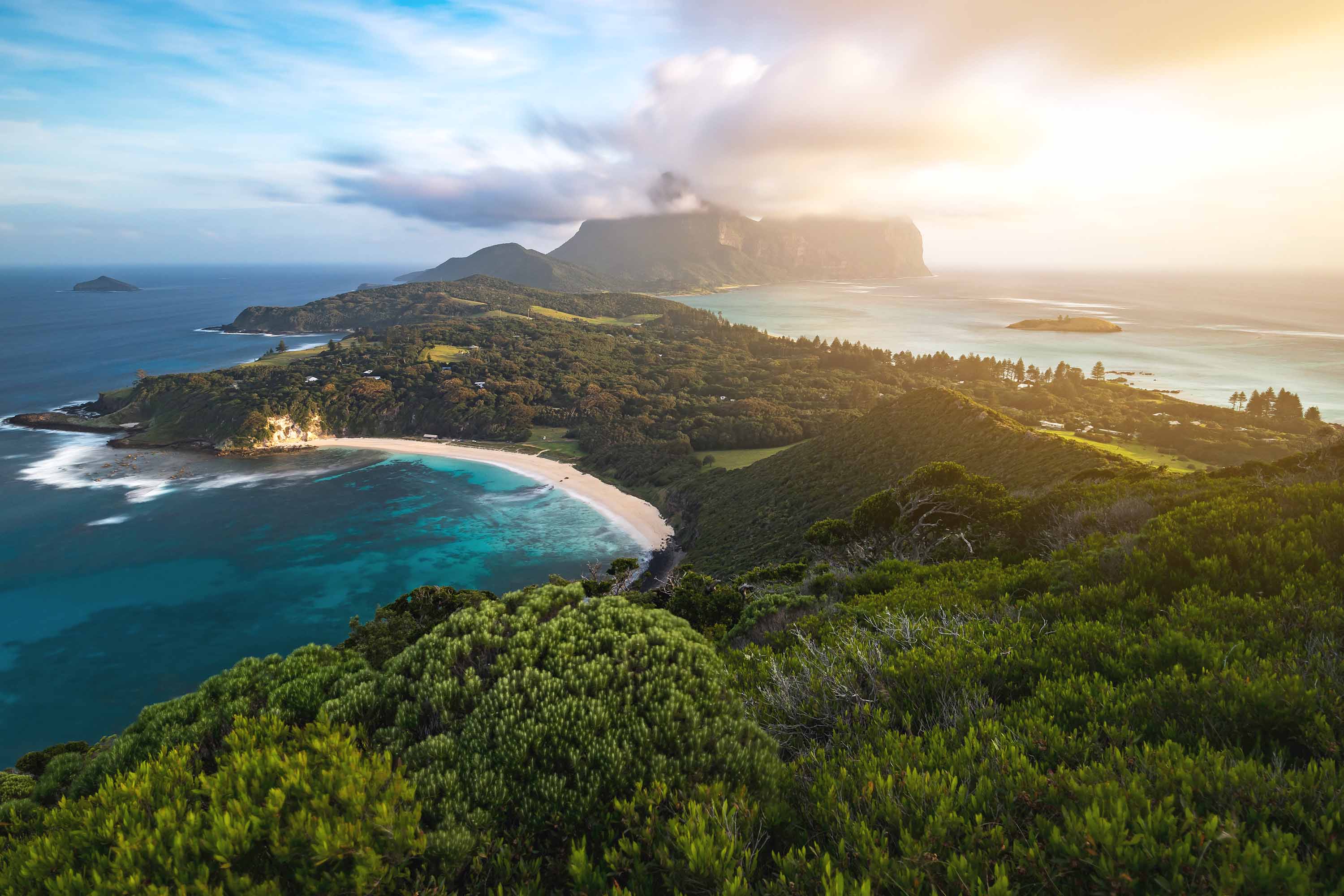
Lord Howe Island
Introduction
Far out in the turquoise waters of the Tasman Sea, between Australia and New Zealand, lies one of the world's most pristine island destinations—Lord Howe Island. Surrounded by crystal-clear lagoons, volcanic mountains, coral reefs, and untouched forests, this tiny island is often described as Australia’s Last Island Paradise.
Recognized as a UNESCO World Heritage Site, Lord Howe Island remains one of Australia's best-kept secrets. Strict visitor limits, outstanding conservation efforts, and breathtaking natural beauty have preserved the island much as it has existed for thousands of years.
Unlike many tropical islands crowded with resorts and large developments, Lord Howe Island offers peace, exclusivity, and an intimate connection with nature. Whether hiking volcanic peaks, snorkeling among vibrant coral reefs, cycling along quiet roads, or watching rare seabirds soar overhead, visitors quickly discover why this remote island is considered one of the most beautiful destinations in the Southern Hemisphere.
For travelers seeking luxury blended with wilderness, Lord Howe Island delivers an unforgettable escape into one of Earth's last truly unspoiled island paradises.
Geography and Environment
Lord Howe Island is located in the Tasman Sea, approximately 600 kilometers east of the Australian mainland.
Administratively part of New South Wales, the island measures just over 11 kilometers in length and is only a few kilometers wide.
The island was formed by volcanic activity around seven million years ago and is the remnant of an ancient shield volcano that once rose dramatically from the ocean floor.
Its landscapes include volcanic mountains, sandy beaches, subtropical forests, freshwater streams, wetlands, and the world's southernmost coral reef ecosystem.
The remarkable diversity of habitats supports numerous endemic plants and animals found nowhere else on Earth.
A UNESCO World Heritage Treasure
Lord Howe Island earned UNESCO World Heritage status because of its exceptional biodiversity, volcanic geology, and outstanding natural beauty.
The island preserves one of the world's finest examples of an isolated oceanic ecosystem.
Scientists consider it an important natural laboratory for studying evolution, island ecology, and conservation biology.
Its unique combination of mountains, forests, coral reefs, and marine environments creates extraordinary ecological richness within a relatively small area.
UNESCO recognition has strengthened conservation efforts while promoting sustainable tourism that protects the island's fragile environment.
Mount Gower – Australia’s Ultimate Island Hike
Dominating the southern end of the island is Mount Gower, a spectacular mountain rising 875 meters above sea level.
Frequently listed among Australia's best day hikes, reaching its summit requires a challenging guided trek through dense forests, steep cliffs, and mist-covered cloud forests.
The journey takes approximately eight hours and rewards hikers with panoramic views stretching across the entire island and surrounding ocean.
Rare plants, moss-covered trees, and nesting seabirds create an atmosphere unlike anywhere else in Australia.
On clear days, the summit offers breathtaking views of turquoise lagoons, coral reefs, and dramatic volcanic peaks.
The World’s Southernmost Coral Reef
One of Lord Howe Island's most remarkable natural features is its coral reef.
The Lord Howe Island Marine Park protects the world's southernmost coral reef ecosystem.
Warm tropical currents meet cooler southern waters here, creating an extraordinary mix of tropical and temperate marine life.
Snorkelers and divers can explore colorful coral gardens filled with hundreds of fish species, sea turtles, rays, and other marine creatures.
The crystal-clear waters often provide visibility exceeding 30 meters, making underwater exploration truly unforgettable.
This rare ecological meeting point distinguishes Lord Howe Island from every other island destination in Australia.
Spectacular Beaches and Crystal-Clear Lagoons
Although small in size, Lord Howe Island boasts numerous stunning beaches.
Ned's Beach is particularly famous for its incredibly clear waters and friendly fish that gather near the shoreline.
Visitors can hand-feed large schools of fish, creating one of Australia's most memorable wildlife experiences.
The island's protected lagoon features calm turquoise waters ideal for swimming, kayaking, paddleboarding, and snorkeling.
White sandy beaches backed by lush vegetation create postcard-perfect scenery throughout the island.
Unlike many popular tropical destinations, these beaches remain peaceful and uncrowded.
Extraordinary Wildlife and Endemic Species
Lord Howe Island supports an exceptional variety of wildlife, much of which exists nowhere else on Earth.
The island is internationally recognized for its birdlife, hosting important breeding colonies of seabirds including the Providence Petrel, which famously lands near visitors without fear.
Other notable species include:
- Lord Howe Woodhen
- Green sea turtles
- Dolphins
- Reef fish
- Rare butterflies
- Numerous endemic plants
One of conservation's greatest success stories occurred here with the rediscovery of the Lord Howe Island Stick Insect, once believed extinct and now the focus of international recovery efforts.
The island's isolation has allowed many species to evolve independently over millions of years.
Adventure and Outdoor Activities
Despite its tranquil atmosphere, Lord Howe Island offers countless outdoor adventures.
Visitors can enjoy:
- Hiking volcanic mountains
- Snorkeling coral reefs
- Scuba diving
- Sea kayaking
- Paddleboarding
- Birdwatching
- Deep-sea fishing
- Cycling scenic roads
- Glass-bottom boat tours
Because motor vehicle traffic is minimal, bicycles are among the most popular ways to explore the island.
The relaxed pace encourages visitors to fully appreciate the surrounding natural beauty.
Outdoor recreation remains central to the island experience.
Marine Life and Underwater Paradise
The surrounding waters are among Australia's richest marine environments.
Divers frequently encounter sea turtles, reef sharks, manta rays, dolphins, and colorful tropical fish.
Seasonal whale migrations also bring Humpback Whale close to the island between May and November.
The combination of volcanic reefs and coral ecosystems creates diverse underwater habitats suitable for both beginner snorkelers and experienced divers.
Marine conservation programs help maintain the exceptional health of these ecosystems.
The island remains one of Australia's premier diving destinations.
Sustainability and Conservation
Lord Howe Island is internationally recognized as a model for sustainable tourism.
Visitor numbers are strictly limited to approximately 400 guests at any given time, helping preserve the island's natural character and minimizing environmental impact.
Comprehensive conservation programs protect forests, coral reefs, wildlife, and invasive species management.
Renewable energy initiatives, responsible waste management, and habitat restoration projects further strengthen environmental protection.
These efforts ensure that Lord Howe Island remains one of the world's best-preserved island ecosystems.
Best Time to Visit Lord Howe Island
Lord Howe Island can be visited throughout the year.
Spring and summer, from September to April, provide warm temperatures ideal for swimming, snorkeling, hiking, and wildlife viewing.
Autumn offers comfortable weather with fewer visitors and excellent diving conditions.
Winter brings cooler temperatures but remains pleasant for hiking, birdwatching, and whale watching.
Because the island enjoys a mild subtropical climate, every season offers unique experiences.
How to Reach Lord Howe Island
Access to Lord Howe Island is carefully managed to protect its fragile environment.
Regular flights operate from Sydney and selected Australian cities.
Upon arrival, visitors discover an island where bicycles often replace cars and walking becomes the preferred mode of transportation.
The absence of heavy traffic contributes significantly to the island's peaceful atmosphere.
Advance booking is recommended because visitor numbers are strictly controlled throughout the year.
Why Visit Lord Howe Island?
Lord Howe Island offers a rare opportunity to experience an island paradise that has remained remarkably untouched. Its volcanic mountains, pristine coral reefs, crystal-clear lagoons, endemic wildlife, and world-class hiking create an experience unlike any other destination in Australia.
Visitors can snorkel among vibrant marine life, climb spectacular peaks, relax on uncrowded beaches, and immerse themselves in one of the world's most carefully protected ecosystems.
For nature lovers, photographers, adventure travelers, and anyone seeking tranquility away from mass tourism, Lord Howe Island is an unforgettable destination.
Conclusion
Lord Howe Island stands as one of Australia's greatest natural treasures and one of the world's finest examples of sustainable island conservation. From the dramatic summit of Mount Gower and the vibrant coral reefs to secluded beaches and rare endemic wildlife, every part of the island showcases extraordinary beauty and ecological significance.
Its limited visitor numbers, exceptional biodiversity, and breathtaking landscapes make it one of the most exclusive and rewarding travel destinations on Earth.
For travelers searching for an authentic island escape where nature remains the true star, Lord Howe Island truly deserves its reputation as Australia’s Last Island Paradise.
00 Comments
No comments yet.
Leave a Comment