

Mostar
Introduction
Nestled in the heart of the Balkans, Mostar is one of Southeast Europe’s most evocative and historically layered cities. Located in southern Bosnia and Herzegovina, this riverside town is globally recognized for its iconic Ottoman-era bridge and its powerful story of resilience. Often described as a place where East meets West, Mostar stands as a symbolic and literal bridge between cultures, religions, and civilizations.
With its cobbled streets, stone houses, turquoise river, and minarets rising alongside church towers, Mostar offers travelers a unique blend of Mediterranean warmth and Balkan heritage. Though it endured significant destruction during the 1990s conflict, the city has since rebuilt not only its physical landmarks but also its cultural identity.
For travelers seeking history, architecture, and meaningful storytelling in a compact yet powerful destination, Mostar delivers an unforgettable experience.
Geography and Environment
Mostar lies along the emerald waters of the Neretva River, surrounded by rugged karst mountains and Mediterranean landscapes. Its location in Herzegovina gives it a warmer and sunnier climate than much of the rest of Bosnia and Herzegovina.
The Neretva River is central to Mostar’s identity. Flowing through the heart of the city, its striking turquoise color contrasts beautifully with the pale stone buildings and arched bridges. Summers are hot and dry, while winters are mild compared to northern Balkan regions.
The surrounding hills provide panoramic views over the city and river valley. The blend of Mediterranean vegetation and mountainous terrain creates a distinctive natural setting that enhances Mostar’s visual appeal.
Landscapes and Heritage
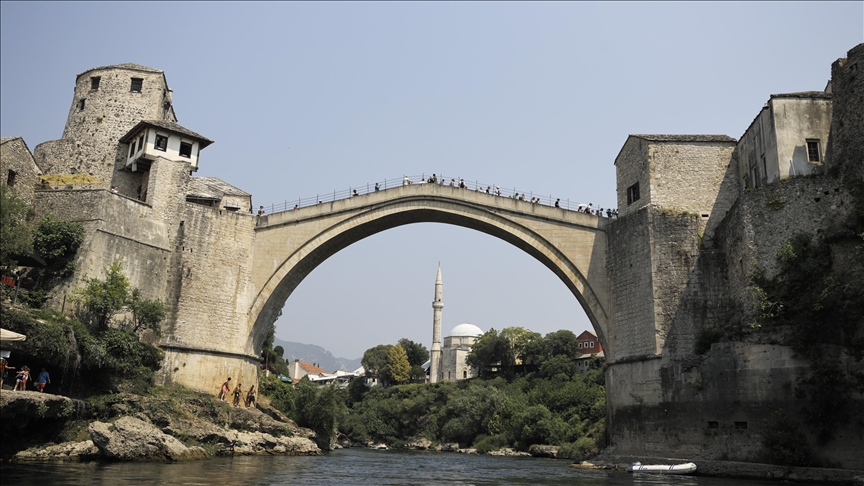
The defining landmark of Mostar is the legendary Stari Most, or “Old Bridge.” Originally built in the 16th century during Ottoman rule, the bridge gracefully arches over the Neretva River and symbolizes unity between diverse communities. Destroyed during the Bosnian War in 1993, it was meticulously reconstructed and reopened in 2004, becoming a UNESCO World Heritage Site.
The historic Old Bazaar, known as Kujundžiluk, stretches along cobbled streets lined with stone shops selling traditional crafts, copperware, and textiles. The Ottoman architectural influence is evident in the city’s mosques, hammams, and courtyard houses.
Among the notable religious landmarks is the Koski Mehmed Pasha Mosque, which offers panoramic views from its minaret. Across the river, Franciscan churches and Austro-Hungarian architecture reflect the region’s complex history.
The juxtaposition of Ottoman, Mediterranean, and Central European influences gives Mostar its distinctive character. Walking through the Old Town feels like traveling across centuries within a few streets.
Cultural Identity and Historical Depth
Mostar’s cultural identity has been shaped by centuries of coexistence among Bosniaks (Bosnian Muslims), Croats (Catholics), and Serbs (Orthodox Christians). Ottoman rule left a lasting architectural and cultural imprint, followed by Austro-Hungarian administration in the late 19th century.
The city’s recent history is marked by the Bosnian War (1992–1995), during which Mostar was heavily damaged and divided along ethnic lines. The destruction of Stari Most became a powerful symbol of cultural fragmentation.
However, Mostar’s reconstruction represents resilience and reconciliation. Today, the restored bridge stands as a symbol of unity, and cultural festivals, art exhibitions, and community initiatives continue to promote dialogue and understanding.
The city’s layered past is visible in its architecture and museums, making Mostar not just a scenic destination but a place of profound historical reflection.
Cuisine of Mostar and Herzegovina
Mostar’s cuisine reflects Ottoman, Mediterranean, and Balkan influences. Traditional dishes include ćevapi (grilled minced meat sausages), burek (savory pastry), and dolma (stuffed vegetables). Grilled meats and fresh bread are staples of local dining.
Herzegovina’s sunny climate supports vineyards and orchards, making regional wines and fresh produce an essential part of the culinary experience. River fish from the Neretva also appear on local menus.
Turkish-style coffee culture remains strong in Mostar. Served in small copper pots with sugar cubes and sweet treats, coffee breaks are an important social ritual.
Dining in riverside restaurants overlooking the Old Bridge enhances the sensory experience, combining flavors with unforgettable views.
Adventure and Outdoor Experiences
While Mostar’s Old Town is compact, adventure seekers can find activities beyond the city center. The Neretva River offers opportunities for rafting and kayaking, particularly in upstream areas where the rapids are stronger.
Cliff diving from Stari Most is a centuries-old tradition. Each summer, skilled local divers leap from the bridge into the cold river below, drawing crowds from around the world. Annual diving competitions celebrate this daring custom.
Nearby natural attractions include the Kravica Waterfalls, a stunning cascade surrounded by lush greenery, and the Blagaj Tekke, a historic dervish monastery built beside a dramatic spring emerging from a cliff.
These excursions complement Mostar’s historical exploration with natural beauty and adventure.
Sustainability and Responsible Tourism
Mostar’s tourism industry continues to grow, and sustainability plays an important role in preserving its fragile heritage. Restoration efforts have focused on authentic materials and traditional craftsmanship to maintain architectural integrity.
Local initiatives encourage support for family-owned businesses, artisans, and restaurants. By purchasing handmade goods and dining at local establishments, visitors contribute directly to the community’s economic resilience.
Respect for cultural sensitivities and historical sites is essential. As a city that experienced recent conflict, Mostar invites travelers to engage thoughtfully with its story and traditions.
Best Time to Visit Mostar
Mostar experiences hot summers and mild winters. The best times to visit are spring (April to June) and autumn (September to October), when temperatures are pleasant and crowds are manageable.
Summer (July and August) offers lively energy and diving competitions but can be extremely hot. Winter is quieter, allowing for a more reflective experience of the city’s historic streets.
Early morning and sunset provide the most magical light for photography, particularly around Stari Most.
Transport and Accessibility
Mostar is accessible by road and rail from Sarajevo and Croatia’s Dalmatian coast. The scenic train journey between Sarajevo and Mostar is considered one of Europe’s most beautiful rail routes, passing through mountains and river valleys.
The city center is compact and walkable, making exploration convenient. Day trips to nearby natural attractions are easily arranged through local tour operators.
International travelers often arrive via Sarajevo or Dubrovnik airports, both within driving distance of Mostar.
Why Visit Mostar?
Mostar offers far more than postcard views. It provides insight into a region shaped by centuries of cultural exchange and recent resilience. Its reconstructed bridge is not just an architectural marvel but a symbol of unity and healing.
Unlike larger European cities, Mostar delivers a deeply personal and immersive experience. Visitors can explore the Old Town in a single day while still feeling connected to its layered history.
The combination of Ottoman charm, Mediterranean climate, Balkan spirit, and meaningful storytelling makes Mostar a powerful destination for culturally curious travelers.
Conclusion
Mostar stands as a testament to the enduring power of connection. From the graceful arch of Stari Most to the bustling bazaars and riverside cafés, the city embodies the meeting of cultures and histories.
Its journey from destruction to restoration has transformed it into a symbol of reconciliation and hope. Today, Mostar welcomes visitors with open arms, inviting them to explore not only its historic streets but also its deeper narrative.
For travelers seeking authenticity, architectural beauty, and cultural depth in Southeast Europe, Mostar truly lives up to its title as the bridge between cultures.
00 Comments
No comments yet.
Leave a Comment