

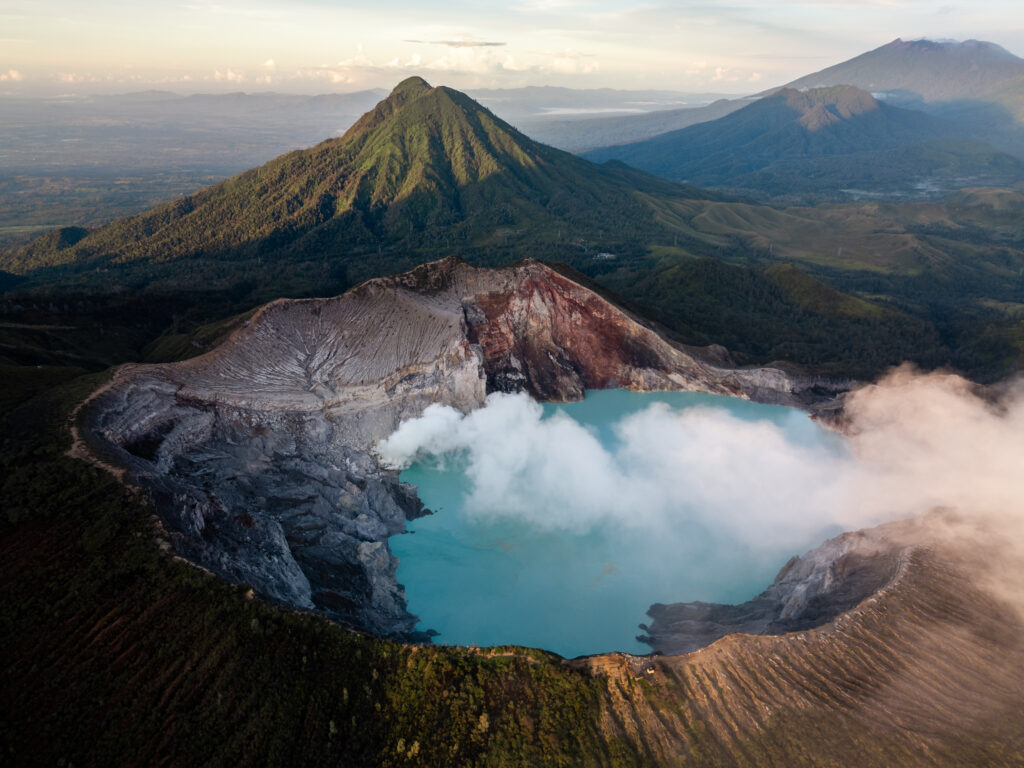
Mount Ijen
Introduction
Rising above the eastern tip of Java, Mount Ijen is one of the world's most extraordinary volcanic destinations. Known as The Blue Fire Volcano, Mount Ijen is famous for its rare electric-blue flames, the world's largest highly acidic crater lake, dramatic volcanic landscapes, and the remarkable sulfur miners who work in one of Earth's most extreme environments.
Unlike ordinary volcanoes, Mount Ijen offers a truly unique natural phenomenon. Before sunrise, glowing blue flames emerge from cracks in the volcano, creating an otherworldly spectacle that attracts photographers, scientists, and adventure travelers from around the globe. This rare "blue fire" is caused by sulfuric gases igniting as they escape through high-temperature volcanic vents, making Mount Ijen one of only a few places on Earth where this phenomenon can be observed.
Standing at 2,799 meters (9,183 feet) above sea level, Mount Ijen is part of the Ijen Geopark, a protected volcanic region that showcases Indonesia's incredible geological diversity. Alongside its famous blue flames, visitors can witness the breathtaking turquoise waters of Kawah Ijen, dense mountain forests, and unforgettable sunrise views over the surrounding volcanoes.
Whether you're an adventure seeker, photographer, geology enthusiast, or traveler looking for one of Indonesia's most unforgettable experiences, this Mount Ijen travel guide explains why the Blue Fire Volcano deserves a place on your bucket list.
Where Is Mount Ijen? Geography and Volcanic Landscape
Mount Ijen is located in East Java, approximately 35 kilometers from the town of Banyuwangi.
The volcano forms part of the larger Ijen volcanic complex, surrounded by tropical forests, coffee plantations, waterfalls, and rugged mountain landscapes.
Its massive crater stretches nearly one kilometer across and contains one of the world's largest acidic crater lakes, whose vivid turquoise color contrasts dramatically against the surrounding volcanic rock.
Steam vents, sulfur deposits, lava formations, and mountain ridges create one of Southeast Asia's most spectacular volcanic environments.
Why Is Mount Ijen Famous?
Mount Ijen is internationally renowned for several extraordinary natural features.
The volcano is famous for:
- Rare blue fire phenomenon
- World's largest acidic crater lake
- Active sulfur mining
- Spectacular sunrise hikes
- Dramatic volcanic landscapes
- UNESCO Global Geopark status
- Night trekking adventures
- Stunning turquoise crater lake
- Unique geological formations
- Adventure tourism
Its combination of rare volcanic activity and breathtaking scenery makes Mount Ijen one of Indonesia's most iconic natural attractions.
History and Geological Significance of Mount Ijen
Mount Ijen is part of Indonesia's Pacific Ring of Fire, one of the most volcanically active regions on Earth.
Over thousands of years, repeated eruptions have shaped the surrounding landscape, forming the enormous crater and its famous acidic lake.
The volcano remains active today, continuously releasing sulfur-rich gases through numerous volcanic vents.
These gases condense into liquid sulfur before igniting upon contact with oxygen, creating the spectacular blue flames visible during darkness.
For generations, local miners have harvested solidified sulfur from the crater, carrying heavy loads up steep volcanic trails in one of the world's most physically demanding occupations.
Mount Ijen remains both an active geological laboratory and an important source of livelihood for nearby communities.
Top Attractions at Mount Ijen
The Blue Fire - A Rare Natural Phenomenon
The main attraction at Mount Ijen is its world-famous blue fire.
Visible only before dawn, glowing electric-blue flames emerge from volcanic vents as sulfuric gases ignite at temperatures exceeding 600°C.
Although often described as "blue lava," the phenomenon is actually burning sulfur gas rather than molten rock.
Watching these mysterious flames dance across the volcanic landscape is one of the most unforgettable experiences in Indonesia.
Kawah Ijen - The Turquoise Crater Lake
At the summit lies Kawah Ijen, the world's largest highly acidic crater lake.
Its brilliant turquoise water creates a striking contrast against dark volcanic cliffs and yellow sulfur deposits.
Despite its beauty, the lake is extremely acidic and should only be admired from designated viewpoints.
The crater is especially breathtaking after sunrise when sunlight illuminates the vivid blue-green water.
Sulfur Mining Operations
Mount Ijen is one of the few places in the world where traditional sulfur mining continues.
Every day, miners descend into the crater to collect solid sulfur before carrying loads weighing up to 80 kilograms back to the crater rim.
Observing their incredible determination offers visitors valuable insight into one of Indonesia's most challenging professions.
Visitors should always respect miners by giving them space along the narrow trail.
Sunrise from the Crater Rim
After witnessing the blue fire, hikers often remain at the crater rim to watch the sunrise.
As daylight spreads across East Java, panoramic views reveal volcanic mountains, forests, and distant coastlines stretching toward Bali.
The changing colors of the crater lake and surrounding cliffs create outstanding photography opportunities.
It is considered one of Indonesia's most rewarding sunrise experiences.
Forest Trails and Wildlife
The approach to Mount Ijen passes through lush montane forests filled with giant ferns, tropical trees, and native wildlife.
The cool mountain climate provides a refreshing contrast to Indonesia's coastal heat.
Nature lovers will appreciate the peaceful environment before reaching the dramatic volcanic landscape.
Wildlife Around Mount Ijen
The forests surrounding Mount Ijen support diverse wildlife.
Visitors may encounter:
- Javan Lutung
- Long-tailed Macaque
- Javan Hawk-Eagle
- Wild deer
- Colorful mountain birds
- Native orchids and tropical plants
The protected forests surrounding the volcano contribute to the region's rich biodiversity.
Best Things to Do at Mount Ijen
Mount Ijen offers unforgettable outdoor experiences.
Popular activities include:
- Night trekking
- Watching the blue fire
- Hiking to the crater rim
- Sunrise photography
- Viewing Kawah Ijen crater lake
- Learning about volcanic geology
- Observing sulfur mining
- Wildlife watching
- Landscape photography
- Exploring nearby coffee plantations
Every visit combines adventure, science, and breathtaking natural beauty.
Local Culture and Traditional Cuisine
The communities surrounding Mount Ijen are known for their warm hospitality and rich Javanese traditions.
Many residents work in coffee farming, agriculture, tourism, and sulfur mining.
Visitors can enjoy local specialties such as Nasi Tempong, grilled freshwater fish, traditional soups, tropical fruits, and freshly grown East Java coffee.
Supporting locally owned guesthouses, restaurants, and certified guides helps strengthen the regional economy while encouraging sustainable tourism.
Sustainable Tourism and Conservation
Mount Ijen is part of the UNESCO-recognized Ijen Geopark, where conservation efforts focus on protecting volcanic ecosystems, forests, wildlife, and local communities.
Visitors are encouraged to remain on designated trails, avoid littering, respect sulfur mining operations, and follow park regulations.
Because volcanic gases can become hazardous, wearing a proper gas mask near the crater is strongly recommended.
Responsible tourism helps preserve one of Indonesia's most extraordinary natural wonders.
Best Time to Visit Mount Ijen (Month-by-Month Guide)
The best time to visit Mount Ijen is during the dry season from April to October.
Clear skies offer the best conditions for viewing the blue fire and photographing the crater lake.
Night temperatures can be surprisingly cold due to the mountain's elevation, so warm clothing is essential.
The rainy season brings slippery trails and reduced visibility but also lush green landscapes.
Most hikers begin their ascent shortly after midnight to reach the crater before dawn.
How to Get to Mount Ijen
Most travelers access Mount Ijen from Banyuwangi or Bondowoso.
Banyuwangi is well connected by train, domestic flights, and ferry services from Bali.
From either town, visitors travel by car to Paltuding, where the hiking trail begins.
The trek to the crater rim generally takes between 1.5 and 2 hours depending on fitness levels.
Essential Travel Tips for Visiting Mount Ijen
A safe and enjoyable hike requires proper preparation.
- Begin your trek around midnight for the best blue fire experience.
- Wear sturdy hiking shoes with good grip.
- Bring warm clothing, as temperatures can drop significantly before sunrise.
- Carry a certified gas mask to protect against volcanic gases.
- Pack a flashlight or headlamp for the night hike.
- Stay on marked trails and follow guide instructions.
- Respect sulfur miners and avoid blocking the narrow pathways.
Preparation ensures a safer and more rewarding adventure.
Why Visit Mount Ijen?
Mount Ijen offers one of the most extraordinary volcanic experiences on Earth. Its rare blue flames, stunning turquoise crater lake, dramatic volcanic scenery, fascinating geology, and unforgettable sunrise views combine to create a destination unlike any other.
Whether you're photographing the glowing sulfur flames, standing beside one of the world's most acidic lakes, or watching the sun rise above East Java's volcanic landscape, every moment at Mount Ijen becomes a memory you'll never forget.
For adventure travelers, photographers, and nature enthusiasts, Mount Ijen is one of Indonesia's most remarkable destinations.
Conclusion
Mount Ijen is far more than an active volcano - it is one of Earth's greatest geological wonders. From its world-famous blue fire and breathtaking crater lake to its resilient sulfur miners and spectacular volcanic landscapes, every aspect of the mountain showcases the incredible power of nature.
Its unique blend of adventure, science, culture, and natural beauty makes it one of Southeast Asia's most unforgettable travel destinations.
For anyone seeking an extraordinary volcanic adventure, Mount Ijen truly lives up to its reputation as The Blue Fire Volcano.
00 Comments
No comments yet.
Leave a Comment