

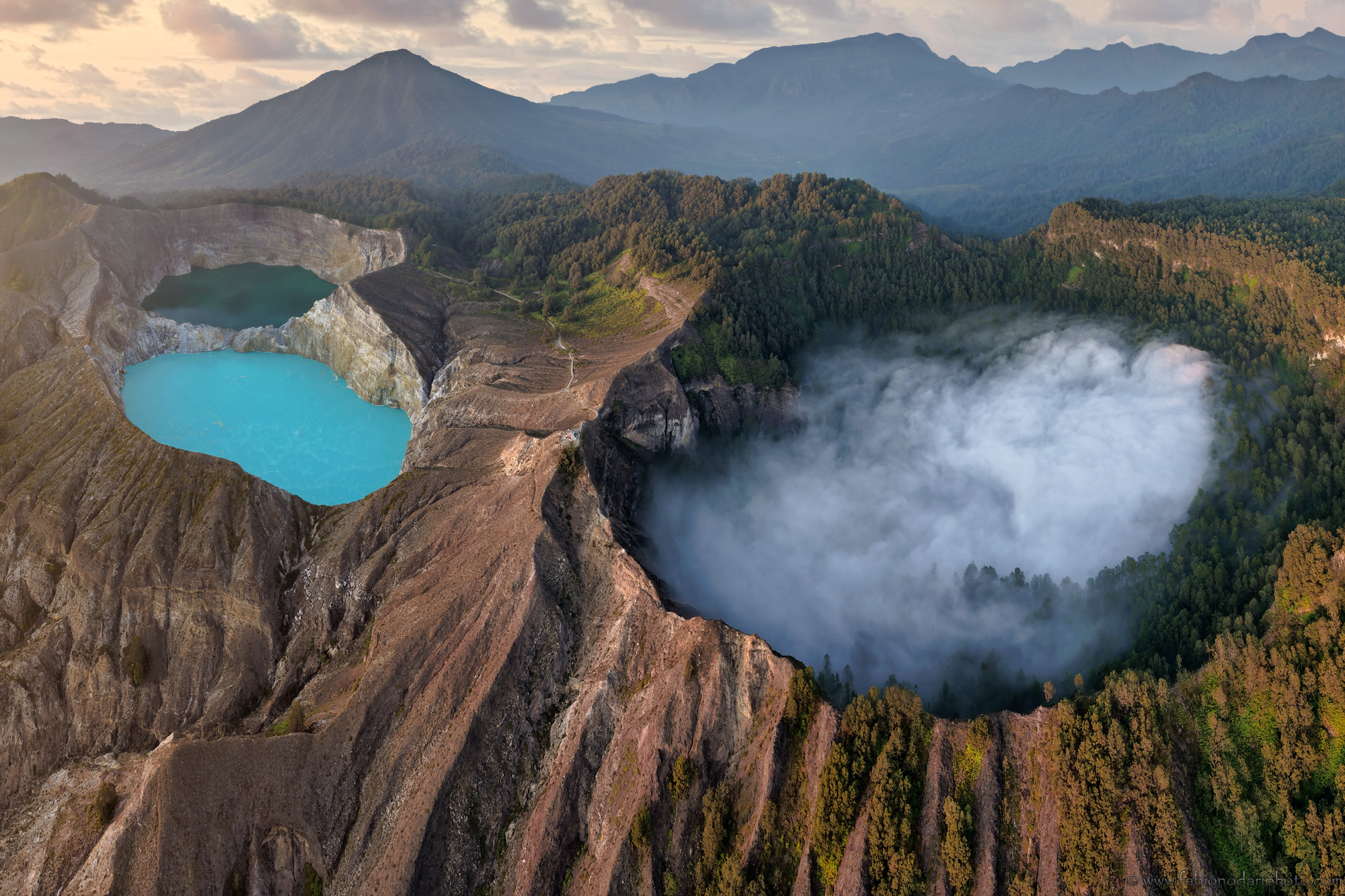
Mount Kelimutu
Introduction
Rising dramatically above the island of Flores in Indonesia, Mount Kelimutu is one of Southeast Asia's most fascinating volcanic landscapes. Famous for its three extraordinary crater lakes, each displaying a different color, this remote destination has earned a reputation as The Volcano of Three Colored Lakes.
Located within Kelimutu National Park, the mountain attracts travelers with its unusual turquoise, green, blue, brown, and sometimes reddish waters. What makes the destination even more remarkable is that the colors can change over time due to volcanic gases, minerals, oxidation, and chemical reactions taking place beneath the lakes.
Unlike ordinary volcanic lakes, the three Kelimutu lakes sit side by side near the summit but often appear in contrasting colors. This extraordinary natural phenomenon, combined with misty mountain scenery, dense tropical forests, traditional Flores culture, and spectacular sunrises, makes Mount Kelimutu one of Indonesia's most unique travel destinations.
For photographers, nature lovers, hikers, and travelers searching for unusual places in Indonesia, Mount Kelimutu offers an unforgettable experience far beyond the country's famous beaches and islands.
This Mount Kelimutu travel guide explores the geography, volcanic science, crater lakes, local culture, wildlife, best things to do, best time to visit, transportation, and essential travel tips for discovering one of Flores' greatest natural wonders.
Where Is Mount Kelimutu? Geography and Volcanic Landscape
Mount Kelimutu is located on Flores Island, part of Indonesia's East Nusa Tenggara province.
The volcano rises to approximately 1,639 meters above sea level and sits within Kelimutu National Park, a protected area established to conserve the region's unique volcanic landscape and biodiversity.
The summit contains three neighboring crater lakes:
- Tiwu Ata Mbupu - Lake of the Ancestors
- Tiwu Nuwa Muri Koo Fai - Lake of Young Men and Maidens
- Tiwu Ata Polo - Lake of Bewitched or Evil Spirits
The three lakes occupy separate volcanic craters, with steep walls dividing them.
Their unusual colors are influenced by dissolved minerals, volcanic gases, and chemical reactions beneath the surface. Because these conditions can change, the appearance of the lakes may also change over the years.
The combination of volcanic craters, tropical forest, mist, and colorful water creates a landscape that looks almost unreal.
Why Is Mount Kelimutu Famous?
Mount Kelimutu is internationally recognized for its three spectacular colored crater lakes.
The volcano is famous for:
- Three differently colored volcanic lakes
- Changing lake colors
- Spectacular sunrise views
- Kelimutu National Park
- Unique volcanic geology
- Traditional Flores beliefs
- Scenic mountain hiking
- Tropical biodiversity
- Dramatic misty landscapes
- One of Indonesia's most unusual natural attractions
The rare combination of three adjacent crater lakes makes Kelimutu one of the most distinctive volcanic destinations in the world.
The Science Behind Kelimutu's Changing Colors
The extraordinary colors of the Kelimutu lakes are not simply caused by ordinary reflections.
The lakes are part of an active volcanic system, and their waters contain different concentrations of minerals and dissolved volcanic gases.
Chemical reactions involving substances such as iron and other minerals can influence the colors observed on the surface.
Changes in volcanic activity, rainfall, water chemistry, and oxidation can cause the lakes to gradually change appearance.
One lake may appear turquoise, another dark green or blue, while another can develop brown, reddish, or almost black tones.
This constantly changing chemistry is one of the reasons Mount Kelimutu remains such a fascinating destination for both travelers and scientists.
The Three Colored Lakes of Kelimutu
Tiwu Ata Mbupu - Lake of the Ancestors
The westernmost crater lake is known as Tiwu Ata Mbupu, often translated as the Lake of the Ancestors.
According to local beliefs, the souls of elderly people who have died are believed to travel to this lake.
Its color has changed over time, making it impossible to guarantee exactly what shade visitors will see on a particular day.
The steep crater walls and surrounding vegetation create an atmospheric setting, especially during the early morning.
Tiwu Nuwa Muri Koo Fai - Lake of Young Men and Maidens
The central lake is known as Tiwu Nuwa Muri Koo Fai, or the Lake of Young Men and Maidens.
It is often associated with the souls of young people who have died.
The lake has frequently displayed striking blue or turquoise shades, although its appearance can change depending on environmental and volcanic conditions.
Its vivid color contrasts beautifully with the dark volcanic walls surrounding it.
Tiwu Ata Polo - Lake of Bewitched Spirits
The eastern lake is known as Tiwu Ata Polo, often translated as the Lake of Bewitched Spirits or Lake of Evil Spirits.
Local traditions associate this lake with people believed to have committed wrongdoing during their lives.
Its waters have displayed deep red, brown, green, and dark tones at different times.
The mysterious appearance of the lake contributes to the powerful legends surrounding Mount Kelimutu.
Local Culture and Traditional Beliefs
Mount Kelimutu holds profound cultural importance for the people of Moni and surrounding Flores communities.
The three lakes are deeply connected to traditional beliefs concerning the journey of human souls after death.
Local people have historically viewed the changing colors of the lakes as meaningful signs rather than simply geological phenomena.
The annual Pati Ka Du'a Bapu Ata Mata ceremony is an important cultural tradition associated with Kelimutu, during which local communities honor their ancestors.
Visitors should approach these traditions with respect and remember that Kelimutu is not simply a scenic tourist attraction - it is also a sacred cultural landscape.
Kelimutu National Park
The mountain and its surrounding forests are protected within Kelimutu National Park.
The park covers a diverse landscape of volcanic peaks, tropical forests, grasslands, and mountain ecosystems.
The protected environment provides habitat for numerous species of birds, mammals, reptiles, and native plants.
Walking through the park offers a different experience from simply visiting the crater viewpoint. The surrounding forests reveal the biodiversity and natural beauty of central Flores.
Wildlife and Natural Environment
Kelimutu National Park supports a variety of wildlife despite its relatively small size.
Visitors may encounter:
- Flores green pigeon
- Flores crow
- Crested serpent eagle
- Various kingfishers
- Tropical songbirds
- Long-tailed macaques
- Civets
- Bats
- Butterflies
- Native reptiles
The park also contains numerous plant species adapted to the mountainous environment.
Early morning is particularly rewarding for birdwatching because the forest becomes active before temperatures rise.
Best Things to Do at Mount Kelimutu
Mount Kelimutu offers more than simply looking at the three crater lakes.
Popular experiences include:
- Watching sunrise above the crater lakes
- Hiking to Kelimutu's viewpoints
- Photographing the changing lake colors
- Exploring Kelimutu National Park
- Birdwatching
- Learning about Flores traditions
- Visiting nearby villages
- Experiencing local ceremonies
- Exploring traditional markets
- Taking a scenic road trip through Flores
The journey through the surrounding countryside is itself part of the experience.
Sunrise at Mount Kelimutu
Watching sunrise is one of the most popular things to do at Mount Kelimutu.
Travelers typically begin the climb before dawn to reach the viewpoint while the sky is still dark.
As the sun rises, the first rays illuminate the crater walls and gradually reveal the mysterious lakes below.
Mist often floats across the surrounding mountains, creating an atmospheric scene that changes from minute to minute.
For photographers, the combination of volcanic craters, colorful lakes, clouds, and golden morning light makes sunrise one of the best times to visit.
Exploring Moni and Flores
The small town of Moni serves as the main gateway to Mount Kelimutu.
The area offers guesthouses, local restaurants, cafés, and guides who can help travelers explore the region.
Visitors can also use Moni as a starting point for discovering traditional villages and the wider Flores landscape.
Flores is known for its distinctive traditional houses, woven textiles, agricultural landscapes, and welcoming communities.
Exploring beyond the volcano allows travelers to experience a more authentic side of Indonesia.
Local Cuisine
Food is an important part of experiencing Flores.
Visitors can enjoy local Indonesian and Flores specialties such as:
- Nasi goreng
- Mie goreng
- Grilled fish
- Chicken dishes
- Fresh vegetables
- Cassava
- Sweet potatoes
- Local coffee
- Traditional snacks
The region around Moni is particularly known for locally grown coffee.
Enjoying a cup of Flores coffee after an early-morning Kelimutu hike is an excellent way to experience the local character of the region.
Sustainable Tourism and Conservation
Kelimutu's volcanic landscape and surrounding forests are fragile ecosystems.
Visitors can help protect the area by:
- Staying on designated trails
- Avoiding littering
- Never entering restricted areas
- Not touching or entering the crater lakes
- Respecting wildlife
- Following national park regulations
- Respecting sacred cultural sites
- Supporting local guides and accommodation providers
The crater lakes are chemically unusual and potentially hazardous, so visitors should never attempt to swim in them.
Responsible tourism helps preserve Kelimutu for future generations while providing economic benefits to surrounding communities.
Best Time to Visit Mount Kelimutu
The best period for visiting Mount Kelimutu is generally during the dry season, from April to October.
April to June
The landscape becomes increasingly suitable for hiking, with relatively favorable weather and lush vegetation remaining from the wetter months.
July to August
These are popular months for visiting Flores, with clearer skies often providing excellent sunrise and photography conditions.
September to October
The weather can remain favorable while visitor numbers may begin to decline.
November to March
The wet season can bring heavier rainfall, clouds, and slippery hiking conditions. However, the landscape can become beautifully green during this period.
For the best chance of clear sunrise views, early morning visits during the drier months are generally recommended.
How to Get to Mount Kelimutu
The most common route begins with a flight to Ende or Maumere on Flores Island.
From Ende, travelers can continue by road toward Moni, the principal gateway to Kelimutu National Park.
From Moni, the summit area is reached by road followed by a relatively short walk to the viewpoints.
Many visitors include Kelimutu as part of a larger Flores itinerary that may include traditional villages, waterfalls, beaches, and other volcanic landscapes.
Road journeys through Flores can take time, so allowing extra days provides a more relaxed experience.
Essential Travel Tips for Visiting Mount Kelimutu
A little preparation can make your visit much more enjoyable.
- Start early for the best sunrise experience.
- Bring a warm jacket because summit temperatures can be cool.
- Wear comfortable walking shoes.
- Carry drinking water.
- Bring a camera and extra batteries.
- Check weather conditions before hiking.
- Stay behind safety barriers.
- Never approach or enter the crater lakes.
- Respect local traditions and sacred areas.
- Consider hiring a local guide.
Morning conditions can be chilly and misty, so carrying an extra layer is particularly useful.
Why Visit Mount Kelimutu?
Mount Kelimutu offers a travel experience that combines geology, culture, adventure, and natural beauty.
Few places in the world allow visitors to stand above three volcanic lakes that can display completely different colors while learning about ancient beliefs surrounding the souls of the dead.
The experience becomes even more memorable when combined with a journey through Flores, where traditional villages, dramatic mountains, tropical forests, and local communities reveal a side of Indonesia far removed from the country's famous resort destinations.
For photographers and nature lovers, the changing colors of the lakes provide endless inspiration. For adventurous travelers, the journey to Kelimutu offers an opportunity to discover one of Indonesia's most unusual volcanic landscapes.
Conclusion
Mount Kelimutu is far more than a volcanic mountain - it is a place where geology, culture, mythology, and extraordinary natural beauty come together.
Its three crater lakes, each with its own character and changing colors, create one of Indonesia's most unforgettable landscapes. Combined with the mist-covered mountains, tropical forests, traditional Flores culture, and spectacular sunrise views, Kelimutu offers an experience unlike almost anywhere else in Southeast Asia.
Whether you're watching the first light spread across the crater lakes, hiking through Kelimutu National Park, discovering local traditions, or exploring the beautiful island of Flores, Mount Kelimutu leaves a lasting impression.
For travelers searching for unique natural wonders and off-the-beaten-path destinations in Indonesia, Mount Kelimutu truly lives up to its reputation as the Volcano of Three Colored Lakes.
00 Comments
No comments yet.
Leave a Comment