

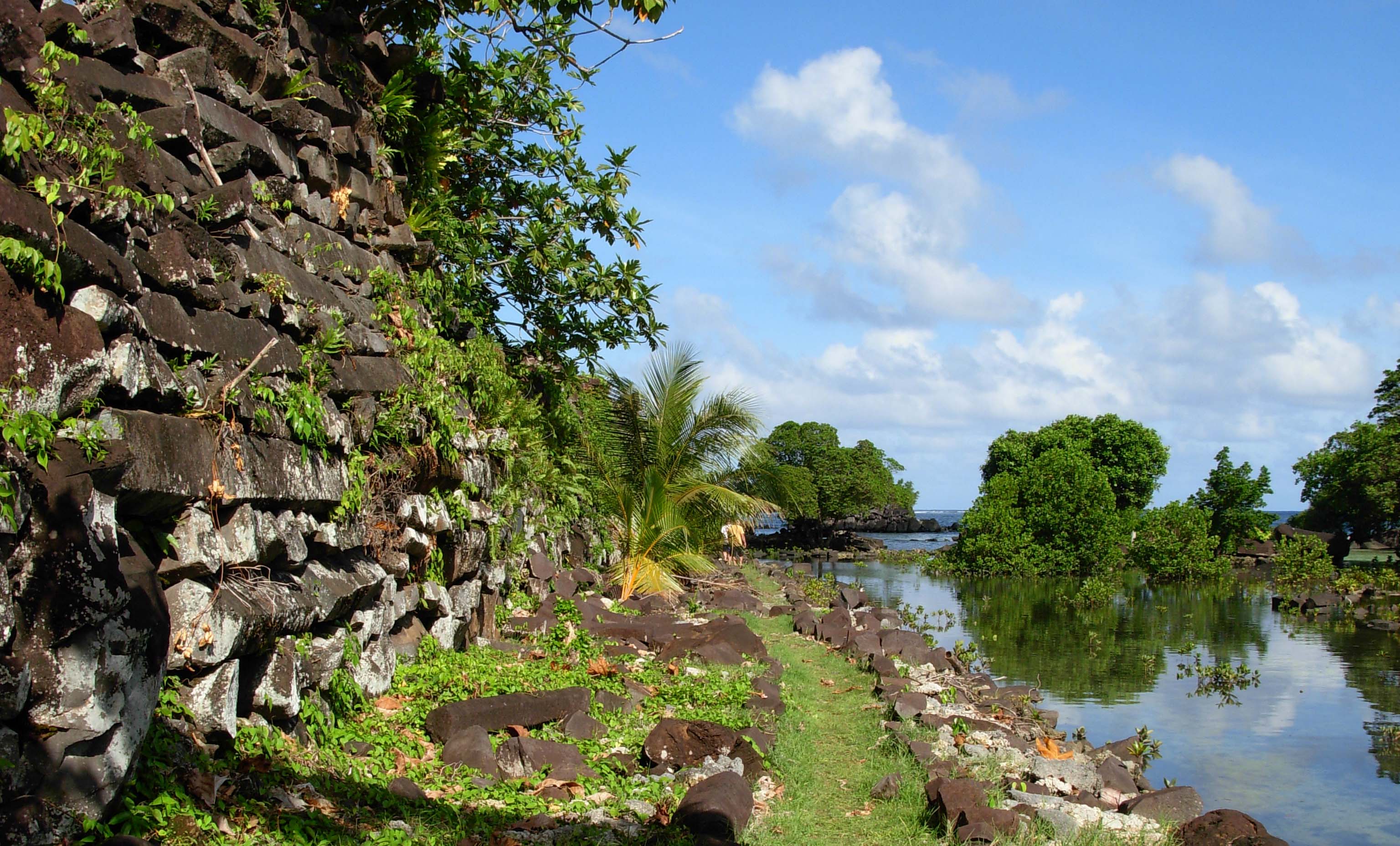
Nan Madol
One of the most mysterious archaeological sites on earth is the ancient stone city of Nan Madol, which is situated off the coast of the Micronesian island of Pohnpei. This historic city, which consists of a collection of islets connected by a system of canals and stone walls, was created more than a thousand years ago by the Saudeleur dynasty, who was in charge of the Pohnpei island at the time.
Nan Madol is still a mystery despite its importance to culture and history. Archaeologists and researchers have been trying to learn more about Nan Madol recently. This article will cover all about Nan Madol including its history, features, and how to reach there.
Nan Madol, Micronesia: Overview
A group of ruins known as Nan Madol is made up of about 100 man-made islands constructed from pillars and boulders of basalt. A system of canals that were originally utilized for transportation and fishing connects the islets.
An area of around 75 acres is occupied by the ruins of Nan Madol, which are encircled by a coral reef. The city, which served as the political and religious hub of the Saudeleur dynasty, is thought to have been constructed between the eighth and thirteenth centuries.
Being one of the most fascinating and mysterious historical destinations in the world, the city was destroyed in the 17th century.
The History of Nan Madol
The Saudeleur dynasty, who ruled over the island of Pohnpei from the 12th to the 17th century, constructed Nan Madol. The city was built on a number of man-made islands that were created using basalt boulders that were brought in from a local quarry. The city's building was a remarkable feat of engineering, and it is still unknown where the technology and methods employed to build it came from.
Thought to have been a hub of political and religious authority, the city's purpose is likewise not entirely clear. The Saudeleur dynasty was structured around a hierarchy of hereditary chiefs, and its kings were revered as deities. The dynasty's emperors' remains were kept in the city's burial complexes, which were also thought to be places of ancestor worship.
Features of Nan Modal in Micronesia
With many characteristics that set it apart from other ancient cities, Nan Madol is a singular and breathtaking place. More than 90 man-made islands make up the metropolis, which is connected by a system of canals and waterways. Huge stones that weighed up to 50 tons were used to create the city, and they were moved over great distances without the aid of wheels or draft animals.
The main complex sometimes referred to as Nan Douwas, is one of Nan Madol's most spectacular buildings. A central platform sits at the center of this structure, which is encircled by a network of smaller platforms that are linked by canals. The central platform is thought to have served as a location for the royal wedding of new chiefs in addition to having served a religious purpose.
The so-called "light windows" that are scattered throughout Nan Madol are another distinctive aspect of the city. These are tiny cracks in the stone walls, through which light seeps, casting a shadowy, unearthly ambiance.
Visit to Nan Madol, Micronesia
A little amount of planning and preparation is necessary for the amazing experience of visiting Nan Madol. Access to the site is restricted because it is on a far-off island in the Pacific. It is necessary to fly to Pohnpei, the largest island in the Federated States of Micronesia, as the initial step in organizing a trip to Nan Madol. From there, travelers must take a boat to Nan Madol's location on the island of Temwen.
As the ruins are dispersed over a vast region and are not easily accessible, visitors should be ready for some hiking and climbing. The view of the ancient stone buildings emerging from the lake is really breathtaking, so the effort is more than worthwhile.
Taking a tour with a guide is among the greatest ways to visit Nan Madol. There are local guides available who can explain the site's heritage and culture in addition to the continuing preservation work. The city's bright windows and beautiful carvings on the stone walls are a couple of the more eye-catching aspects that the guides may point out.
Visitors to Nan Madol can enjoy the surrounding natural splendor in addition to seeing the ruins. Temwen Island is a beautiful, tropical paradise with immaculate beaches, sparkling waterways, and a wide variety of wildlife. To explore the aquatic environment near Nan Madol, visitors can go snorkeling or scuba diving, or they can just laze on the beach and enjoy the sunshine.
Preservation work at Nan Madol
Despite being listed as a UNESCO World Heritage Site, Nan Madol is still struggling to be preserved. The site lacks the infrastructure required to support tourism and is situated in an inhospitable and secluded area. The stability of the ruins is also in danger because of the increasing sea levels and intensity of tropical storm activity caused by climate change.
The Micronesian government has started a number of projects to conserve and maintain the property in order to deal with these issues. To reconcile the needs for preservation and economic development, these projects include the creation of a tourist center and the creation of eco-tourism activities. The government is also developing a strategy to safeguard the location against the consequences of climate change in collaboration with international organizations.
Conclusion
A visit to Nan Madol is a one-of-a-kind and fascinating experience that provides a window into the Saudeleur dynasty's engineering brilliance and old culture. Although the site's construction and intended use are still unknown, its distinctive characteristics and breathtaking beauty continue to draw tourists from all over the world. Even though Nan Madol's preservation faces many difficulties, there is still optimism that this ancient city of stone will amaze and inspire future generations thanks to ongoing protection efforts.

00 Comments
No comments yet.
Leave a Comment