

Orkney
Introduction
Far beyond Scotland's rugged mainland, where the North Sea meets the Atlantic Ocean, lies an archipelago that preserves one of Europe's greatest archaeological treasures - Orkney. Often called Scotland's Ancient Island Civilization, Orkney is a remarkable destination where prehistoric villages, mysterious stone circles, Viking heritage, dramatic coastal cliffs, and thriving wildlife coexist in one unforgettable landscape.
Unlike many historic destinations that have been heavily modernized, Orkney remains deeply connected to its ancient past. More than 5,000 years ago, long before Stonehenge or the Egyptian pyramids were built, thriving Neolithic communities established sophisticated settlements across these islands. Today, visitors can walk through remarkably preserved stone villages, stand among ceremonial stone circles, and explore burial chambers that have survived for millennia.
Beyond its archaeological significance, Orkney captivates travelers with spectacular sea cliffs, pristine beaches, abundant seabird colonies, traditional fishing villages, and a rich Norse legacy that still shapes local culture. Whether you're passionate about history, photography, wildlife, hiking, or discovering hidden destinations, Orkney offers one of the most rewarding travel experiences in the United Kingdom.
If you're searching for an unforgettable Orkney travel guide, this ancient Scottish archipelago deserves a place at the very top of your bucket list.
Where Is Orkney? Geography and Island Landscape
Orkney is an archipelago located approximately 16 kilometers north of mainland Scotland, separated by the turbulent waters of the Pentland Firth.
The islands consist of around 70 islands, of which about 20 are permanently inhabited. The largest island, known simply as Mainland, serves as the cultural and historical heart of Orkney.
Unlike Scotland's mountainous Highlands, Orkney features gently rolling green hills, fertile farmland, rugged coastlines, towering sandstone cliffs, sea caves, natural arches, and pristine sandy beaches.
The surrounding Atlantic Ocean and North Sea constantly shape the islands, creating breathtaking coastal scenery and rich marine ecosystems that attract wildlife from across northern Europe.
Its unique combination of fertile landscapes and dramatic seascapes makes Orkney one of Scotland's most picturesque island destinations.
Why Is Orkney Famous?
Orkney is internationally renowned as one of Europe's most important archaeological landscapes.
Its greatest distinction is the UNESCO-listed Heart of Neolithic Orkney, a collection of prehistoric monuments considered among the finest anywhere in the world.
The islands are famous for:
- Exceptionally preserved Neolithic settlements
- Ancient stone circles older than Stonehenge
- Viking heritage and Norse history
- Spectacular sea cliffs and coastal scenery
- Diverse seabird colonies
- Historic cathedrals
- Shipwreck diving in Scapa Flow
- Traditional Scottish island culture
Together, these attractions make Orkney one of the most unique travel destinations in Europe.
History of Orkney - From Neolithic Civilization to Viking Rule
Human settlement in Orkney dates back more than 8,500 years, making it one of Britain's oldest continuously inhabited regions.
During the Neolithic period, farming communities flourished across the islands, constructing impressive stone houses, ceremonial monuments, burial chambers, and temples.
Unlike many prehistoric sites elsewhere in Europe, Orkney's stone architecture has survived remarkably well due to the scarcity of timber and the durability of local sandstone.
Around the 8th century, Viking settlers arrived from Norway, transforming the islands into an important Norse kingdom.
For centuries, Orkney remained under Norwegian rule before becoming part of Scotland in 1472.
This remarkable blend of prehistoric, Norse, and Scottish heritage gives Orkney a cultural richness found in very few destinations worldwide.
Top Attractions in Orkney
Skara Brae - Europe's Best-Preserved Neolithic Village
The crown jewel of Orkney is Skara Brae, one of the world's best-preserved Stone Age settlements.
Dating back over 5,000 years, this remarkably intact village predates both Stonehenge and the Great Pyramids of Giza.
Visitors can explore interconnected stone houses complete with fireplaces, stone beds, shelves, and drainage systems that demonstrate an astonishing level of prehistoric engineering.
The village remained buried beneath sand dunes for thousands of years before being rediscovered after a storm in 1850.
Today, Skara Brae offers one of the most fascinating glimpses into daily life during Europe's Neolithic Age.
Ring of Brodgar - Scotland's Ancient Stone Circle
Standing majestically between two lochs is the magnificent Ring of Brodgar.
Originally consisting of approximately 60 standing stones arranged in a perfect circle, it remains one of Britain's largest ceremonial monuments.
Although its exact purpose remains unknown, archaeologists believe it served religious, astronomical, or ceremonial functions more than 4,500 years ago.
Walking among these towering stones creates one of Scotland's most atmospheric historical experiences.
Maeshowe - The Mysterious Burial Chamber
Another remarkable UNESCO site is Maeshowe, a massive chambered tomb built around 2800 BC.
The monument is perfectly aligned so that the setting sun illuminates its inner chamber during the winter solstice.
Centuries later, Viking explorers entered the tomb and carved runic inscriptions into its walls, leaving behind one of Europe's largest collections of Viking graffiti.
This extraordinary combination of Neolithic engineering and Norse history makes Maeshowe one of Orkney's most intriguing attractions.
St Magnus Cathedral - The Viking Cathedral
Located in Kirkwall, St Magnus Cathedral is widely regarded as Scotland's finest medieval cathedral.
Constructed from distinctive red and yellow sandstone during the 12th century, it reflects Orkney's strong Viking heritage.
Its impressive Romanesque architecture dominates Kirkwall and continues to serve as the cultural heart of the islands.
Old Man of Hoy - Orkney's Natural Icon
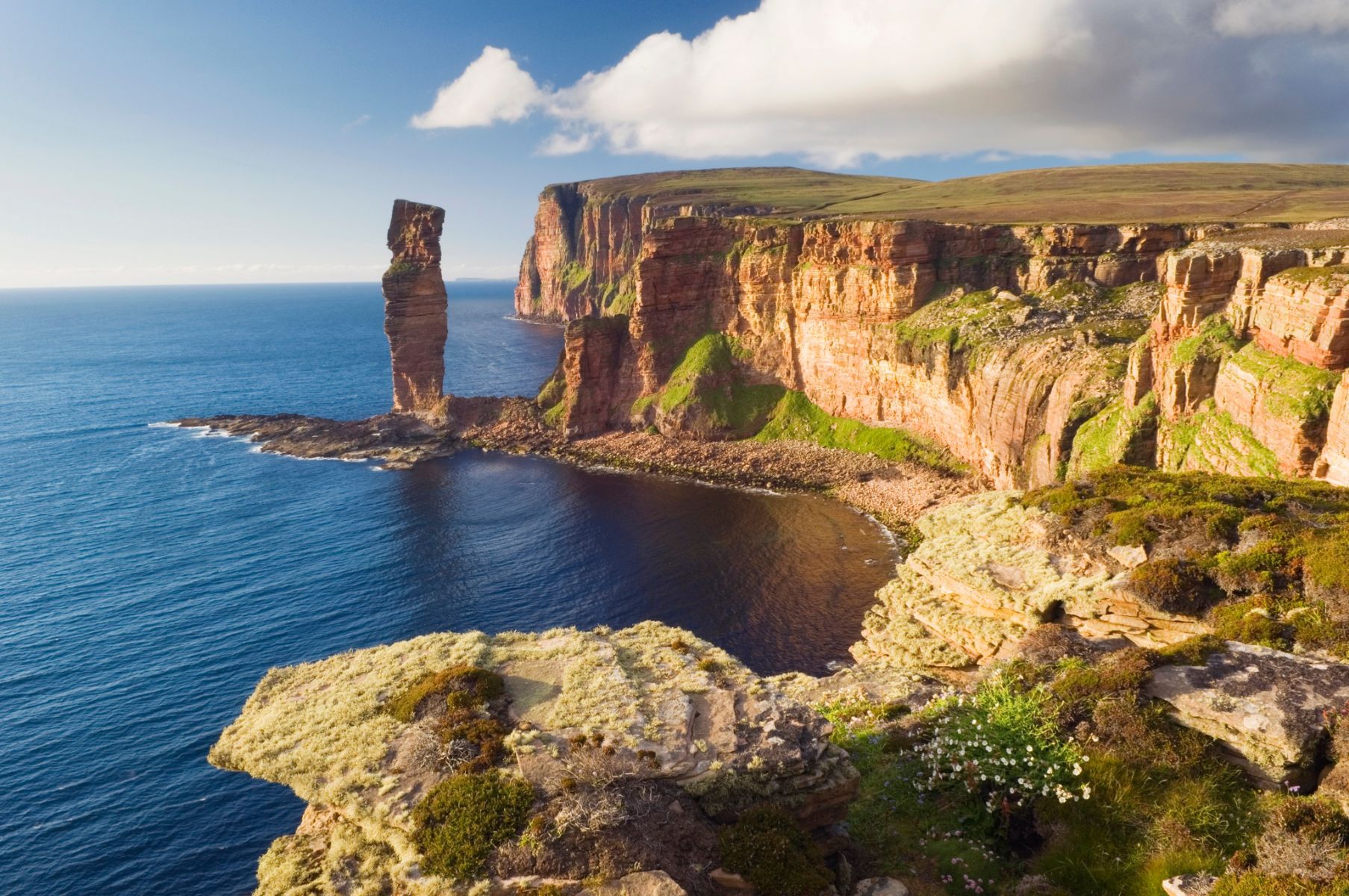
Nature lovers should not miss the spectacular Old Man of Hoy.
This towering sandstone sea stack rises dramatically from the Atlantic Ocean and has become one of Scotland's most recognizable coastal landmarks.
Reaching viewpoints overlooking the sea stack involves scenic hikes across rugged cliffs with panoramic ocean views.
Wildlife in Orkney - Puffins, Seals, Whales and Rare Birds
Orkney's coastal habitats support an incredible diversity of wildlife.
The islands are among Britain's finest destinations for birdwatching, particularly during spring and summer.
Visitors commonly encounter:
- Atlantic Puffin>
- Northern Gannet
- Common Guillemot
- Grey Seal
- Harbour Seal
The surrounding seas also host dolphins, porpoises, orcas, minke whales, and humpback whales during seasonal migrations.
The dramatic sea cliffs provide nesting grounds for hundreds of thousands of seabirds, creating one of Europe's most spectacular wildlife spectacles.
Best Things to Do in Orkney
A visit to Orkney offers far more than archaeological exploration.
Popular activities include:
- Exploring UNESCO World Heritage Sites
- Hiking dramatic coastal cliffs
- Visiting traditional fishing villages
- Wildlife watching
- Puffin photography
- Sea kayaking
- Cycling quiet country roads
- Visiting whisky distilleries
- Exploring Scapa Flow's famous shipwrecks
- Watching spectacular northern sunsets
Whether you're an adventurer or history enthusiast, Orkney offers experiences for every type of traveler.
Local Food and Orcadian Culture
Orkney's fertile farmland and surrounding seas provide exceptional local produce.
Fresh seafood, including scallops, crab, lobster, salmon, and mussels, forms the foundation of Orcadian cuisine.
Locally raised beef, lamb, artisan cheeses, oatcakes, and traditional baked goods are equally celebrated.
The islands are also home to world-famous whisky producers, including Highland Park Distillery, whose award-winning single malts reflect centuries of craftsmanship.
Traditional music festivals, storytelling events, and community celebrations showcase Orkney's enduring cultural identity.
Sustainable Tourism in Orkney
Protecting Orkney's fragile archaeological sites and natural landscapes remains a top priority.
UNESCO recognition has helped fund preservation projects that safeguard prehistoric monuments from erosion and environmental damage.
Wildlife reserves protect important breeding colonies, while sustainable tourism encourages responsible travel that benefits local communities.
Visitors are encouraged to stay on marked trails, respect historical sites, and support locally owned businesses.
These conservation efforts ensure that Orkney's remarkable heritage continues to inspire future generations.
Best Time to Visit Orkney (Month-by-Month Guide)
The ideal time to visit Orkney is between May and September.
Summer offers long daylight hours—sometimes extending to nearly 18 hours—making it perfect for sightseeing, hiking, wildlife watching, and photography.
Spring brings colorful wildflowers and puffin colonies, while autumn offers peaceful landscapes and fewer tourists.
Winter provides dramatic stormy coastlines, atmospheric scenery, and occasional opportunities to witness the Northern Lights under dark skies.
Each season offers a different perspective on Orkney's timeless beauty.
How to Get to Orkney from Mainland Scotland
Travelers can reach Orkney via ferry or domestic flights from mainland Scotland.
Regular ferry services connect the islands with northern Scottish ports, while flights operate from cities including Aberdeen, Inverness, and Edinburgh.
Kirkwall serves as the main transportation hub and offers accommodations, restaurants, museums, and guided tours throughout the archipelago.
Renting a car or bicycle provides the greatest flexibility for exploring Orkney's many archaeological and natural attractions.
Why Visit Orkney?
Orkney is unlike anywhere else in Scotland. It combines prehistoric monuments older than the pyramids, Viking heritage, dramatic coastal scenery, abundant wildlife, and warm island hospitality into one unforgettable destination.
Whether you're wandering through the ancient homes of Skara Brae, standing among the mysterious stones of Brodgar, watching puffins soar above towering sea cliffs, or discovering centuries of Norse history, every moment in Orkney feels like a journey through time.
For travelers seeking hidden gems, world-class archaeology, breathtaking landscapes, and authentic Scottish culture, Orkney deserves a place on every European travel itinerary.
Conclusion
Orkney is far more than a remote Scottish island chain—it is one of Europe's greatest living museums. From the prehistoric wonders of Skara Brae and the Ring of Brodgar to the Viking legacy of St Magnus Cathedral and the breathtaking cliffs of the Old Man of Hoy, the islands offer an extraordinary blend of history, culture, and natural beauty.
Its UNESCO-listed monuments, thriving wildlife, spectacular coastlines, and welcoming communities make it one of the most rewarding destinations in the United Kingdom.
For anyone searching for an unforgettable journey into Europe's ancient past, Orkney truly lives up to its reputation as Scotland's Ancient Island Civilization.
00 Comments
No comments yet.
Leave a Comment