

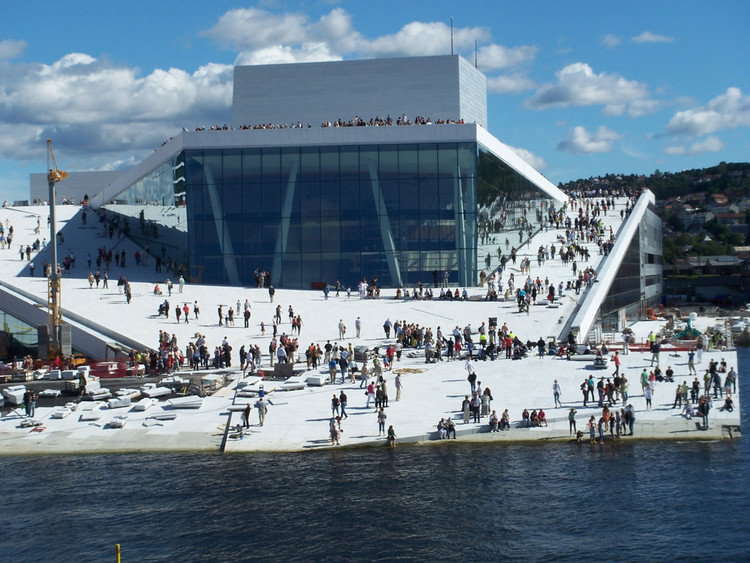
Oslo Opera House
The Oslo Opera House is a stunning work of art in the world. It is a world-renowned building that has become an icon for Oslo city and Norway. The Oslo Opera House was designed by Norwegian architect, Snohetta and completed in 2007. It is on the waterfront of Oslo, with a beautiful view of the city and the harbor.
The building has a main house and a small studio theatre. The lower foyer contains the box office, restaurant, café, bar, and toilets. The Opera House is built with white marble from Carrara, Italy, and has a granite base. The roof comprises glass panels that allow natural light to enter the building.
Continue reading to get more information about the Oslo Opera House, the stunning tourist attraction in Norway.
History of the Opera House
In 2007, Norwegian architect, Snohetta designed the Oslo Opera House. It is located on the waterfront in the city center of Oslo and is one of the most iconic buildings in Norway. The building has two parts: the main auditorium with 1,364 seats and a smaller studio theatre with 400 seats.
The roof resembles an iceberg floating in the sea, and the exterior walls are made from white marble. The opera house's interior features wooden floors, ceilings, and sweeping views of Oslo harbor.
The Opera House has played host to numerous operas, ballets, concerts, and plays since its opening. It is also a popular tourist destination, with over 1 million visitors yearly.
The Architecture of the Opera House
The Oslo Opera House is one of Norway's most stunning works of architecture. The building is situated on the waterfront in the capital city of Oslo and has two horizontal slabs that intersect at an angle. The exterior of the building is of white marble, which gives it a sleek and modern appearance.
The opera house has three main performance halls, a restaurant, and a bar. The Main Hall can seat up to 1,364 people, and most operas and ballets are performed here. The smaller Private Hall has a more intimate setting and hosts concerts, recitals, and other events. The Studio Hall is for experimental productions and rehearsals.
The windows around the lobby are 16 meters (52 feet) tall with little framing and are made of unique glass that provides the best possible views. Thin angled columns minimize the view obstruction and support the roof.
Interior surfaces are covered with Oak to add warmth to rooms in contrast to the white exterior's coolness. A horseshoe-shaped oval chandelier with 5,800 handcrafted crystals lights up the main auditorium. Audience members can follow opera libretti in addition to their native language by using monitors built into their seats for the electronic libretto system.
Oslo Opera House in Norway is worth a visit if you are architecture lover.
Visiting Oslo Opera House
The Oslo Opera House is one of Norway's most striking pieces of architecture. Its white, angular exterior is reminiscent of a snow-capped mountain, and its location on the waterfront gives it an even more dramatic effect.
The Opera House's interior is just as stunning as its appearance. The main auditorium has seating for over 1,364 people and features beautiful wood paneling and acoustic design. The stage itself is one of the largest in Europe and can accommodate productions of all sizes. The exterior of the Opera House is made up of white marble and glass, giving it a modern and sleek look.
In addition to the main auditorium, the Opera House also features two smaller theaters, a rehearsal stage, and several other public spaces. There is the Studio Theater for experimental theater productions. This space is more flexible than the other two halls and can be used for different performances.
The building is open to the public year-round and offers guided tours, concerts, and other events. No matter what you are interested in seeing, the Oslo Opera House has something for everyone. So if you are looking for an unforgettable experience while in Norway, be sure to add the Opera House to your list of places to visit.
Conclusion
Oslo Opera House is a must-see for anyone visiting Norway. The building is not only beautiful, but it is also a working opera house that puts on some of the best shows in the country. If you are lucky enough to catch a performance during your visit, you will be dazzled by the talent on display. Even if you do not get to see a show, the Oslo Opera House is still worth a visit for its stunning architecture and breathtaking setting.

00 Comments
No comments yet.
Leave a Comment