

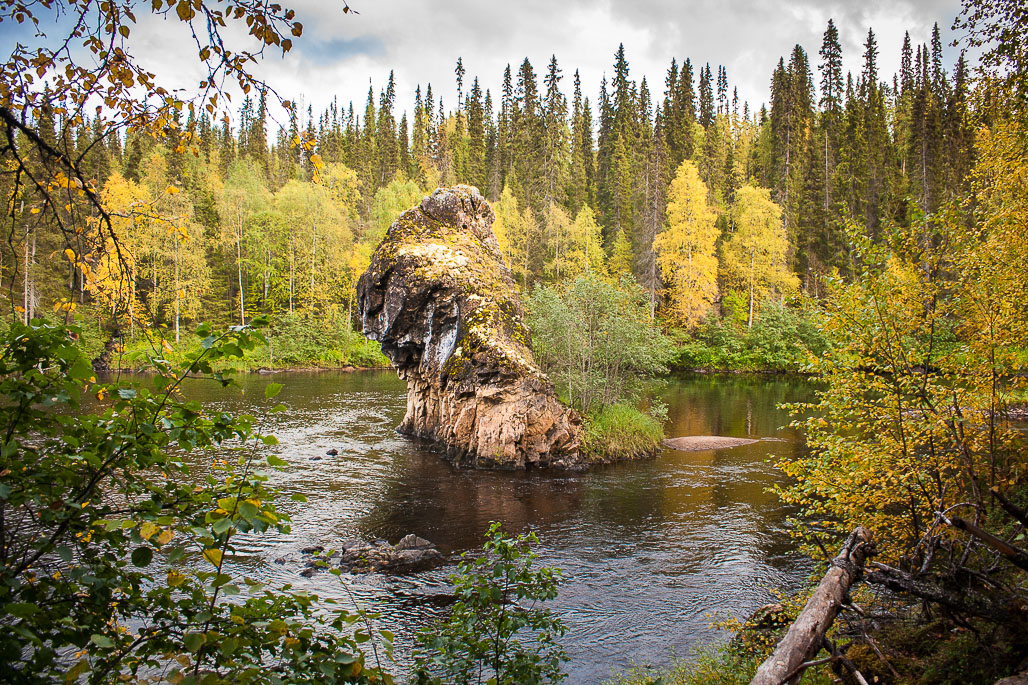
Oulanka National Park
Introduction
In the far northeastern corner of Finland, where dense boreal forests meet powerful rivers, dramatic gorges, suspension bridges, and remote wilderness trails, lies Oulanka National Park. Known for its free-flowing rivers, rugged landscapes, rich biodiversity, and legendary hiking routes, Oulanka is one of Finland's most spectacular destinations for outdoor adventure.
Established in 1956, Oulanka National Park stretches across the municipalities of Kuusamo and Salla. The park is shaped by two major rivers, the Oulankajoki and Kitkajoki, whose rapids and valleys form the heart of its landscape.
The most famous hiking route is the Karhunkierros Trail, or Bear's Trail, which takes hikers through forests, river valleys, suspension bridges, rapids, cliffs, and traditional wilderness landscapes. The park's best-known rapids, Kiutaköngäs and Jyrävä, provide some of its most dramatic scenery.
Oulanka is particularly special because its landscape changes dramatically with the seasons. Spring brings powerful floods, summer fills the forests with greenery and wildflowers, autumn transforms the landscape into a colorful wilderness, and winter creates a frozen world of snow-covered forests and icy rivers.
For travelers searching for unique places to visit in Finland, this Oulanka National Park travel guide explores its geography, rivers, hiking trails, wildlife, history, local culture, best things to do, best time to visit, transportation, sustainability, and why this remote corner of Finland deserves a place on an adventurous Nordic itinerary.
Where Is Oulanka National Park? Geography and Landscape
Oulanka National Park is located in northeastern Finland, close to the Russian border and around the town of Kuusamo.
The landscape is characterized by:
- Free-flowing rivers
- Deep river valleys
- Boreal forests
- Rocky cliffs
- Rapids
- Suspension bridges
- Flood meadows
- Wetlands
- Ancient woodland
- Open wilderness
The two rivers running through the park are central to its identity.
The Oulankajoki River and Kitkajoki River have carved valleys through the surrounding landscape, creating dramatic gorges and rapids.
This combination of forests and waterways gives Oulanka a distinctive character that separates it from Finland's more lake-dominated national parks.
Why Is Oulanka National Park Famous?
Oulanka is famous for combining some of Finland's best hiking scenery with powerful northern rivers.
The park is known for:
- Karhunkierros Trail
- Pieni Karhunkierros
- Kiutaköngäs Rapids
- Jyrävä Rapids
- Oulankajoki River
- Suspension bridges
- Boreal forests
- Arctic wildlife
- Autumn colors
- Wildflower meadows
- Wilderness huts
The park receives more than 200,000 visits annually, demonstrating its importance as one of Finland's major outdoor destinations.
Kiutaköngäs - Oulanka's Famous Rapids
One of the most spectacular sights in Oulanka is Kiutaköngäs, a powerful series of rapids on the Oulankajoki River.
The water rushes through a narrow rocky gorge, creating dramatic whitewater surrounded by forest.
Kiutaköngäs is particularly impressive during the spring flood season, when melting snow increases the volume and power of the river.
According to Finland's official nature information service, the spring flood peak at Kiutaköngäs usually occurs between mid-May and late May.
The rapids are also relatively accessible compared with some of the park's longer hiking destinations, making them an excellent choice for travelers who want to experience Oulanka without committing to a multi-day trek.
Jyrävä Rapids - The Power of the Kitkajoki River
Another spectacular feature of Oulanka is Jyrävä, located along the Kitkajoki River.
The river plunges through a rugged landscape surrounded by forest and exposed rock.
Jyrävä is particularly impressive when viewed from nearby hiking trails, where visitors can experience the sound and power of the river at close range.
Together, Jyrävä and Kiutaköngäs represent the wild character of Oulanka's waterways.
Karhunkierros Trail - Finland's Legendary Hiking Route
The Karhunkierros Trail, or Bear's Trail, is the most famous hiking route in Oulanka.
The route was opened in 1954, before the national park itself was officially established in 1956. Its creation helped establish Oulanka as a major destination for hiking and outdoor tourism.
The trail passes through:
- Dense forests
- River valleys
- Rapids
- Rocky viewpoints
- Suspension bridges
- Wilderness huts
- Lakes
- Deep gorges
The official route has also undergone a change in 2026. Its starting and ending point is moving from Ruka village to Itä-Ruka's Saarua, shortening the official hiking route to approximately 81 kilometers.
This makes Karhunkierros an excellent choice for experienced hikers looking for a genuine multi-day Finnish wilderness experience.
Pieni Karhunkierros - The Shorter Adventure
Travelers who do not have several days available can explore the Pieni Karhunkierros, meaning "Little Bear's Trail."
This shorter circular route offers a concentrated introduction to Oulanka's landscapes.
Along the way, hikers can experience:
- Forest trails
- River views
- Rapids
- Suspension bridges
- Rocky viewpoints
- Waterfalls
- Traditional wilderness scenery
It is one of the best options for visitors who want to experience the essence of Oulanka without completing the full Karhunkierros.
Suspension Bridges Over the Wilderness
Suspension bridges are an iconic part of hiking in Oulanka.
Several trails cross rivers and ravines using bridges that provide elevated views over the surrounding wilderness.
Walking across a suspension bridge while a powerful northern river flows below creates one of the most memorable experiences in the park.
The bridges also provide excellent photography opportunities, especially during autumn when the surrounding forest turns shades of yellow, orange, and red.
Oulanka's Boreal Forest
The forests of Oulanka are one of its greatest natural treasures.
The park contains a mixture of:
- Spruce forests
- Pine forests
- Birch
- Aspen
- Willow
- Mosses
- Lichens
- Wildflowers
The landscape is particularly rich in plant life because of the combination of river valleys, limestone-related geology, flood meadows, and varied microclimates.
Some plants found here are unusually rare in Finland.
The park is especially well known for its botanical diversity, which has attracted scientists and researchers for more than a century.
Oulanka's Famous Wildflowers
Oulanka is an excellent destination for nature lovers interested in northern plants.
One of its most famous species is the lady's-slipper orchid, also known as Venus's slipper or Calypso bulbosa.
The delicate orchid blooms from approximately late May to mid-June, depending on snowmelt and seasonal conditions. It is an endangered species and should never be picked or disturbed.
The combination of unusual plants, river meadows, forests, and wetlands gives Oulanka remarkable botanical importance.
Wildlife in Oulanka National Park
Oulanka provides habitat for a wide variety of northern wildlife.
Visitors may encounter:
- Reindeer
- Moose
- Brown bears
- Wolves
- Lynx
- Red foxes
- Forest squirrels
- Arctic and boreal birds
- Owls
- Woodpeckers
- Grouse
Large predators are naturally elusive, so sightings are uncommon.
Birdwatchers have better chances of observing wildlife along quieter forest trails and river valleys.
The park's extensive forests provide important habitat and ecological connections across northeastern Finland.
Spring in Oulanka - The Season of Wild Rivers
Spring is a particularly dramatic season in Oulanka.
As snow melts, the rivers rise and the rapids become significantly more powerful.
Kiutaköngäs is one of the best places to observe this seasonal transformation.
Spring also brings the first signs of new vegetation and the return of migratory birds.
By late May and early June, wildflowers begin appearing as the snow disappears.
For travelers interested in waterfalls, rivers, and seasonal wildlife, late spring can be an especially rewarding time to visit.
Autumn in Oulanka - Finland's Golden Wilderness
Autumn is arguably the most visually spectacular season in Oulanka.
The forests gradually change from green to brilliant shades of:
- Yellow
- Gold
- Orange
- Red
This Finnish autumn phenomenon is known as ruska.
The colorful forest contrasts beautifully with dark rivers, rocky cliffs, and wooden bridges.
Photographers often visit during this period to capture the combination of autumn foliage and rugged northern scenery.
Winter in Oulanka - A Frozen Wilderness
Winter transforms Oulanka into a completely different landscape.
Snow covers the forests and trails, while rivers and rapids develop layers of ice around their edges.
Popular winter activities include:
- Snowshoeing
- Cross-country skiing
- Winter hiking
- Photography
- Wildlife tracking
Winter conditions require additional preparation because daylight is limited and temperatures can become extremely cold.
Local History and Wilderness Heritage
Oulanka has a long human history.
Modern hikers sometimes follow paths that were used by people thousands of years ago. Official Finnish sources note that traces of Stone Age hunting remain part of the region's historical landscape.
The area was also shaped by:
- Reindeer husbandry
- Traditional farming
- Haymaking
- Logging
- River transport
- Fishing
Old wilderness huts and traditional meadow landscapes provide reminders of how local communities interacted with the environment.
Some current wilderness huts originally served reindeer herders or loggers before becoming facilities for hikers.
Oulanka's River Conservation Story
One of the most fascinating parts of Oulanka's history is the struggle to protect its rivers.
During the 1950s, there were plans to harness the Oulankajoki and Kitkajoki rivers for hydroelectric power.
The debate became known as the "Kuusamo rapids war."
Conservation efforts ultimately helped preserve the free-flowing rivers, and Oulanka National Park was established in 1956.
Today, the untouched character of the rivers is one of the park's greatest attractions.
Finnish Cuisine and Local Flavors
A trip to Oulanka can be combined with experiencing the cuisine of northern Finland and the Kuusamo region.
Local foods may include:
- Reindeer
- Wild fish
- Salmon
- Arctic char
- Mushrooms
- Bilberries
- Lingonberries
- Cloudberries
- Rye bread
- Karelian-style pastries
Wild berries are particularly important in Finnish food culture.
After a long hike, warm soup, coffee, berries, and traditional Finnish pastries can provide a comforting end to the day.
Sustainable Tourism and Conservation
Oulanka's popularity makes responsible tourism extremely important.
Visitors should:
- Stay on marked trails
- Keep the wilderness clean
- Avoid disturbing wildlife
- Never pick protected plants
- Use designated campsites and fire areas
- Respect wilderness huts
- Follow fire regulations
- Keep dogs under control where required
- Avoid damaging vegetation
The park's infrastructure is regularly maintained. In 2026, several bridges, huts, stairs, toilets, and trail sections are scheduled for renovation or improvement. Visitors are advised to check official updates before setting out because temporary closures can occur.
Climate change is another long-term challenge. Official assessments indicate that warmer winters, increased rainfall, changing trail conditions, erosion, and more frequent heat events could affect hiking conditions in Oulanka in coming decades.
Best Time to Visit Oulanka National Park
Oulanka is a year-round destination, but each season offers a completely different experience.
May to June - Spring
Spring is ideal for powerful river scenery and wildflowers. Kiutaköngäs is particularly impressive during the annual snowmelt.
July to August - Summer
Summer offers long daylight hours, green forests, hiking opportunities, and comfortable conditions for exploring longer trails.
September to October - Autumn
Autumn is one of the best periods for photography because of Finland's famous ruska colors.
November to April - Winter
Winter offers snow-covered landscapes, skiing, snowshoeing, and a peaceful Arctic atmosphere.
For a first visit, late August through September can be an excellent choice for combining hiking with autumn scenery, while spring is ideal for seeing the rivers at their most powerful.
How to Get to Oulanka National Park
The main gateway to Oulanka is Kuusamo, which has an airport and road connections with other parts of Finland.
From Kuusamo, travelers can continue toward the national park and nearby Ruka.
The area is commonly combined with a visit to Ruka, one of Finland's major outdoor destinations.
Having access to a car can make it easier to reach different trailheads, although seasonal transportation services and guided tours are also available.
Before traveling, check current trail conditions, transportation schedules, and any temporary closures.
Essential Travel Tips for Visiting Oulanka
Oulanka is a genuine wilderness environment, so preparation matters.
- Wear sturdy hiking shoes.
- Carry waterproof clothing.
- Bring enough food and drinking water.
- Use insect repellent during summer.
- Check river and weather conditions.
- Carry a map or reliable navigation system.
- Keep valuables protected from rain.
- Follow marked trails.
- Prepare for rapidly changing weather.
- Check official trail updates before departure.
For multi-day hikes such as Karhunkierros, plan your accommodation and equipment carefully.
Open wilderness huts can provide free overnight accommodation on a shared basis, but they operate according to specific etiquette and cannot be treated like private hotel rooms.
Why Visit Oulanka National Park?
Oulanka offers something increasingly rare in modern Europe - the feeling of entering a truly wild river landscape.
Its forests are not simply scenic backgrounds. They surround powerful rapids, ancient trails, remote huts, suspension bridges, and deep valleys that create a genuine sense of adventure.
For hikers, Karhunkierros is one of Finland's classic long-distance trails. For photographers, the combination of rivers and autumn forests is spectacular. For wildlife lovers, the park provides access to one of northeastern Finland's richest natural environments.
And for travelers seeking a destination that feels different from the usual European tourist circuit, Oulanka offers an authentic Nordic wilderness experience.
Conclusion
Oulanka National Park is far more than a Finnish hiking destination - it is a remarkable wilderness shaped by rivers, forests, glaciers, wildlife, and centuries of human interaction with nature.
From the thundering rapids of Kiutaköngäs and Jyrävä to the suspension bridges of Karhunkierros, the colorful forests of autumn, and the frozen landscapes of winter, every season reveals a different side of this extraordinary national park.
Its history is equally fascinating. The preservation of Oulanka's free-flowing rivers helped shape the national park itself, ensuring that its wild character could survive for future generations.
For travelers looking for unique places to visit in Finland, unforgettable hiking trails, spectacular river scenery, Arctic wildlife, and peaceful wilderness, Oulanka National Park truly deserves its reputation as Finland's Wild River Wilderness.
00 Comments
No comments yet.
Leave a Comment