

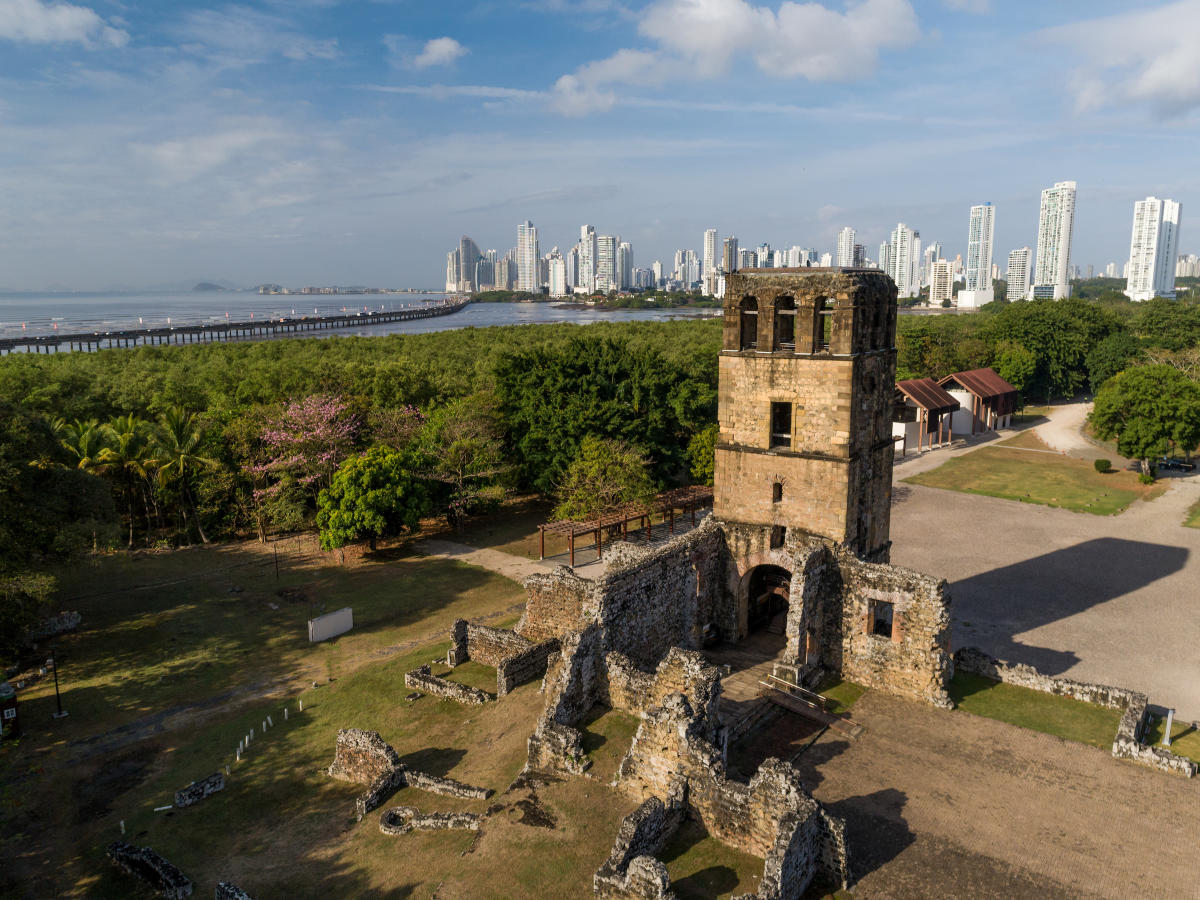
Panamá Viejo
Panamá Viejo, a historic city outside of Panama City, has had a profound impact on the country's history and culture. During the 16th and 17th centuries, it played a significant role as a hub for trade and commerce as the first Spanish settlement on the Pacific coast of the Americas. However, in the 17th century, the city was destroyed and abandoned, leaving behind an amazing assemblage of remains that provide a fascinating look into Panama's past.
In this article, we will explore the history, relevance, and cultural value of Panamá Viejo's historic ruins. You will also get to know the ways to reach the ancient place in Panama.
History of the Panamá Viejo
Panamá Viejo was constructed in 1519 by the Spanish adventurer Pedro Arias Dávila as a base for his explorations of the area. As a hub for trade, business, and transportation that connected the Atlantic and Pacific oceans, the city swiftly gained importance. On its voyage to Spain, the renowned Spanish treasure ship traveled through the city carrying gold and silver.
African slaves were transported to the city to labor in the mines and on the plantations, making Panamá Viejo another important hub for the slave trade. Native Panamanians, Spaniards, Africans, and other nations coexisted in the city as a melting pot of cultures and people.
When pirates repeatedly attacked and destroyed the city in the 17th century, the city's status started to erode. Henry Morgan, an English pirate, conducted a raid in 1671 that left the city in ruins.
Panamá Viejo in Modern Times
The Panamá Viejo remains are now considered a UNESCO World Heritage Site, and efforts are being made to protect and repair the remaining buildings. A guided tour of the ruins is available for visitors who want to learn more about the city's past and present. The Panamá Viejo Museum, which has displays of the history of the city and objects from the archaeological digs, is also located on the site.
Along with the ruins, the neighborhood has a lot of other tourist attractions, such as dining, shopping, and entertainment. The neighboring Amador Causeway is a well-liked location for jogging, biking, and walking and provides breathtaking views of Panama Bay.
Exploring the Ruins of Panamá Viejo
Today, Panamá Viejo's ruins provide an intriguing look into the past of the city. The city's layout, including its buildings, plazas, and cobblestone streets, can be explored by visitors. The Cathedral of Nuestra Seora de la Asunción, which was the first cathedral on the Pacific coast of the Americas and was erected in 1619, is the most important building in the city. Henry Morgan's attack damaged the cathedral, but the ruins still serve as a reminder of how magnificent the city once was.
The Casa Alarcón, the residence of the Spanish governor, and the Casa de Oidor, the courthouse, are two more notable buildings in the ruins. The ruins of the city's defense walls and towers, which were erected to keep the city safe from pirates and other intruders, are also visible to visitors.
In addition to its historical significance, Panamá Viejo's ruins are noteworthy for their cultural significance. The city was able to rise from the ashes of its devastation and reconstruct itself as a prosperous contemporary nation, making the ruins a representation of Panama's tenacity and power.
How to get to Panamá Viejo
At the northernmost point of the city, 8 kilometers from Casco Viejo, is Panama Viejo. Since there isn't much parking, it's better to take a taxi or an Uber to get there; otherwise, you'll probably have to find a spot far from the gate and walk over there.
Opening hours: 8:00 am to 5:00 pm and is closed on Mondays.
Conclusion
A fascinating destination for anyone interested in history and culture are the remains of Panamá Viejo. Exploring the buildings and cobblestone streets can transport tourists back in time to the era of Spanish colonialism and trade. The ruins provide a unique window into the city's past. Given that the city was able to recover after being destroyed, the ruins are also a representation of Panama's tenacity and fortitude. A walk through the historic ruins of Panamá Viejo is an experience you won't soon forget, whether you're a history enthusiast or just seeking for an interesting day excursion.
00 Comments
No comments yet.
Leave a Comment