

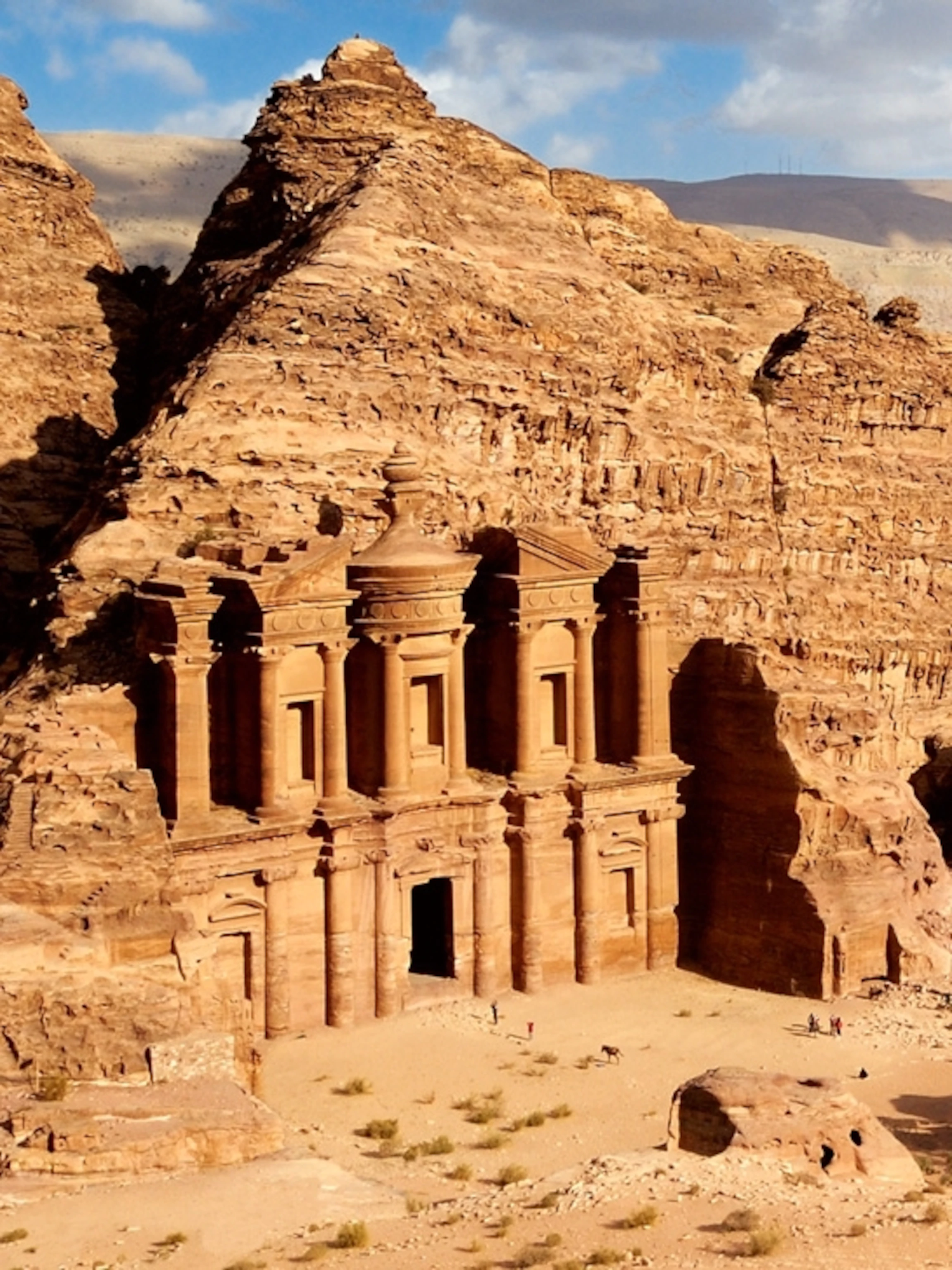
Petra
Petra, Jordan, is one of the world's most mysterious and extraordinary archeological sites. Located in the heart of the Arabah desert, Petra was once a thriving city of the Nabataean kingdom. Petra is an ancient city carved into the rock in Jordan. It is thought to have been inhabited by the Nabataeans, an Arab people who built it as their capital city around 300 BC. This city became history after the Roman conquest of the Nabataeans in 106 AD. A Swiss explorer rediscovered it in 1812. The site is now an abandoned ruin, but its beauty and grandeur still astound visitors worldwide.
Today, Petra is one of the most popular tourist destinations in Jordan. Hundreds of thousands of people visit yearly to see the incredible rock-cut architecture and stunning views.
The History of Petra
Though Petra is now an empty, deserted city in the middle of the Jordanian desert, it was once a thriving metropolis, teeming with life. This city was founded around the 6th century BC by the Nabataeans, a Semitic people who inhabited the region. The Nabataeans were great traders and built Petra into a prosperous city by controlling the trade routes in and out of the Arabian Peninsula.
The Nabataeans were also master architects and engineers. They carved their magnificent buildings and temples into the red sandstone cliffs. The most famous of these structures is Al-Khazneh, or "the Treasury." This building, with its ornate facade and massive columns, is one of the most iconic images of Petra.
Petra continued to flourish under Roman rule. The Romans expanded the city's infrastructure, including its water system. They also built many new temples and public buildings. But by the end of the 4th century AD, Rome's grip on Petra began to loosen. In 551 AD, an earthquake destroyed much of the city. Petra was completely abandoned by 640 AD.
Why did this once great city fall into ruin? Historians have offered many theories, but no one knows for sure. Perhaps it was due to a change in trade routes that made Petra less relevant, or maybe it was because of religious or political changes; within the Roman Empire that led to a decline in tourism to Petra.
Architecture of Petra
Petra is an ancient city built by the Nabataeans in Jordan. The city is well known for its unique architecture, which includes buildings carved into the rock face. The most famous of these buildings is the Treasury, featured in "Indiana Jones and the Last Crusade".
Petra was originally a caravan stop for traders traveling between Arabia and the Mediterranean. The Nabataeans were expert stone masons who used their skills to construct Petra into a thriving city. In addition to the Treasury, there are many other impressive structures in Petra, including temples, tombs, and an Amphitheater.
The architecture of Petra is unique and is one of the main reasons the city is such a popular tourist destination.
How to get to Petra
To get to Petra, you will need to fly into the nearby city of Amman, Jordan. From there, you can either take a 4-hour bus ride or a 30-minute flight to the city of Petra. Once you arrive in Petra, there are a few different ways to explore the ancient ruins. You can join a guided tour, hire a private guide, or explore yourself.
If you are traveling by bus from Amman to Petra, the journey will take you through some of Jordan's stunning desert scenery. The bus will drop you off at the entrance to Petra, where you will need to purchase a ticket to enter the archaeological site.
Once you have entered Petra, you can take different pathways to explore the ancient city. The most popular path is the Siq, a narrow path that leads directly to the Treasury building - one of Petra's most iconic landmarks. This route takes around 2 hours to complete. If you are short on time or not interested in doing much walking, there is also a horse-drawn carriage service that takes visitors along the same route.
Another option for exploring Petra is to hike up through the Monastery - an enormous cliff-face carving that requires around 3 hours to reach the top. This strenuous hike is not for everyone, but it is worth it for the incredible views of Petra and the surrounding desert.
Finally, if you are interested in learning more about the history and culture of Petra, there are several guided tours available. These tours typically last around 3 hours and include - a visit to Petra's most famous landmarks and a stop at the Petra Museum.
Tips for visiting Petra
When visiting Petra, there are a few things to keep in mind to make the most of your experience. First, be sure to wear comfortable shoes as you will be doing a lot of walking. Second, it is best to visit during the cooler months, from October to March, as temperatures can reach over 100 degrees Fahrenheit during the summer months.
Third, although there are plenty of food and drink options available within Petra, it is recommended that you bring your water and snacks as prices can be high.
What to see in Petra
Visit Petra, Jordan, if you want to explore one of the world's most mysterious and fascinating archeological sites. This ancient city, carved into the red sandstone cliffs by the Nabataeans over 2,000 years ago, is full of incredible monuments and temples that will leave you speechless. Here are some of the top sights that you need to see during your visit to Petra:
· The Treasury: Also known as Al Khazneh, this is perhaps the most iconic monument in Petra and is worth a visit. The facade of the Treasury is beautifully carved out of the sandstone cliff. It is said to have been used as a tomb for the Nabataean king.
· The Monastery: If you are looking for an even more impressive sight than The Treasury, you can check out The Monastery. This monument, located at the top of an 800-step staircase, is 50 meters tall. The views from The Monastery are breathtaking!
· The Royal Tombs: The main royal tombs in Petra are – The Urn Tomb, The Palace Tomb, and The Silk Tomb. Each one is unique and offers different insights into the lives of the Nabataean kings buried there.
· These are just some of the many incredible sights one can see while visiting Petra. So, do not miss out on this opportunity to explore one of the world's most fascinating ancient cities.
Conclusion
Petra is one of the world's most mysterious and fascinating archeological wonders. This ancient city, hidden away in the Jordanian desert, has attracted people for centuries. If you ever have a chance to visit Petra, you definitely won't be disappointed.
00 Comments
No comments yet.
Leave a Comment