

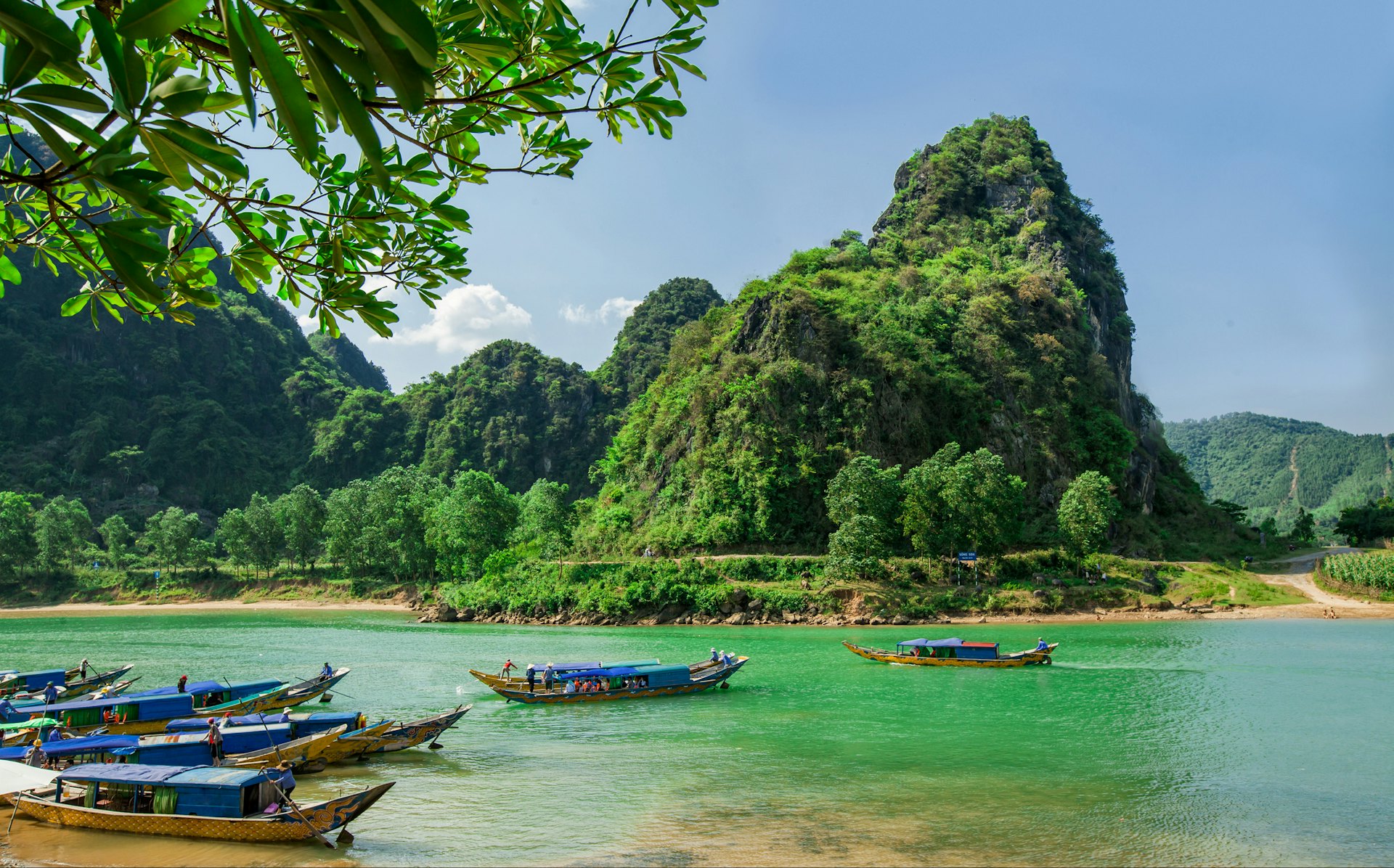
Phong Nha-Ke Bang National Park
Introduction
Hidden among the dramatic limestone mountains of central Vietnam, Phong Nha-Ke Bang National Park is one of Southeast Asia's most extraordinary natural destinations. Often described as the World's Greatest Cave Kingdom, this UNESCO World Heritage Site is famous for its enormous cave systems, underground rivers, ancient limestone formations, tropical forests, and some of the largest caves ever discovered.
Located in Quang Binh Province, Phong Nha-Ke Bang is home to an astonishing network of more than 400 caves and grottoes, many of which remain unexplored. Among them is Son Doong Cave, widely recognized as the world's largest cave passage by volume. The cave is so enormous that it contains its own underground forests, clouds, rivers, and weather systems.
But Son Doong is only one part of the park's incredible underground world. Phong Nha Cave, Paradise Cave, Tu Lan Cave System, and Hang En Cave offer spectacular experiences ranging from peaceful boat journeys to challenging multi-day expeditions.
Above ground, the park is equally impressive. Towering karst mountains covered in dense jungle rise dramatically from the landscape, while rivers wind through valleys and forests shelter rare wildlife.
For adventure travelers, cave explorers, photographers, nature lovers, and anyone searching for extraordinary places in Vietnam, this Phong Nha-Ke Bang travel guide explores why the region deserves its reputation as one of Earth's greatest cave landscapes.
Where Is Phong Nha-Ke Bang National Park? Geography and Karst Landscape
Phong Nha-Ke Bang National Park is located in Quang Binh Province, approximately 500 kilometers south of Hanoi and around 260 kilometers north of Da Nang.
The park covers more than 123,000 hectares of limestone mountains, tropical forests, underground rivers, caves, valleys, and rugged terrain.
Its limestone formations are among the oldest and most geologically significant in Southeast Asia, with some rocks dating back hundreds of millions of years.
Over immense periods of time, rainwater slowly dissolved the limestone, creating:
- Giant caves
- Underground rivers
- Sinkholes
- Stalactites
- Stalagmites
- Karst towers
- Deep valleys
- Hidden forests
This geological process created one of the most complex cave systems on Earth.
The result is a landscape where the underground world is almost as spectacular as the surface.
Why Is Phong Nha-Ke Bang Famous?
Phong Nha-Ke Bang is internationally famous for its exceptional cave systems and ancient karst landscape.
The national park is known for:
- Son Doong Cave
- Paradise Cave
- Phong Nha Cave
- Hang En Cave
- Underground rivers
- Ancient limestone mountains
- UNESCO World Heritage status
- Tropical biodiversity
- Multi-day cave expeditions
- Spectacular jungle scenery
Its combination of enormous caves, untouched forests, and geological history makes it one of Vietnam's most remarkable natural attractions.
History and Natural Significance
The geological history of Phong Nha-Ke Bang stretches back hundreds of millions of years.
The region was once covered by ancient seas, where layers of sediment accumulated and eventually transformed into limestone.
Over geological time, tectonic movements raised the limestone above sea level. Rainwater and underground rivers then gradually carved the rock into the intricate cave systems seen today.
The caves have also played a role in human history.
During the Vietnam War, some caves provided shelter and transportation routes. Today, the park's caves and surrounding forests are protected for their geological, ecological, and cultural importance.
Phong Nha-Ke Bang became a UNESCO World Heritage Site in 2003, with its recognition later expanded for its exceptional geological and biodiversity values.
Son Doong Cave - The World's Largest Cave
The undisputed star of Phong Nha-Ke Bang is Son Doong Cave.
Discovered locally for generations but brought to international attention after exploration in the 2000s, Son Doong is famous for its enormous dimensions.
Some passages are large enough to accommodate a skyscraper, while underground chambers are so vast that clouds can form inside them.
The cave contains:
- Underground rivers
- Massive stalagmites
- Collapsed sinkholes
- Underground forests
- Unique cave ecosystems
- Natural clouds
- Giant chambers
Sunlight enters through collapsed sections of the cave roof, allowing vegetation to grow deep underground.
Exploring Son Doong is not a conventional sightseeing experience. Access is tightly controlled and requires a multi-day expedition with specialist guides and equipment.
For serious adventurers, it is one of the world's ultimate cave experiences.
Phong Nha Cave - The Cave That Gave the Park Its Name
Phong Nha Cave is one of the park's most accessible and famous attractions.
Visitors travel by boat along the Son River before entering the cave through a dramatic entrance surrounded by limestone cliffs.
Inside, underground rivers, enormous chambers, and spectacular rock formations create an unforgettable atmosphere.
The combination of water and limestone makes the experience especially unique.
Phong Nha Cave is an excellent introduction to the underground world of the national park and is suitable for travelers who do not want a demanding expedition.
Paradise Cave - Vietnam's Underground Palace
Paradise Cave is another spectacular attraction in Phong Nha-Ke Bang.
Discovered in the early 21st century, the cave extends for more than 30 kilometers, although only part of the system is open to regular visitors.
Its enormous chambers contain extraordinary stalactites and stalagmites formed over millions of years.
The cave's illuminated pathways showcase massive rock formations resembling towers, curtains, waterfalls, and sculptures.
For travelers seeking a dramatic cave experience without committing to a multi-day expedition, Paradise Cave is one of the best choices.
Hang En Cave - The Cave with an Underground Beach
Hang En Cave is famous for its enormous chamber and beautiful underground river.
A spectacular sandy area beside the underground stream resembles a hidden beach deep inside the cave.
The journey to Hang En involves hiking through jungle valleys, crossing streams, and camping inside the cave.
It offers a more adventurous experience than Phong Nha Cave or Paradise Cave while remaining more accessible than the full Son Doong expedition.
For photographers, the combination of enormous cave walls, underground water, and camping tents creates unforgettable images.
Tu Lan Cave System - The Hidden Adventure
The Tu Lan Cave System lies outside the main tourist areas of Phong Nha-Ke Bang but offers some of Vietnam's most exciting cave adventures.
The experience involves trekking through jungle, swimming through cave passages, crossing rivers, and exploring underground chambers.
Multi-day expeditions allow travelers to camp beneath enormous limestone formations and experience the caves in a relatively untouched environment.
It is ideal for adventurous travelers who want an immersive cave expedition.
Wildlife and Biodiversity
Phong Nha-Ke Bang is not only a cave destination - it is also one of Vietnam's most important biodiversity regions.
The park's forests provide habitat for numerous species, including:
- Saola
- Asian black bears
- Sunda pangolins
- Langurs
- Macaques
- Civets
- Flying squirrels
- Hornbills
- Numerous reptiles
- Hundreds of butterfly species
The Ha Tinh langur and other rare primates are particularly important conservation species.
The park's isolation and extensive forest cover have helped preserve wildlife habitats that have disappeared from many other parts of Vietnam.
Best Things to Do in Phong Nha-Ke Bang
The region offers adventures for almost every type of traveler.
Popular activities include:
- Exploring Phong Nha Cave
- Visiting Paradise Cave
- Trekking to Hang En
- Multi-day Son Doong expeditions
- Exploring Tu Lan caves
- Jungle trekking
- River kayaking
- Cycling through rural villages
- Wildlife watching
- Mountain photography
- Visiting local communities
Whether you prefer an easy boat ride or an intense underground expedition, Phong Nha offers something extraordinary.
Local Culture and Traditional Life
The villages surrounding Phong Nha-Ke Bang provide an opportunity to experience rural central Vietnam.
Local communities include the Bru-Van Kieu and Chut ethnic groups, alongside the wider Vietnamese population.
Traditional livelihoods include farming, forestry, fishing, and tourism.
Visitors can explore villages, interact with local guides, sample regional dishes, and learn about the communities that have lived alongside the mountains and rivers for generations.
Supporting locally owned accommodation, restaurants, and guiding services helps ensure tourism benefits surrounding communities.
Vietnamese Cuisine in Phong Nha
Exploring Phong Nha is also a chance to enjoy the flavors of central Vietnam.
Local dishes may include:
- Banh xeo
- Pho
- Bun cha
- Grilled river fish
- Fresh spring rolls
- Chicken dishes
- Rice-based specialties
- Local vegetables
- Vietnamese coffee
After a long day of trekking through caves and jungle, a simple Vietnamese meal in a local restaurant can be one of the most enjoyable parts of the journey.
Sustainable Tourism and Conservation
Phong Nha-Ke Bang's extraordinary environment requires careful protection.
Caves are extremely fragile ecosystems. Even small changes in temperature, humidity, lighting, or human activity can affect underground environments.
Visitors should:
- Stay on designated trails
- Never touch stalactites or stalagmites
- Avoid leaving waste
- Follow guide instructions
- Never disturb cave wildlife
- Avoid damaging vegetation
- Respect local communities
- Choose licensed cave operators
Son Doong and several other major caves have strict visitor limits to reduce environmental impact.
Sustainable tourism is essential for protecting this remarkable cave kingdom for future generations.
Best Time to Visit Phong Nha-Ke Bang
The best time to visit Phong Nha-Ke Bang is generally from March to August, when conditions are more favorable for cave exploration and outdoor activities.
March to May
Pleasant temperatures and lower rainfall make this an excellent period for trekking and sightseeing.
June to August
Summer brings hotter conditions but generally offers good opportunities for cave adventures.
September to November
Heavy rainfall can affect river levels and cave accessibility. Some activities may be suspended during periods of flooding.
December to February
The weather is cooler and sometimes cloudy or rainy, but popular caves may be less crowded.
Always check current weather and cave-access conditions before planning an expedition.
How to Get to Phong Nha-Ke Bang
The main gateway is Dong Hoi, the capital of Quang Binh Province.
Travelers can reach Dong Hoi by:
- Domestic flights
- Train
- Long-distance bus
- Private vehicle
From Dong Hoi, Phong Nha town is approximately a one-hour drive.
Many travelers combine Phong Nha with itineraries through Hanoi, Hue, and central Vietnam.
For major cave expeditions, transportation and accommodation are often arranged by specialist tour operators.
Essential Travel Tips for Visiting Phong Nha-Ke Bang
A little preparation will make your trip safer and more enjoyable.
- Wear comfortable hiking shoes.
- Bring lightweight waterproof clothing.
- Carry insect repellent for jungle treks.
- Bring enough drinking water.
- Follow all cave safety instructions.
- Book major cave expeditions well in advance.
- Prepare for mud, humidity, and slippery surfaces.
- Avoid visiting restricted areas without a licensed guide.
- Bring a waterproof bag for electronics during cave adventures.
For Son Doong and multi-day cave trips, physical fitness and proper preparation are essential.
Why Visit Phong Nha-Ke Bang?
Phong Nha-Ke Bang offers an experience that few destinations can match.
Above ground, ancient limestone mountains rise from dense tropical forests. Below ground, enormous chambers, underground rivers, forests, and rock formations create an entirely different world.
The opportunity to walk through one of the world's largest caves, kayak through underground rivers, camp beneath enormous limestone chambers, or simply cruise into Phong Nha Cave makes this destination extraordinary.
For adventure travelers, it provides world-class exploration. For photographers, it offers surreal landscapes. For nature lovers, it combines spectacular geology with remarkable biodiversity.
Most importantly, Phong Nha-Ke Bang demonstrates how powerful natural forces can transform landscapes over hundreds of millions of years.
Conclusion
Phong Nha-Ke Bang National Park is far more than a collection of caves - it is an enormous natural kingdom where ancient limestone mountains, tropical forests, underground rivers, and extraordinary wildlife come together.
From the immense chambers of Son Doong and the spectacular formations of Paradise Cave to the underground rivers of Phong Nha Cave and the adventurous trails of Hang En, every corner of this UNESCO-listed landscape reveals something remarkable.
For travelers searching for unique destinations, unforgettable adventures, and some of the most spectacular geological formations on Earth, Phong Nha-Ke Bang National Park truly lives up to its reputation as the World's Greatest Cave Kingdom.
00 Comments
No comments yet.
Leave a Comment