

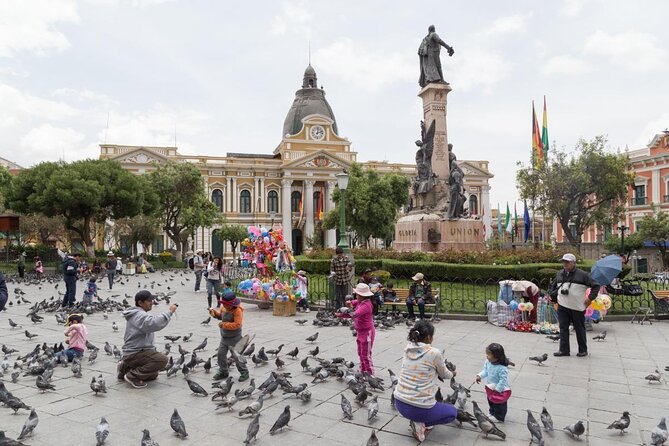
Plaza Murillo
Any visitor to La Paz, Bolivia, should make time to see Plaza Murillo. This famous area, which is in the center of the city, perfectly encapsulates Bolivia's rich history and lively character. Plaza Murillo is a significant landmark that has been crucial to Bolivia's history and culture because of its stunning architecture, historical importance, cultural events, and lively environment.
The historical, architectural, and cultural significance of Plaza Murillo as well as the exciting activities and attractions that make it one of the most visited places in La Paz will all be covered in this article. Join us as we explore Plaza Murillo's beauty and everything it has to offer.
Historical Significance of Plaza Murillo
Plaza Murillo has a long and interesting history dating back to the colonial era. The square, which was once called Plaza de Armas, was constructed in the 16th century and housed the seat of the Spanish colonial authority. This area of the city was directly across from the existing Spanish settlement, which had been home to around 200 Spaniards and 5,000 native inhabitants. The Plaza Mayor swiftly replaced the former Spanish center square, currently known as Plaza Alonso de Mendoza.
The Cabildo (or city administration building, which includes a jail), a Society of Jesus building, the Cathedral, the Royal Treasury (Cajas Reales), and the Bishop's Residence (Casa Obispal) are some of the colonial structures that were constructed around the plaza.
Battles for political dominance in Bolivia have frequently taken place in the plaza. In various revolutionary fights, including those that occurred in 1809, 1811, 1814, 1862, 1865, 1871, 1898, 1946, 1952, and 2002, it was attacked or defended. A number of independence-era leaders were assassinated on or close to the plaza.
After construction, the Plaza was given the name Plaza Mayor (Greatest/Main Plaza). Later, during the colonial era, it became known as the Plaza de Armas. The square was called Plaza Murillo in the early 19th century in honor of Pedro Domingo Murillo, a key figure in the Bolivian War of Independence. His statue is prominently displayed in the middle of the square as a symbol of Bolivia's struggle for independence.
Architectural Features of Plaza Murillo
The majestic buildings that surround Plaza Murillo are among its most outstanding features. The Presidential Palace and the National Congress are the two that stand out the most.
The Palacio Quemado also referred to as the Presidential Palace, is an opulent neo-classical structure that houses the President of Bolivia. The signing of the Bolivian Constitution in 2009 was one of several significant historical occurrences that took place thereafter it was constructed in the late 19th century.
The National Congress usually referred to as the Palacio Legislativo, is a magnificent colonial-style structure that serves as the seat of Bolivia's government. It was constructed in the first decade of the 20th century, and it dominates the square with a magnificent dome.
The Cathedral of La Paz, the Archbishop's Palace, and the Central Bank of Bolivia are a few other significant structures that surround the area. Neo-classical, colonial, and modern architectural styles are all represented in these structures.
Cultural Significance of Plaza Murillo
Plaza Murillo is an important location for social, political, and cultural gatherings and plays a significant part in Bolivian culture. Numerous notable political protests have taken place at the square, notably those that led to President Gonzalo Sanchez de Lozada's resignation in 2003.
For indigenous Bolivians and other underrepresented groups, Plaza Murillo serves as a crucial cultural center. Bolivia's rich cultural legacy is frequently celebrated in the square through festivals and other activities.
The Dia de los Muertos, or Day of the Dead, celebration is one of the most important cultural events celebrated at Plaza Murillo. Bolivians commemorate their ancestors and the cycle of life and death on this holiday. Bolivian spirit is captured in the cheerful and colorful ambiance that the square creates with its lively costumes, music, and food.
Other Attractions of Plaza Murillo
Plaza Murillo is a buzzing, vibrant destination in addition to being a historical and cultural treasure. Numerous street vendors can be found in the square selling everything from traditional Bolivian handicrafts to regional food and beverages.
For tourists, the Mercado de Brujas, often known as the Witch's Market, is a must-see location. The market, which is a few streets from the square, sells an assortment of unusual and fascinating goods, including dried llama fetuses, which are thought to bring good luck and ward off evil spirits, exotic herbs, and traditional Bolivian charms and remedies.
The plaza itself, in addition to the market, is a hive of activity. Dancers, musicians, and street performers amuse both locals and visitors. Both locals and tourists enjoy visiting the square because of its lively atmosphere.
The ritual of the Changing of the Guard is another well-liked event that takes place at Plaza Murillo. Every morning, during this ritual, troops and a band march through the square while playing music and executing maneuvers. The ceremony is a well-liked tourist destination and a wonderful opportunity to discover Bolivia's patriotic attitude.
How to get to Plaza Murillo, Bolivia
It is situated in the city's old town, or Casco Viejo, and is bordered to the west by Socabaya Street, the east by Ayacucho Street, the south by Comercio Street, and the north by a continuation of Ingavi and Ballivan Streets.
There are various methods to go to Plaza Murillo if you're planning to visit La Paz and want to see this famous square.
By Plane:
The quickest and most practical way to get to La Paz from outside of Bolivia is via plane. The nearby El Alto International Airport offers daily flights to major South American cities as well as a number of other international locations.
You can take a bus or a taxi from the airport to go to the city's core. The journey takes around 30 minutes, depending on traffic.
By Bus:
The bus is a common and cost-effective means of transportation within Bolivia. Numerous bus companies provide transportation to La Paz from other significant cities throughout the nation, including Cochabamba and Sucre.
In Bolivia, buses can range from the most basic to the most opulent, so it's crucial to pick a trustworthy operator that provides relaxing and secure travel. You may go to Plaza Murillo in La Paz by cab or local bus after you arrive there.
By Taxi:
The best and most practical way to travel in La Paz is by taxi. The city is home to a number of taxi firms as well as individual drivers who you can flag down on the street.
Always negotiate over the fare in a taxi before getting in the vehicle. Having small dollars on hand is also a smart idea because some drivers might not have change for larger payments.
By Foot:
You can walk to Plaza Murillo if you are staying in the city's core. Many well-known hotels, eateries, and attractions are all within walking distance of the square, which is situated in the center of the city.
A great way to see La Paz and take in the lively atmosphere is by walking around the city. But it's crucial to pay attention to your surroundings and exercise caution, especially if you're out alone or late at night.
Conclusion
Plaza Murillo is a distinctive and exciting location that perfectly captures Bolivia's rich heritage and lively attitude. The square is a significant landmark and a must-visit location for anybody visiting La Paz due to its spectacular architecture, historical significance, cultural activities, and lively atmosphere. You may learn more about Bolivia's rich cultural legacy and the significance of this iconic square by examining the historical, architectural, cultural, and lively features of Plaza Murillo.
00 Comments
No comments yet.
Leave a Comment