

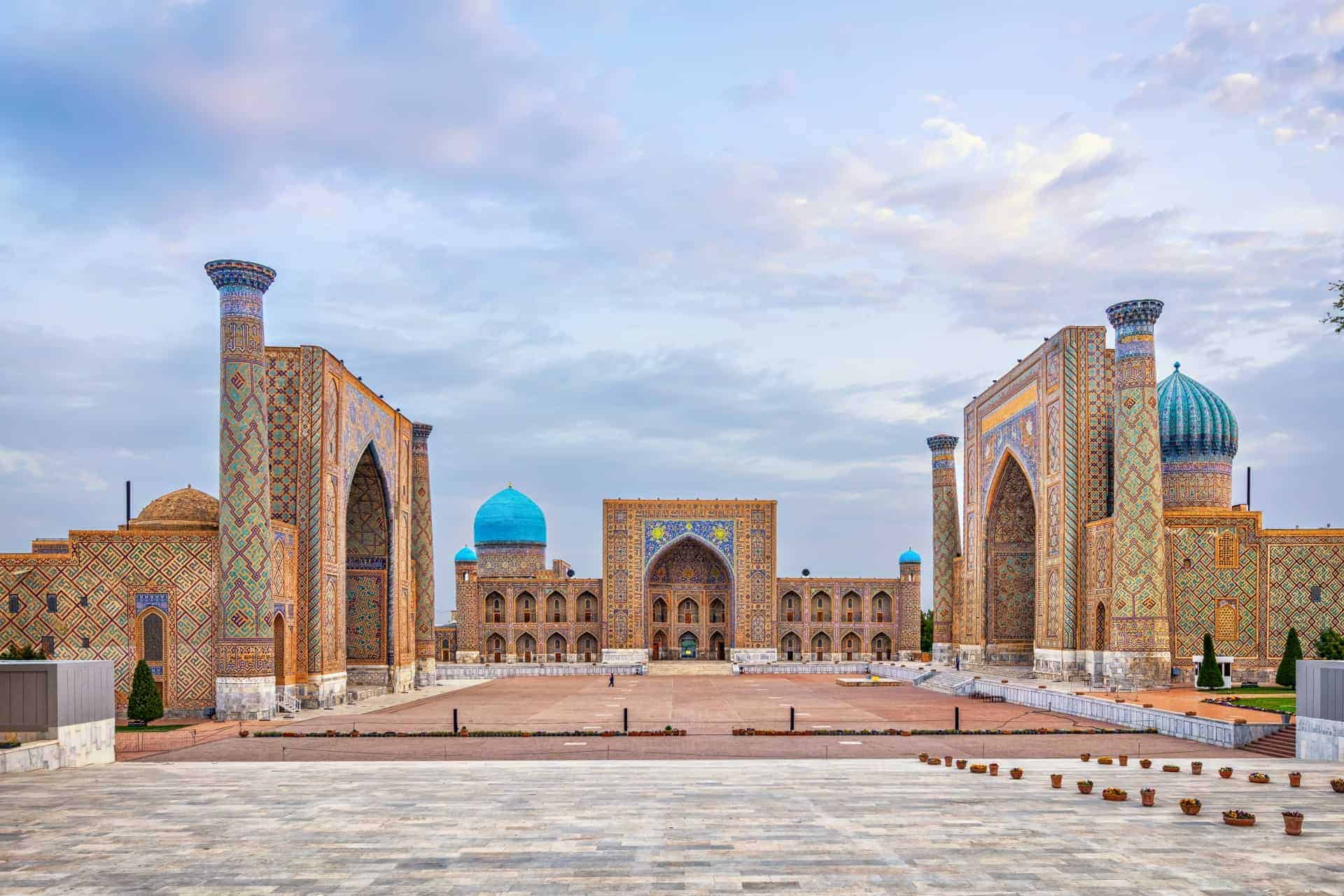
Registan Square
Uzbekistan is a place rich in history and culture, and no journey to this Central Asian country is complete without a visit to Samarkand's Registan Square. Registan Square, in the historic city of Samarkand, Uzbekistan, is a spectacular example of Islamic architecture and a symbol of Central Asia's rich cultural and intellectual history.
Registan Square, with its three magnificent madrasas (Islamic schools) embellished with elaborate tile work, majestic domes, and gorgeous calligraphy, has enthralled tourists for centuries and remains one of the iconic landmarks in the world, and it is a popular tourist attraction.
We will examine the history and significance of Registan Square in more detail in this article and offer a thorough guide to assist you in organizing your trip to this beautiful representation of Islamic architectural magnificence in Uzbekistan.
When Was The Registan Square Built?
The history of Registan Square dates back to ancient times when Samarkand was a center of trade and culture along the famous Silk Road. The oldest madrasa at Registan Square is the Ulugh Beg Madrasa, built in the early 15th century during the reign of Ulugh Beg, a Timurid ruler who was also a renowned astronomer and mathematician. The Ulugh Beg Madrasa quickly became a center of Islamic learning, attracting students from all over the Islamic world.
Over the centuries, two more madrasas were built on either side of the Ulugh Beg Madrasa, completing the iconic Registan Square. The Sher-Dor Madrasa, built in the 17th century, is known for its colorful tile work and intricate mosaics, while the Tilya-Kori Madrasa, also made in the 17th century, features a stunning blue dome and beautiful calligraphy. These madrasas were built during the reign of the Shaybanid dynasty.
Registan Square is not only a marvel of Islamic architecture but also an important center of education and scholarship. The madrasas at Registan Square served as centers of learning for students from all over the Islamic world, and many renowned scholars and theologians studied here. These madrasas also played an essential role in the political and cultural life of Central Asia, often serving as venues for important events such as royal ceremonies, public speeches, and religious festivals.
What Is The Significance Of Registan Square?
The significance of Registan Square stems from its long history as a hub of Islamic study and research in Central Asia for centuries. The square is surrounded by three magnificent madrasas (Islamic schools) with stunning tile work, intricate mosaics, and impressive domes. These madrasas served as centers of learning for students from all over the Islamic world, and many renowned scholars and theologians studied here. Mainly the Ulugbek Madrasa was recognized for its astronomical observatory, where pupils could research the motions of the planets and stars.
Registan Square continues to serve as a significant reminder of Uzbekistan's rich history and culture. The square, which draws tourists from worldwide to marvel at its beauty and discover more about its extensive history and cultural significance, has been magnificently repaired and kept. The madrasas are among the best preserved and restored buildings in the country.
Why Is Registan Famous?
Registan is famous because of its stunning architecture and intricate tilework. The three madrasas that surround the square (Ulugh Beg Madrasa, Sher-Dor Madrasa, and Tilya-Kori Madrasa) are considered to be some of the finest examples of Islamic architecture in the world. They are adorned with intricate tile work, colorful mosaics, and impressive domes that showcase the artistic and architectural achievements of the Timurid dynasty.
Where Is The Registan Square Located?
Registan Square is located in the city of Samarkand, which is situated in the southeastern part of Uzbekistan. Samarkand is one of the oldest continuously inhabited cities in Central Asia and has been an important center of trade, culture, and scholarship for centuries.
Conclusion
Registan Square is a magnificent example of Islamic architecture and a symbol of the rich cultural and intellectual heritage of Central Asia. Its three stunning madrasas, adorned with intricate tile work, impressive domes, and beautiful calligraphy, are not only a marvel of artistry and craftsmanship but also important centers of education and scholarship. For centuries, Registan Square has played an important role in the intellectual and cultural life of Central Asia, attracting students, scholars, and visitors from all over the Islamic world.
Today, Registan Square continues to be a major tourist attraction and an important symbol of the region's cultural and intellectual heritage. It's beauty and historical significance make it a must-see destination for anyone interested in exploring the rich history and culture of Central Asia. Registan Plaza serves as a potent reminder of the lasting legacy of Islamic scholarship and the ability of art and architecture to inspire and fascinate as we continue to value and protect our world's architectural and cultural monuments.

00 Comments
No comments yet.
Leave a Comment