

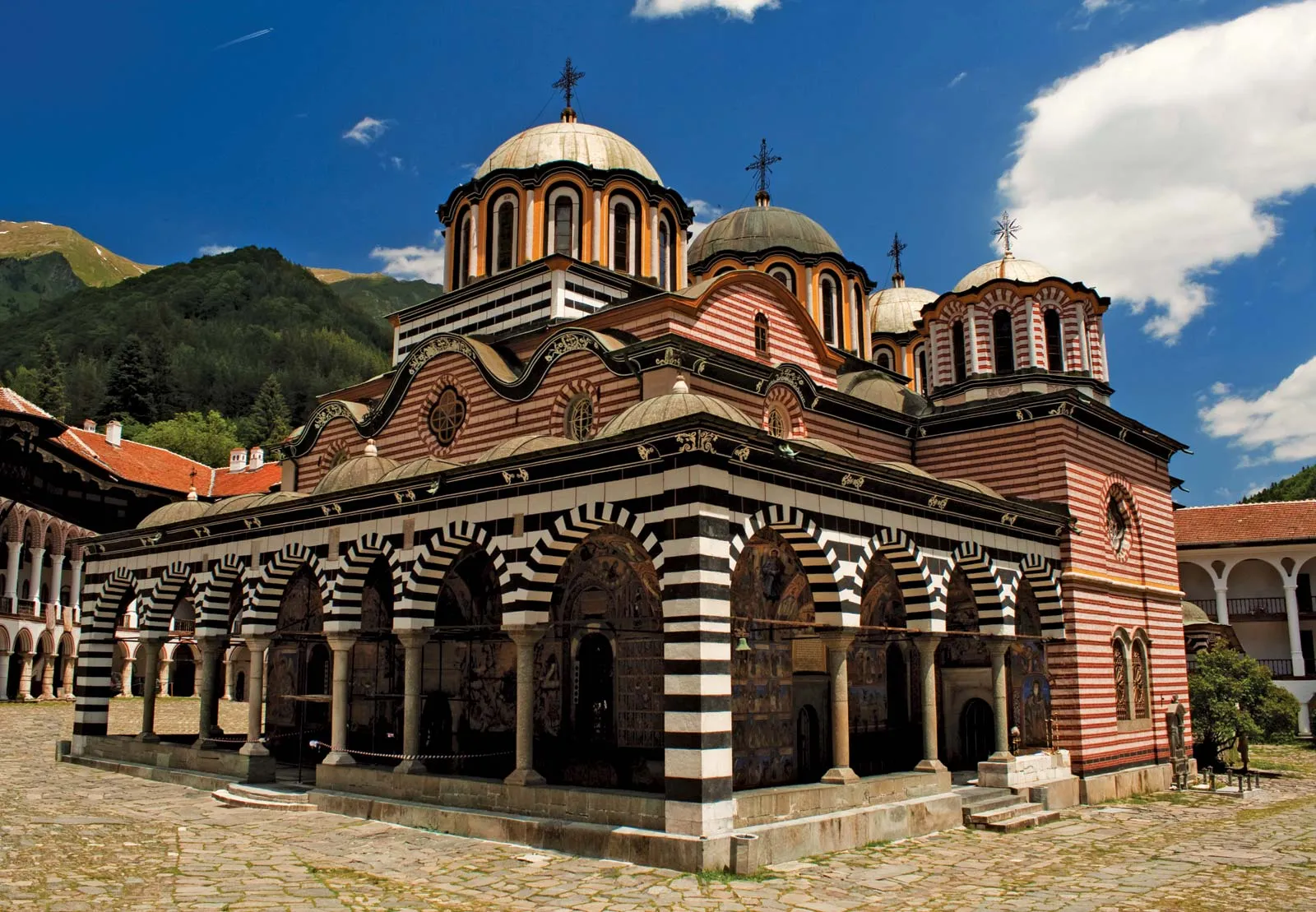
Rila Monastery
Introduction
Hidden deep within the rugged landscapes of southwestern Bulgaria, Rila Monastery stands as one of the most important spiritual, cultural, and architectural landmarks in the Balkans. Surrounded by dense forests and dramatic mountain peaks, this centuries-old monastery represents the heart of Bulgarian Orthodox Christianity and a powerful symbol of national identity.
Located within the majestic Rila Mountains, the monastery has served as a sanctuary of faith, learning, and resilience for more than a thousand years. Today, it is recognized as a UNESCO World Heritage Site and attracts pilgrims, historians, and travelers seeking both spiritual reflection and breathtaking scenery.
The monastery’s colorful frescoes, striped arches, and peaceful courtyards create an atmosphere that feels timeless. For visitors exploring Eastern Europe’s hidden treasures, Rila Monastery offers a profound journey into Bulgaria’s spiritual heritage and natural beauty.
Geography and Environment
Rila Monastery lies within the mountainous region of southwestern Bulgaria, approximately 120 kilometers south of the capital city of Sofia. The monastery is nestled within the vast wilderness of the Rila Mountains, the highest mountain range in the Balkans.
The surrounding landscape is characterized by dense pine forests, alpine meadows, and dramatic peaks that rise above 2,500 meters. This isolated setting has long provided the monastery with both protection and tranquility.
Nearby lies Rila National Park, a vast protected area known for its pristine ecosystems, glacial lakes, and diverse wildlife. The park contributes to the monastery’s serene environment, making the area a haven for hikers and nature lovers.
The climate in the region varies by season. Summers are cool and pleasant, while winters bring heavy snowfall that transforms the monastery and surrounding mountains into a breathtaking winter landscape.
Landscapes and Heritage
The centerpiece of this spiritual complex is Rila Monastery, founded in the 10th century by the hermit saint Ivan of Rila. Originally a small religious retreat, the monastery gradually expanded into one of the most significant centers of Eastern Orthodox faith in Bulgaria.
The architectural layout features a large courtyard surrounded by multi-story residential buildings with wooden balconies and arched corridors. The vivid black-and-white striped arcades create a striking visual contrast against the mountain backdrop.
At the center stands the Church of the Nativity of the Virgin, famous for its richly detailed frescoes that cover both the interior and exterior walls. These paintings depict biblical scenes, saints, and symbolic imagery, showcasing the mastery of Bulgarian religious artists.
Nearby, the medieval Hrelyo Tower remains one of the oldest surviving structures within the complex. Built in the 14th century, this stone tower once served as both a defensive structure and a refuge for monks during times of invasion.
Together, these architectural elements create a unique blend of spiritual symbolism, artistic excellence, and mountain scenery.
Cultural Identity and Historical Significance
Rila Monastery has played a crucial role in preserving Bulgarian culture and identity throughout centuries of political change. During periods of Ottoman rule, when Bulgaria lacked political independence, the monastery became a center for literacy, education, and national consciousness.
Monks copied manuscripts, preserved religious texts, and maintained Bulgarian traditions. As a result, the monastery became not only a place of worship but also a cultural stronghold.
The legacy of Saint Ivan of Rila, the founder of the monastery, continues to inspire pilgrims today. Known for his ascetic lifestyle and spiritual teachings, he remains one of Bulgaria’s most revered saints.
Throughout its history, the monastery endured fires, invasions, and reconstruction efforts. Yet it remained a symbol of resilience and spiritual continuity for the Bulgarian people.
Cuisine and Monastic Traditions
While Rila Monastery itself maintains a simple monastic lifestyle, the surrounding region offers traditional Bulgarian cuisine rooted in local ingredients and rural traditions.
Nearby restaurants and guesthouses serve hearty dishes such as bean soup, grilled meats, fresh salads, and traditional pastries. Yogurt and cheese are also important components of Bulgarian cuisine, reflecting centuries of pastoral farming.
Visitors can also find honey, herbal teas, and handmade sweets produced by local communities. These foods reflect the natural richness of the mountainous region.
Dining near the monastery often feels peaceful and authentic, with many small establishments offering views of forested slopes and mountain rivers.
Adventure and Outdoor Exploration
The Rila Mountains provide numerous opportunities for outdoor adventure. Hiking trails begin near the monastery and extend deep into the surrounding wilderness.
One popular route leads to the cave where Saint Ivan of Rila once lived as a hermit. Pilgrims and visitors often walk this path as a symbolic journey of reflection and spiritual connection.
For more experienced hikers, the Rila Mountains offer challenging routes to alpine peaks and glacial lakes. Scenic landscapes include waterfalls, dense forests, and high mountain meadows filled with wildflowers.
Wildlife such as deer, chamois, and rare bird species inhabit the protected forests of the national park, making the region appealing for nature enthusiasts and photographers.
These outdoor experiences complement the monastery’s spiritual atmosphere, creating a perfect balance between culture and nature.
Sustainability and Cultural Preservation
Preserving the historical and spiritual significance of Rila Monastery is a major priority for Bulgaria. As a UNESCO World Heritage Site, strict conservation measures protect the architectural integrity and artistic treasures within the complex.
Restoration projects focus on maintaining original materials and traditional construction techniques. Frescoes are carefully preserved to prevent damage from humidity and environmental factors.
Sustainable tourism practices encourage visitors to respect the religious nature of the site. Modest dress, quiet behavior, and responsible photography are expected within the monastery grounds.
The surrounding national park also promotes environmental conservation, ensuring that forests, rivers, and wildlife habitats remain protected.
Best Time to Visit Rila Monastery
Rila Monastery can be visited throughout the year, though each season offers a different atmosphere.
Spring and early summer (May to June) bring blooming wildflowers and pleasant temperatures, making it ideal for hiking and sightseeing.
Summer (July to August) is the most popular time to visit due to warm weather and easier mountain access.
Autumn (September to October) transforms the forests with vibrant colors, creating spectacular views around the monastery.
Winter (December to February) offers a quieter and more mystical experience as snow blankets the monastery and surrounding mountains.
Transport and Accessibility
Rila Monastery is accessible from Bulgaria’s capital, Sofia, by car or organized tour. The journey typically takes around two hours and passes through scenic countryside and mountain valleys.
Public buses also connect nearby towns with the monastery, though schedules may be limited. Many travelers choose guided tours that combine the monastery visit with exploration of the Rila Mountains.
Once inside the monastery complex, walking is the primary way to explore. The peaceful courtyard and surrounding paths invite visitors to slow down and appreciate the spiritual atmosphere.
Why Visit Rila Monastery?
Rila Monastery offers far more than architectural beauty. It represents the spiritual heart of Bulgaria and a powerful symbol of cultural endurance.
The combination of vivid frescoes, historic buildings, and dramatic mountain landscapes creates a setting unlike any other religious site in Europe. Visitors often describe the experience as both visually inspiring and emotionally moving.
Whether drawn by history, spirituality, or nature, travelers find that Rila Monastery provides a unique window into Bulgaria’s past and present.
Conclusion
Rila Monastery stands as one of the Balkans’ most treasured cultural landmarks. Founded by a humble hermit over a thousand years ago, it has grown into a symbol of Bulgarian faith, resilience, and artistic achievement.
Surrounded by the breathtaking scenery of the Rila Mountains, the monastery offers a rare blend of spiritual serenity and natural beauty. Its vibrant frescoes, historic architecture, and peaceful mountain setting continue to inspire visitors from around the world.
For travelers exploring Eastern Europe, Rila Monastery provides an unforgettable journey into Bulgaria’s spiritual soul—a true sanctuary where history, faith, and nature meet in perfect harmony.

00 Comments
No comments yet.
Leave a Comment