

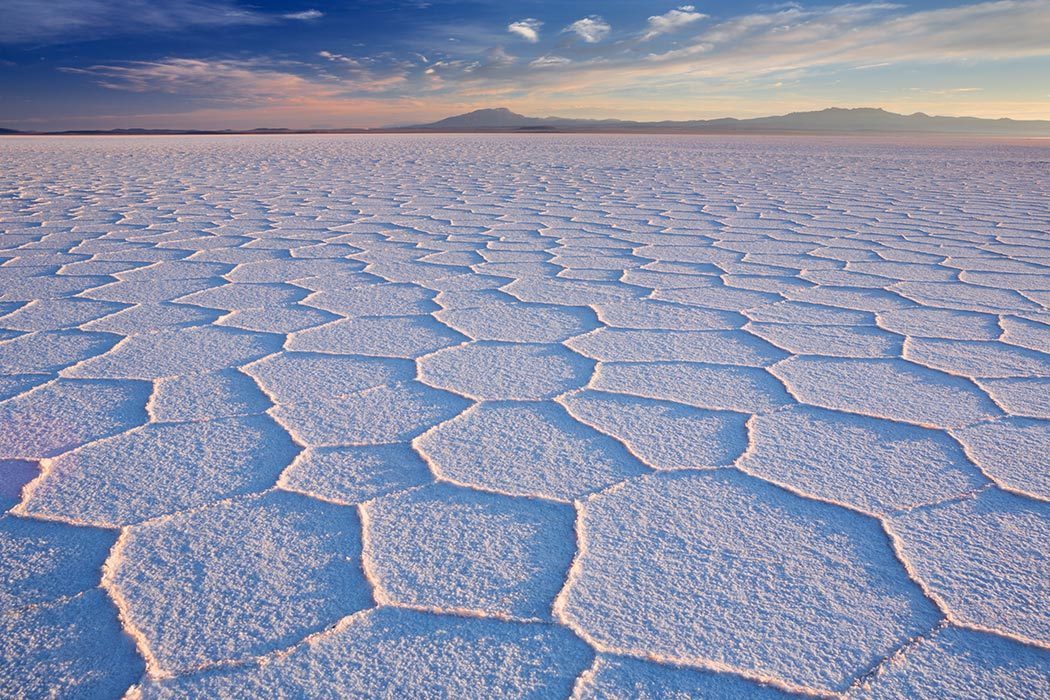
Salar de Uyuni
Salar de Uyuni in Bolivia is home to the largest salt flats on Earth. This incredible place spans over 10,000 square kilometers. The Salar de Uyuni is truly a sight to behold. The vast expanse of white salt is so bright that it feels like you are walking on another planet. And when the rain comes, the salt flats transform into a giant mirror, reflecting the sky and creating an illusion.
Whether you are an experienced traveler or a first-time visitor, the Salar de Uyuni is a must-see destination. But what exactly are they, and how did they form?
In this article, you will explore the origins of the Salar de Uyuni salt flats and how they came to be. So if you have ever wanted to learn more about these fascinating natural wonders, read on.
Origin of Salar de Uyuni
Salar de Uyuni is in Bolivia, South America, and is the world's largest salt flat, covering an area of 10,000 square kilometers (3,900 square miles). The salt flats are at an altitude of 3,656 meters (11,995 feet) above sea level.
The Salar de Uyuni formation was due to the expansion and contraction of several ancient lakes. The salts that remained on the surface of the flats were left behind as the lakes evaporated.
The first recorded exploration of the Salar de Uyuni was by Spanish explorer Antonio de Mendoza in 1541. However, a detailed map of the area was created in 1879 by German geographer Otto Herzberg.
Today, the Salar de Uyuni is a popular tourist destination in Bolivia. Tourists visit to see the stunning landscapes and participate in activities such as 4x4 driving and tours of the salt flat.
Location and Climate of Salar de Uyuni
Salar de Uyuni is located in southwestern Bolivia, near the crest of the Andes, at an elevation of 3,663 meters (12,018 ft). The climate is dry and cold, with average temperatures ranging from -5 to 15 degrees Celsius. The region experiences a large amount of solar radiation due to its high altitude and clear skies.
The small layer of water covering the salt flats evaporates quickly in the sun and wind. It leaves behind a crust of salt that is up to 10 centimeters (4 inches) thick in some places. The salt crust is very fragile, and footsteps can easily break it.
The Flora and Fauna of Salar de Uyuni
Salar de Uyuni is home to a variety of unique flora and fauna. The most notable is the pink flamingo found in the lakes that dot the salt flats. Other animals that call Salar de Uyuni home include vicunas (a type of wild llama), alpacas, guanacos (a relative of the llama), and rabbits.
The plant life in Salar de Uyuni is equally as unique as its animal inhabitants. One of the most striking plants in the area is the quinoa plant, which has adapted to growing in salty soil. Other plants found in Salar de Uyuni include cacti, shrubs, and grasses.
Importance of Salar de Uyuni
The Salar de Uyuni is the world’s largest salt flat, covering an area of over 10,000 square kilometers. The salt flats, located in southwestern Bolivia, are near the town of Uyuni.
The salt flats are a popular tourist destination due to their size and beauty. The vast expanse of white salt creates an otherworldly landscape unlike anything else on Earth. The salt flats are also home to different wildlife, including flamingos, which feed on the algae that thrive in the salty waters.
The Salar de Uyuni has several unique features that make it a scientific site. For example, the flats can be the remnants of a prehistoric lake that once covered most of the region. The salt flats also contain large deposits of lithium used in batteries and other electronic devices. In recent years, the Bolivian government has been working to develop the country’s lithium resources to boost its economy.
Tips for Visiting the Salar de Uyuni
While planning to visit the Salar de Uyuni in Bolivia, here are a few things to keep in mind.
· The best time to visit the salt flats is during the dry season, from May to November, when the salt flats are most spectacular. During this time, a layer of crunchy salt covers the Salar and makes it for great walking.
· Avoid visiting during the wet season (December-April), as the salt flats can become muddy and slippery.
· Pack your sunscreen and sunglasses. The sun reflects off of the salt flats and can be incredibly strong.
· While at the Salar de Uyuni, take a tour of one of the nearby lakes. These lakes are beautiful, and many of them are home to flocks of flamingos.
· You should drink enough water because Salar de Uyuni is quite hot.
What to See and Do at the Salar de Uyuni
The Salar de Uyuni is a stunningly beautiful place and is worth visiting. Here are some of the things you can see and do while you are there:
· Visit the largest salt flats in the world.
· Take in the stunning views.
· Swim in one of the nearby lakes.
· Have fun riding on a jeep or bike across the salt flats.
· Take plenty of photos.
Conclusion
Salar de Uyuni is a unique place that is worth visiting in Bolivia. The experience of being there is unlike anywhere else on Earth, and the salt flats are otherworldly. If you have the opportunity to visit, then do not hesitate. It is an unforgettable experience.
00 Comments
No comments yet.
Leave a Comment