

Sarek National Park
Introduction
Hidden deep within the Arctic wilderness of northern Sweden, Sarek National Park is one of Europe's last truly untouched landscapes. Known as Sweden's Last True Wilderness, this spectacular national park offers an experience unlike any other in Europe. There are no roads cutting through its valleys, no marked hiking trails leading to scenic viewpoints, and no hotels or visitor centers within its boundaries. Instead, Sarek rewards adventurous travelers with soaring mountain peaks, vast glaciers, wild rivers, ancient forests, and complete solitude.
Established in 1909, Sarek is one of Europe's oldest national parks and forms part of the UNESCO-listed Laponian Area, a protected region celebrated for its extraordinary natural beauty and the traditional homeland of the Indigenous Sámi people. Covering nearly 2,000 square kilometers, the park contains six of Sweden's highest mountains, over 100 glaciers, countless alpine valleys, and one of Scandinavia's richest concentrations of wildlife.
Unlike many famous national parks that are filled with visitors during peak season, Sarek remains wonderfully remote. Every expedition here is a genuine wilderness adventure where nature dictates the journey.
Whether you're an experienced trekker, landscape photographer, wildlife enthusiast, or simply searching for one of Europe's most extraordinary hidden gems, this Sarek National Park travel guide will show you why Sweden's last true wilderness deserves a place on every adventurer's bucket list.
Where Is Sarek National Park? Geography and Natural Landscape
Sarek National Park lies in Swedish Lapland, above the Arctic Circle in northern Sweden.
The park sits within the magnificent Scandinavian Mountains, surrounded by other protected wilderness areas that together form one of Europe's largest unspoiled natural regions.
Unlike most national parks, Sarek has no developed tourist infrastructure. Visitors will not find paved roads, designated viewpoints, or maintained hiking trails. Instead, the landscape remains almost exactly as it has for thousands of years.
Towering granite peaks rise above glacier-carved valleys, while braided rivers, alpine meadows, dense birch forests, wetlands, and expansive tundra stretch across the landscape.
This raw and untamed environment has earned Sarek its reputation as Sweden's most authentic wilderness destination.
Why Is Sarek National Park Famous?
Sarek National Park is internationally recognized for offering one of Europe's purest wilderness experiences.
The park is famous for:
- More than 100 glaciers
- Nearly 200 mountain peaks
- Six of Sweden's highest mountains
- Untouched Arctic wilderness
- UNESCO World Heritage status
- Challenging multi-day trekking routes
- Rich Sámi cultural heritage
- Diverse wildlife
- Spectacular glacier valleys
- Midnight Sun and Northern Lights
Unlike many popular European parks, Sarek offers complete immersion in nature, where visitors navigate using maps, compasses, or GPS rather than marked trails.
History of Sarek National Park
For thousands of years, the lands surrounding Sarek have been home to the Indigenous Sámi, whose traditional way of life remains closely connected to the Arctic landscape.
Long before modern conservation efforts, the Sámi moved their reindeer herds through these mountains following seasonal migration routes that are still used today.
Recognizing the area's exceptional ecological value, Sweden established Sarek National Park in 1909, making it one of the first national parks in Europe.
Today, Sarek forms part of the UNESCO-listed Laponian Area, protecting not only one of Europe's greatest wilderness landscapes but also preserving the cultural traditions of the Sámi people.
Top Attractions in Sarek National Park
Rapadalen Valley - Sarek's Most Iconic Landscape
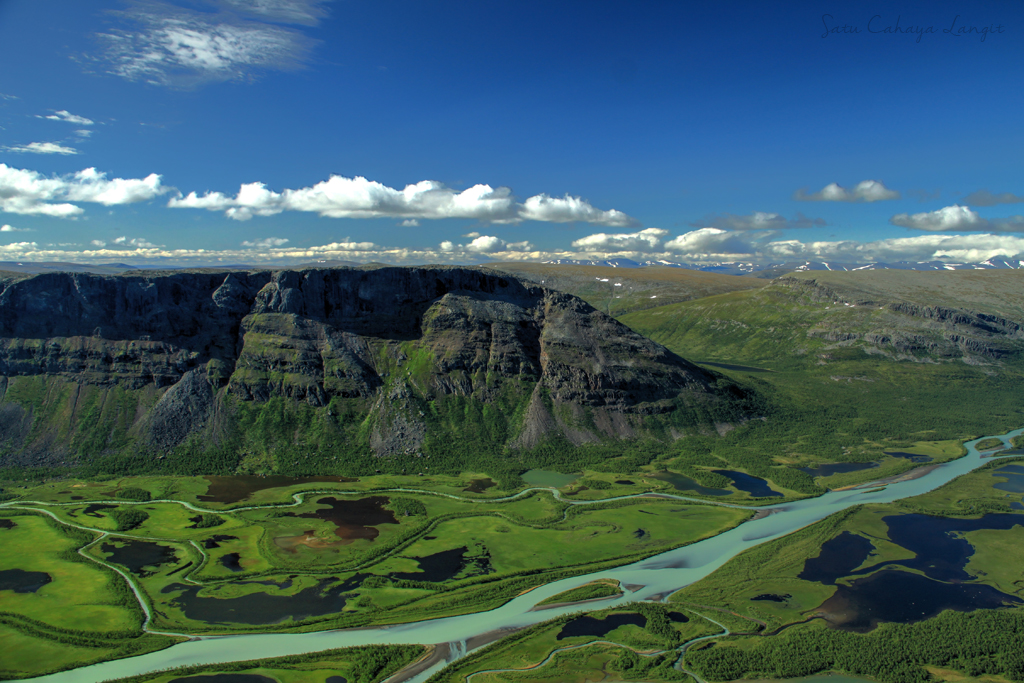
The breathtaking Rapadalen is widely considered the heart of Sarek National Park.
This vast valley features winding rivers, lush vegetation, alpine meadows, and towering mountains that create one of Scandinavia's most spectacular panoramas.
Viewed from nearby mountain ridges, the Rapa River forms an intricate braided delta that has become one of Sweden's most photographed natural landscapes.
For many visitors, Rapadalen perfectly represents the untouched beauty of Sarek.
Sarektjåkkå - One of Sweden's Highest Mountains
Standing at over 2,000 meters, Sarektjåkkå ranks among Sweden's tallest peaks.
Its snow-covered summit dominates the surrounding mountains and attracts experienced climbers seeking one of Scandinavia's greatest mountaineering challenges.
Numerous glaciers descend from its slopes, creating dramatic alpine scenery throughout the park.
The Glaciers of Sarek
Sarek National Park contains more than 100 glaciers, making it one of Sweden's largest glacial regions.
These ancient ice formations have sculpted the surrounding valleys over thousands of years and continue shaping the landscape today.
Many glaciers remain largely inaccessible except to experienced hikers, helping preserve their pristine condition.
Their brilliant blue ice contrasts beautifully with the dark granite mountains and green summer valleys.
Alpine Rivers and Waterfalls
Fed by melting glaciers and seasonal snow, Sarek's rivers are among the most powerful in Scandinavia.
Braided river systems wind through broad valleys while countless waterfalls cascade down steep mountain slopes.
During the summer thaw, these waterways become even more dramatic, creating thunderous rapids and spectacular scenery.
River crossings are often one of the most challenging aspects of trekking through the park.
The Midnight Sun and Northern Lights
Sarek's Arctic location offers two unforgettable natural phenomena.
From late May to mid-July, visitors can experience the Midnight Sun, when daylight continues around the clock, providing endless hours for hiking and photography.
During autumn and winter, dark skies create excellent opportunities to witness the magical Aurora Borealis, as vibrant green and purple lights dance across the Arctic sky.
These seasonal spectacles make Sarek an extraordinary destination throughout the year.
Wildlife in Sarek National Park
Sarek supports one of Scandinavia's richest wildlife populations thanks to its vast protected habitats.
Visitors may encounter:
- Brown Bear
- Wolverine
- Arctic Fox
- Eurasian Moose
- Reindeer
- Golden Eagle
The surrounding mountains also provide habitat for snowy owls, falcons, ptarmigans, and numerous migratory birds.
Because visitor numbers remain low, wildlife behaves naturally, offering exceptional opportunities for photographers and nature enthusiasts.
Best Things to Do in Sarek National Park
Sarek is designed for travelers seeking genuine wilderness adventures.
Popular activities include:
- Multi-day wilderness trekking
- Backpacking expeditions
- Mountaineering
- Wildlife photography
- Glacier exploration
- River valley hiking
- Camping beneath the Midnight Sun
- Northern Lights photography
- Nature observation
- Landscape photography
Unlike traditional tourist destinations, every journey through Sarek requires careful planning, navigation skills, and self-sufficiency.
Sámi Culture and Indigenous Heritage
The Indigenous Sámi people have lived across Swedish Lapland for thousands of years.
Traditional reindeer herding remains central to Sámi culture, with seasonal migrations continuing across landscapes surrounding Sarek National Park.
Visitors exploring nearby communities can learn about Sámi traditions, handicrafts, storytelling, cuisine, and their deep spiritual connection to nature.
Respecting Indigenous culture forms an important part of responsible tourism throughout the region.
Sustainable Tourism and Conservation
Sarek National Park represents one of Europe's finest examples of wilderness conservation.
Strict environmental protections prohibit infrastructure development within the park, allowing natural ecosystems to function without significant human interference.
Visitors are encouraged to follow Leave No Trace principles, carry out all waste, avoid disturbing wildlife, and protect fragile alpine vegetation.
These conservation efforts ensure that Sweden's last true wilderness remains untouched for future generations.
Best Time to Visit Sarek National Park (Month-by-Month Guide)
The ideal time to visit Sarek is between late June and early September.
Summer offers mild temperatures, glacier-free mountain passes, colorful alpine flowers, and nearly continuous daylight beneath the Midnight Sun.
July and August provide the safest conditions for long-distance trekking.
September brings brilliant autumn colors, crisp mountain air, fewer insects, and increasing opportunities to photograph the Northern Lights.
Winter transforms the park into an extreme Arctic wilderness suitable only for experienced winter expeditions.
Each season offers a completely different perspective on Sarek's extraordinary landscapes.
How to Get to Sarek National Park
Because of its remote location, reaching Sarek requires careful planning.
Most travelers begin their journey from Jokkmokk or Gällivare, before continuing by train, bus, boat, or helicopter to access points around the park.
Popular starting locations include Kvikkjokk, Ritsem, and Saltoluokta Mountain Station.
Since there are no roads or tourist facilities inside the park, visitors should carry camping equipment, navigation tools, food supplies, emergency gear, and appropriate clothing for rapidly changing mountain weather.
Essential Travel Tips for Visiting Sarek National Park
Planning is essential before entering Sarek National Park.
- Only experienced hikers should attempt multi-day expeditions.
- Carry detailed topographic maps, a GPS device, and a compass.
- Prepare for unpredictable Arctic weather, even during summer.
- Bring sufficient food, water purification equipment, and emergency supplies.
- Inform someone of your planned route before entering the park.
- Respect wildlife and maintain a safe distance from animals.
- Practice Leave No Trace principles to protect this fragile wilderness.
Good preparation ensures a safer and more rewarding adventure in one of Europe's wildest landscapes.
Why Visit Sarek National Park?
Sarek National Park offers something increasingly rare in today's world - complete wilderness. There are no crowds, no commercial attractions, and no distractions from nature. Instead, visitors experience glacier-covered mountains, roaring rivers, vast valleys, abundant wildlife, and some of the most breathtaking scenery in Scandinavia.
Whether you're trekking across remote Arctic landscapes, photographing wild reindeer beneath the Midnight Sun, climbing Sweden's highest peaks, or simply embracing the silence of untouched nature, Sarek delivers an adventure unlike any other.
For experienced hikers, photographers, and outdoor enthusiasts, it is one of Europe's ultimate wilderness destinations.
Conclusion
Sarek National Park is more than just a national park - it is one of the last places in Europe where nature still reigns supreme. Its glacier-carved valleys, towering mountains, wild rivers, Arctic wildlife, and rich Sámi heritage combine to create an unforgettable destination that feels truly untouched.
As one of Europe's oldest national parks and a UNESCO World Heritage Site, Sarek protects an extraordinary landscape that has inspired explorers, scientists, and adventurers for generations.
For travelers seeking authentic wilderness, breathtaking scenery, and one of Scandinavia's greatest hidden gems, Sarek National Park truly lives up to its title as Sweden's Last True Wilderness.
00 Comments
No comments yet.
Leave a Comment