

Saxon Switzerland National Park
Introduction
Hidden in eastern Germany near the Czech border lies one of Europe’s most extraordinary natural landscapes—Saxon Switzerland National Park. Famous for its towering sandstone cliffs, deep valleys, dense forests, and panoramic viewpoints, this protected area offers one of the most dramatic mountain landscapes in Germany. Despite its name, Saxon Switzerland is not located in Switzerland but was named by Swiss artists in the 18th century who believed the scenery reminded them of their homeland.
Today, Saxon Switzerland National Park attracts nature lovers, hikers, photographers, and rock climbers from around the world. Its unique rock formations and breathtaking views create a landscape that feels almost surreal, making it one of the most remarkable destinations in central Europe.
The region is also part of a larger cross-border protected area connected with Bohemian Switzerland National Park in the Czech Republic, forming one of the most beautiful sandstone landscapes on the continent.
For travelers seeking adventure, tranquility, and spectacular natural scenery, Saxon Switzerland National Park offers an unforgettable journey into Germany’s dramatic sandstone mountains.
Geography and Environment
Saxon Switzerland National Park is located in the German state of Saxony along the valley of the Elbe River. The park covers a relatively small area but features a remarkably diverse and rugged terrain shaped over millions of years by erosion.
The landscape is dominated by sandstone formations created during the Cretaceous period when the region was once covered by a prehistoric sea. Over time, wind, water, and geological processes carved the soft sandstone into towering pillars, cliffs, arches, and narrow gorges.
The park forms part of the larger Elbe Sandstone Mountains, a unique geological region shared between Germany and the Czech Republic. These mountains rise dramatically above forests and river valleys, creating a labyrinth of rock formations that are unlike any other in Europe.
The environment is also home to a rich variety of plant and animal species. Ancient forests, moss-covered rocks, and clear streams provide habitats for rare wildlife, making the park an important ecological sanctuary.
Dramatic Landscapes and Natural Wonders
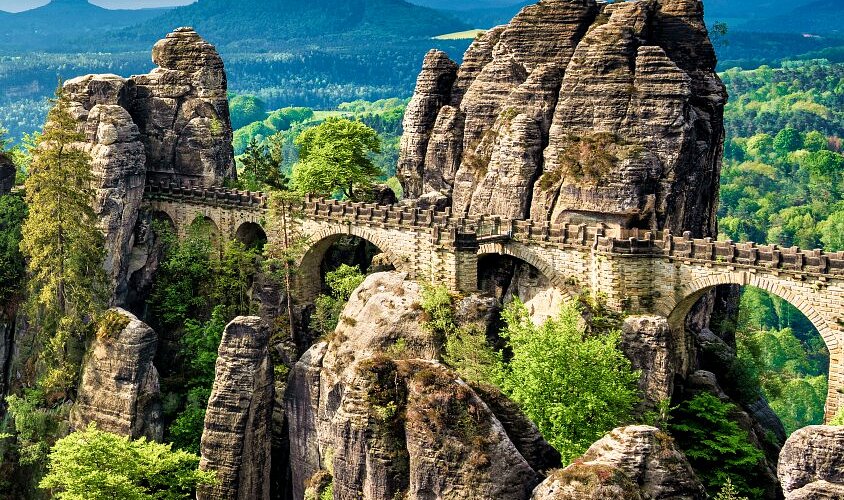
One of the most iconic landmarks in the park is the Bastei Bridge, a breathtaking stone bridge built in the 19th century that connects several towering rock formations. Perched high above the Elbe River valley, the bridge offers panoramic views of the surrounding sandstone cliffs and forests.
Another remarkable formation is the Schrammsteine, a series of jagged sandstone peaks that rise dramatically above the forested landscape. Hiking along these ridges provides some of the most spectacular viewpoints in the park.
Deep ravines and narrow valleys wind through the landscape, creating an almost mystical atmosphere in certain areas. Dense forests cover much of the terrain, particularly in remote sections of the park where nature has been allowed to evolve without human interference.
Sunrise and sunset are especially magical times to visit the viewpoints, when golden light illuminates the sandstone cliffs and morning mist drifts through the valleys below.
Wildlife and Natural Ecosystems
Saxon Switzerland National Park supports a rich and diverse ecosystem. The dense forests and rocky terrain provide ideal habitats for many species of wildlife.
Among the most notable animals found in the park is the Eurasian Lynx, a rare predator that has slowly returned to parts of central Europe after centuries of decline. Other wildlife includes deer, wild boar, foxes, and numerous bird species.
The park’s cliffs also serve as nesting grounds for birds of prey such as the Peregrine Falcon, which hunts along the rocky cliffs and valleys.
In addition to wildlife, the park is home to a wide variety of plant species adapted to rocky environments and shaded forest floors. Mosses, ferns, and rare flowers thrive in the moist microclimates created by the sandstone formations.
These ecosystems are carefully protected, ensuring the park remains one of Germany’s most valuable natural landscapes.
History and Cultural Significance
Although Saxon Switzerland is primarily known for its natural beauty, the region also holds historical significance. The dramatic landscapes have inspired artists, writers, and travelers for centuries.
In the 18th century, Swiss painters visiting the region were struck by the resemblance between the sandstone mountains and the Alps, which led them to nickname the area “Saxon Switzerland.”
One historical landmark located within the park is Königstein Fortress, one of the largest hilltop fortresses in Europe. Built atop a massive sandstone plateau, the fortress has served various roles throughout history, including as a military stronghold and royal refuge.
The fortress now functions as a museum, offering visitors insight into the region’s past while providing spectacular views over the Elbe valley and surrounding mountains.
Adventure and Outdoor Activities
Saxon Switzerland National Park is widely regarded as one of the best outdoor adventure destinations in Germany. The park features more than 1,000 kilometers of hiking trails that wind through forests, valleys, and dramatic rock formations.
Hiking routes range from gentle forest walks to challenging climbs that lead to breathtaking viewpoints. The Malerweg Trail, also known as the “Painter’s Way,” is one of the most famous long-distance hiking routes in the region, named after the artists who once painted the landscape.
Rock climbing is another popular activity in the park. The sandstone cliffs attract climbers from around the world who follow strict traditional climbing rules designed to protect the fragile rock surfaces.
Cycling, river kayaking, and scenic boat tours along the Elbe River also allow visitors to explore the landscape from different perspectives.
Sustainability and Conservation
Saxon Switzerland National Park is dedicated to preserving its unique geological formations and fragile ecosystems. Large areas of the park are protected as wilderness zones where natural processes are allowed to continue without human interference.
Visitors are encouraged to follow designated trails and respect conservation guidelines that help protect wildlife habitats and prevent erosion of the sandstone cliffs.
Local communities also support sustainable tourism initiatives, promoting eco-friendly travel options such as hiking, cycling, and public transportation.
These efforts ensure that the region’s remarkable landscapes remain preserved for future generations.
Best Time to Visit Saxon Switzerland
Saxon Switzerland National Park can be visited year-round, though each season offers a unique experience.
Spring brings blooming wildflowers and fresh green forests, making it ideal for hiking and nature photography.
Summer offers warm temperatures and long daylight hours, perfect for exploring trails and outdoor activities.
Autumn transforms the forests into vibrant shades of red, orange, and gold, creating some of the most scenic landscapes in Germany.
Winter covers the sandstone cliffs and forests in snow, creating a peaceful and magical atmosphere for winter hikes and photography.
Transport and Accessibility
The national park is easily accessible from the nearby city of Dresden, which lies approximately 30 kilometers away. Regular train services connect Dresden to towns along the Elbe valley, making travel convenient for visitors.
From these towns, buses, hiking trails, and ferries provide access to different areas of the park.
Many travelers also explore the region by bicycle along the scenic Elbe River cycling route, which passes through picturesque villages and dramatic landscapes.
Despite its accessibility, large parts of the park remain peaceful and uncrowded, allowing visitors to fully enjoy the natural surroundings.
Why Visit Saxon Switzerland National Park?
Saxon Switzerland National Park offers a truly unique landscape that cannot be found anywhere else in Germany. Its towering sandstone cliffs, panoramic viewpoints, and lush forests create a natural environment that feels both dramatic and serene.
For hikers, photographers, and outdoor enthusiasts, the park provides endless opportunities for exploration and adventure. The combination of breathtaking scenery and well-preserved ecosystems makes it one of the most rewarding destinations in central Europe.
Its proximity to Dresden also makes it an easy addition to any travel itinerary in Germany or the Czech Republic.
Conclusion
Saxon Switzerland National Park stands as one of Europe’s most remarkable natural landscapes. Carved by millions of years of geological forces, its sandstone mountains, deep valleys, and forested plateaus create a landscape that feels both ancient and awe-inspiring.
From the famous Bastei Bridge to the towering Schrammsteine cliffs and the historic Königstein Fortress, the park offers countless opportunities to explore and admire its extraordinary beauty.
For travelers seeking dramatic scenery, outdoor adventure, and peaceful wilderness, Saxon Switzerland National Park represents one of Germany’s most unforgettable destinations—a true masterpiece of nature in the heart of Europe.
00 Comments
No comments yet.
Leave a Comment