

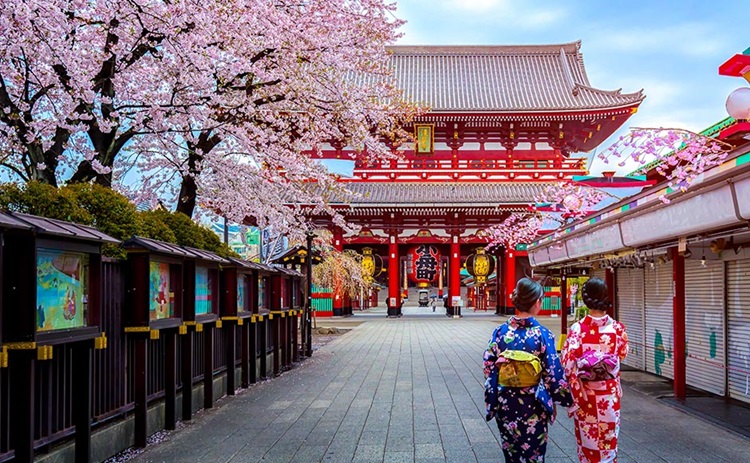
Sensō-ji Temple
Sensō-ji is a Buddhist temple located in Asakusa, Tokyo, Japan. It is one of Tokyo's most visited tourist destinations and the city's oldest temple. The temple was built in 645 AD to honor the memory of Kannon, the Bodhisattva of Compassion.
The temple complex is extensive and includes a five-story pagoda, a main hall, and a theatre. The main hall is the most popular spot in the complex and is the site of many of the temple’s festivals and events.
If you are planning to visit Tokyo, Sensō-ji is a must-see. Keep reading for a travel guide to Sensō-ji, including tips on how to get there, what to see, and where to eat.
History behind the Sensō-ji Temple
Buddhist temple Sens-ji is situated in Tokyo, Japan's Asakusa district. The Buddhist goddess of mercy, Kannon Bosatsu, is the patron saint of the temple, which was established in the year 645 AD.
A statue of the Kannon was allegedly discovered in the Sumida River in 628 AD by brothers Hinokuma Hamanari and Takenari, two fishermen. Hajino Nakamoto, the local leader, understood the statue's sacredness and preserved it by converting his own home into a modest temple in Asakusa so that the villagers may worship Kannon.
The temple has endured countless fires, earthquakes, and battles over its lengthy and intriguing history. During the Edo era, it was even used as a military base (1603-1868).
Sens-ji has remained one of Tokyo's most significant cultural and spiritual sites despite its turbulent past. It is one of the most popular tourist destinations in the city and is thought to be its oldest temple. Millions of people travel here every year from all over the world.
Beauty of the Sensō-ji Temple
Sensō-ji's architecture and delicate workmanship are among its most prominent characteristics. The "Thunder Gate" or "Kaminarimon," the temple's main gate, is a stunning red building with a sizable paper lantern hanging in the middle. The gate, which leads to the temple grounds, sets the scene for the elegance that awaits inside.
Beautiful gardens, pagodas, and other buildings will be all around you as you go around the temple grounds. The statue of Kannon Bosatsu is located in the temple's "Honzon Hall," which is surrounded by incense burners that emit the fragrant aroma of burning incense.
The Asakusa Shrine, which is situated just beyond the main temple grounds, is another Sens-ji attraction that is a must-see. This shrine, which plays a significant role in the history of the temple, is devoted to the three men who found the ancient statue of Kannon Bosatsu.
Visiting the Sensō-ji Temple and the surrounding street
When you visit Sens-ji, you should immerse yourself in Japanese culture and history in addition to admiring the temple's aesthetic appeal. People praying and engaging in ritualistic actions like lighting incense and giving sacrifices can be seen as you go through the temple grounds. Additionally, there are numerous stores positioned in the Nakamise-dōri, the street surrounding the temple where you can buy mementos such as omamori (lucky charms).
Nakamise-dōri
On the way to the temple, there is a street called the Nakamise-dori. It is said to have started when Sensō-ji's neighbors were permitted to open stores on the road leading up to the temple in the early 18th century.
The Tokyo government, however, issued a directive in May 1885 for all store owners to vacate. The area was rebuilt in Western-style brick in December of that same year. Many of the stores were demolished after the Great Kant earthquake in 1923; they were later rebuilt using concrete in 1925 and damaged once more during World War II airstrikes.
Today, the street is about 250 meters (820 feet) long, and it has 89 stores.
How to get to the Sensō-ji in Tokyo, Japan?
Senso-ji is situated in Tokyo's Asakusa district and is conveniently reachable by cab and public transportation. The Tokyo Metro Ginza Line, the Tobu Sky Tree Line, the Tsukuba Express Asakusa Station, and the Toei Asakusa Line are the stations that are most convenient to Sensoji Temple. From either of these stations, it takes 5 minutes to walk to Sensoji Temple.
· By Train
Taking the train is the most feasible way to travel to Sensoji. The Tokyo Metro Ginza Line and the Tobu Skytree Line both stop at Asakusa Station, which is only a short distance from the temple. You may get to the temple quickly by simply following the directions from the station.
· By Taxi
A quick and convenient method to go to Sensoji is to take a cab, which is another option. Just let the driver know where you want to go, and they will take you there. In Tokyo, taxis are widely available.
The temple is open from 6:30 am to 5:00 pm from October to March and for the rest of the year, it opens half an hour early.
Conclusion
A trip to Tokyo is not complete without stopping at Senso-ji. The temple provides a unique and fascinating experience while serving as a monument to the rich history and culture of Japan. Senso-ji has plenty to offer everyone, regardless of their level of interest in the architecture, culture, or history of the temple. So be sure to include this amazing temple on your itinerary and explore Sensoji's beauty.

00 Comments
No comments yet.
Leave a Comment