

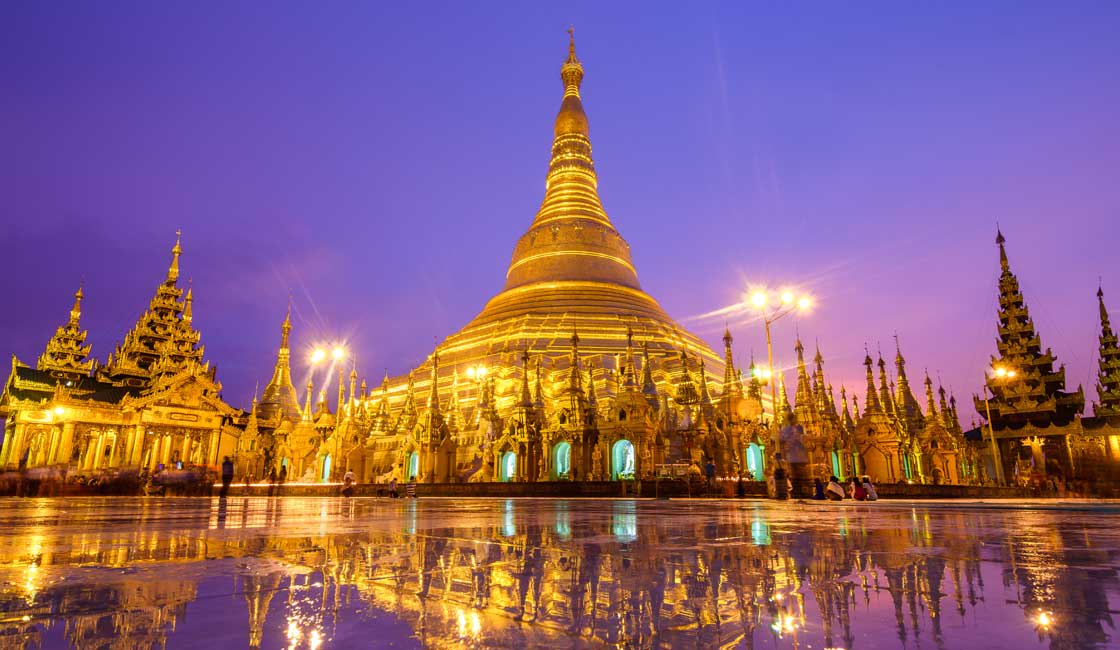
Shwedagon Pagoda
The Shwedagon Pagoda is one of Myanmar's most important religious landmarks, and it attracts visitors and pilgrims from all over the world. The pagoda is a 99-meter-tall edifice studded with hundreds of diamonds, rubies, and other valuable stones. The pagoda's spiritual significance stems from the belief that it holds precious relics such as strands of the Buddha's hair and other vital relics from past Buddhas.
Beyond its religious significance, the Shwedagon Pagoda is also an embodiment of Myanmar's culture and history. It has played a central role in the country's political and social landscape for over 2,500 years, surviving wars, political upheavals, and natural disasters. The pagoda is a symbol of the resilience and strength of the Myanmar people, who have upheld their traditions and beliefs despite centuries of external influences.
This article will take you on a cultural tour of Myanmar while examining the Shwedagon Pagoda's history, significance, and value to the local populace. We will explore the pagoda's architectural features, religious and cultural significance, and function in Myanmarese citizens' daily lives. Join us as we embark on a fascinating tour of one of the most stunning and spiritually significant buildings in the entire world.
Why Is Shwedagon Pagoda Famous?
The Shwedagon Pagoda is well-known for a variety of reasons, including its historical significance, architectural splendor, and religious significance. Following are some of the reasons why the Shwedagon Pagoda is so well-known and revered:
· Religious Importance: The Shwedagon Pagoda is a revered Buddhist site and is believed to house sacred relics of the Buddha and other important Buddhist figures. It is considered to be one of the most sacred places in Myanmar and attracts pilgrims and devotees from all over the world.
· Architectural Splendor: The pagoda is a marvel of architectural and artistic achievement, with its towering spire, intricately carved facades, and gleaming golden surface. The pagoda is covered in over 60 tons of gold leaf and is adorned with thousands of diamonds, rubies, and other precious stones.
· Historical Significance: The Shwedagon Pagoda has a rich and fascinating history, dating back over 2,500 years. It has survived wars, invasions, and natural disasters and has played a central role in the country's political and social landscape.
· Cultural Importance: The pagoda is an embodiment of Myanmar's culture and identity and is a symbol of the resilience and strength of its people. It is an important site for festivals and other cultural events and is a must-visit destination for anyone interested in Myanmar's rich cultural heritage.
Overall, the Shwedagon Pagoda is famous for its religious, architectural, historical, and cultural significance, and it is a true gem of Southeast Asia.
What Is The History Of Shwedagon Pagoda?
The Shwedagon Pagoda has a more than 2,500-year history. According to legend, the original pagoda was built during the time of the Buddha and housed eight strands of his hair. Over the centuries, the pagoda has been destroyed and rebuilt many times, with each successive ruler and dynasty adding to its grandeur and beauty.
The current pagoda was built during the reign of the Mon King, Binnya U, in the 15th century. The king commissioned the construction of a new pagoda and ordered that it be covered in gold. The task was completed in 1479, and the pagoda became a symbol of the Mon people's wealth and power.
Over the centuries, the pagoda has been damaged by earthquakes, fires, and invasions. It has been rebuilt and renovated many times, with each successive ruler and dynasty adding to its grandeur and beauty. The pagoda was extensively renovated during the reign of King Hsinbyushin in the 18th century and again during the British colonial period in the early 20th century.
Today, the Shwedagon Pagoda remains one of the most important religious and cultural sites in Myanmar, and is a source of pride and inspiration for the country's people. It is a testament to the resilience and strength of the Myanmar people, who have preserved their traditions and beliefs despite centuries of external influences.
What Is The Architecture Of Shwedagon Pagoda?
The Shwedagon Pagoda's architecture is a unique combination of Burmese, Mon, and Indian traditions, reflecting the region's long and complicated history. The pagoda is made consisting of a gigantic bell-shaped stupa, or dome, coated with gold leaf and embellished with hundreds of precious stones.
The base of the stupa is surrounded by a series of smaller pagodas, shrines, and pavilions, each with its own distinctive architectural style. The eastern entrance is marked by a towering gateway known as the Shinbyu Gate, which is adorned with intricate carvings and sculptures depicting scenes from Buddhist mythology.
The stupa is topped by a diamond-encrusted umbrella, which is said to symbolize the Buddha's enlightenment. The umbrella is surrounded by a ring of bells, which tinkle gently in the breeze, creating a soothing and tranquil atmosphere.
The pagoda is also decorated with a number of other ornamental features, such as Buddha statues, legendary animals, and beautiful floral motifs. The pagoda's inside is just as elaborate, with complex carvings, paintings, and gold leaf embellishments covering every surface.
Ultimately, the building of the Shwedagon Pagoda is a monument to the Burmese people's talent and inventiveness, as well as a reflection of the region's rich cultural legacy. It is a one-of-a-kind and stunning example of Buddhist architecture that serves as a source of inspiration and wonder for visitors.
What Is The Entrance Fee For Shwedagon Pagoda?
Are you planning a trip to Shwedagon Pagoda and thinking about whether can you go inside Shwedagon Pagoda or not? Well, let us tell you that you have to pay the fees for it. The entry fee for foreign visitors is approximately $6 per person. However, Myanmar citizens and Buddhist monks, and nuns are allowed to enter for free. Yes, visitors can go inside the Shwedagon Pagoda.
How To Get There?
The Shwedagon Pagoda is located in Yangon, the largest city in Myanmar. There are several ways to get there, depending on your starting point.
· If you are arriving from Yangon International Airport, the easiest way to reach the pagoda is by taxi or ride-hailing service. The journey takes around 30 minutes, depending on traffic.
· If you are arriving from downtown Yangon, you can take a taxi, ride-hailing service, or public bus to the pagoda. Taxis and ride-hailing services are readily available, and the journey should take around 10-15 minutes.
· If you are arriving by train, the nearest station is Yangon Central Railway Station, which is located around 5 kilometers from the pagoda.
Conclusion
The Shwedagon Pagoda is a magnificent and awe-inspiring landmark that symbolizes Myanmar's rich cultural history and spiritual traditions. Its history, architecture, and spiritual importance have made it one of the country's most famous tourist destinations, attracting people from all over the world. The long and complicated history of the pagoda demonstrates the perseverance and fortitude of the Myanmar people, who have maintained their traditions and beliefs despite decades of external influences.
The pagoda has been rebuilt and refurbished several times, with each succeeding emperor and dynasty adding to its magnificence and beauty. It has withstood earthquakes, fires, and invasions to become a symbol of resistance to colonial power and a source of inspiration for the people of Myanmar. So, why to wait? Plan your trip to Shwedagon Pagoda, Myanmar.

00 Comments
No comments yet.
Leave a Comment