

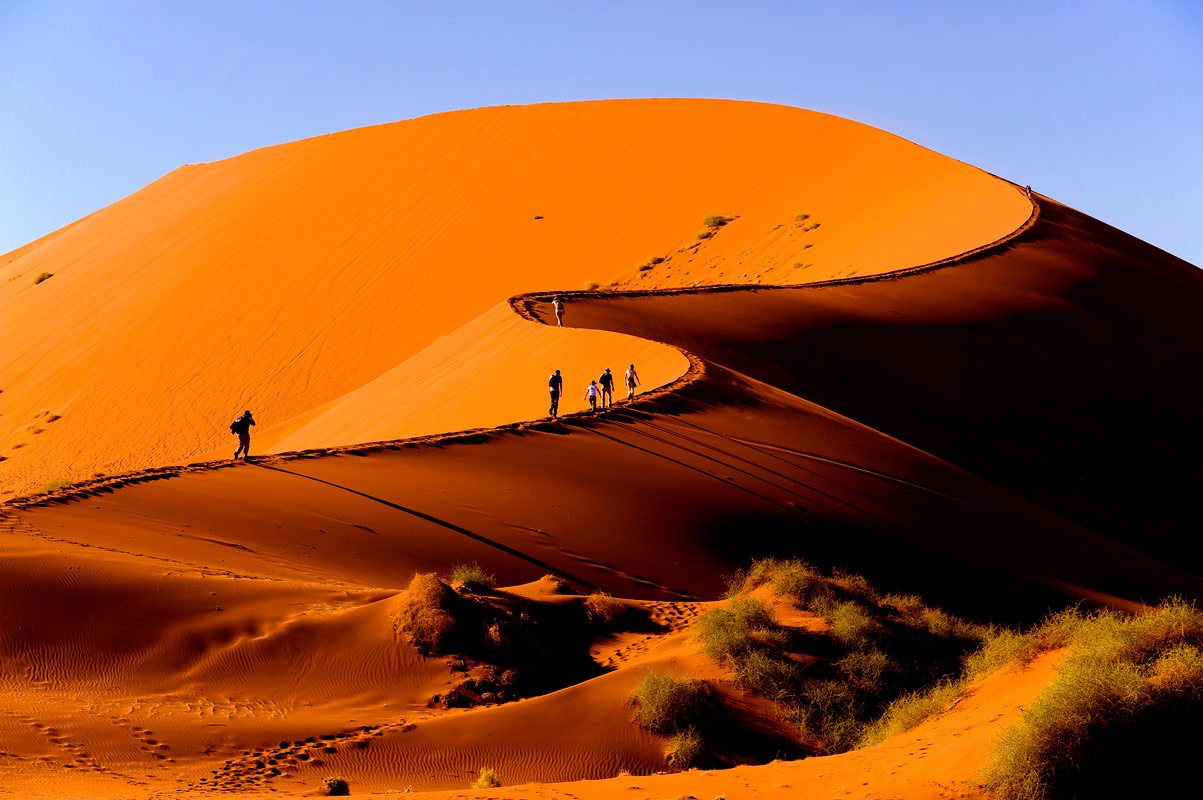
Sossusvlei Dunes
The Sossusvlei Dunes are some of the largest sand dunes in the world. They are located in the Namib Desert in Namibia and are a popular tourist destination. The dunes are made up of sand that has been blown here from the nearby Orange River. The sand is rusty red in color, and the dunes are incredibly beautiful.
The Sossusvlei Dunes are a great place to hike, camp, and photograph. The best time to visit the dunes is in the early morning or evening when the light is softer. If you are planning a trip to Namibia, add the Sossusvlei Dunes to your itinerary. This article will let you explore the Sossusvlei dunes and what makes them so special.
Sossusvlei Dunes: Overview
The Sossusvlei region is a salt and clay pan surrounded by high red dunes. The name "Sossusvlei" means "dead-end marsh" in Afrikaans. The Sossusvlei region is a part of a larger, homogeneous southern Namib area (approximately 32.000 square kilometers) that stretches between the Koichab and Kuiseb rivers.
This region is distinguished by tall, brilliant pink-to-orange sand dunes, which are a result of oxidation processes brought on by the presence of a lot of iron in the sand. The Sossusvlei dunes are some of the most beautiful and unique sand dunes in the world.
Dunes with a stronger reddish color are the oldest. These dunes rank among the tallest in the world; most of them rise above 200 meters; the tallest being Big Daddy, which is around 325 meters high; however, Dune 7 in the Namib Desert is the tallest at about 388 meters.
The vegetation atop the highest and most stable dunes is mostly watered by a variety of underground and ephemeral channels that occasionally flood the pans, forming wetlands known as vlei. When dried, these pans appear nearly white in color because of the high salt concentration. The humidity produced by the frequent morning fogs that approach the desert from the Atlantic Ocean is another important water source for Sossusvlei.
Fauna of Sossusvlei, Namibia
The Sossusvlei region has a comparatively diverse fauna. The majority of its inhabitants are small animals that can live without much water, such as various arthropods, tiny reptiles, and small mammalian species like rodents or jackals; larger animals like antelopes (mostly springboks and oryxes), and ostriches are also present. Several migrating bird species can be seen among the rivers and marshes during the flood season.
The fauna of Sossusvlei and the Namib is largely indigenous and well-adapted to the distinctive characteristics of the Namib. The Namib Desert Beetle is one example of a fog beetle that has mastered the art of collecting water from morning fog through the bumps on its back.
What to see in Sossusvlei, Namibia?
Sossusvlei is one of the most famous tourist attractions in Namibia. Located in the southern part of the country, this area is home to some of the most iconic landscapes in the world and is known for its deep red dunes, which contrast sharply with the white salt flats.
If you're planning a visit to Sossusvlei, there are a few things you won't want to miss. Here are some of the highlights of this incredible place:
· Elim Dune
On a side road leading from Sesriem to Sossusvlei, 5 kilometers past the Sesriem gate, sits the high and very remote Elim Dune. Before the National Park was created, there was a farm in the region that gave the dune its name.
· Dune 45
Due to its location 45 kilometers past Sesriem on the way to Sossusvlei, Dune 45 earned its name. It is made of sand that is five million years old and is 80 meters high.
· Sesriem Gate
From the Sesriem gate, situated in the vicinity of the named canyon, visitors can enter the Sossusvlei region of the Namib-Naukluft National Park. A 60-kilometer tarmac road connects Sesriem to the actual Sossusvlei.
· Sossusvlei
About 66 kilometers after the Sesriem gate is Sossusvlei. Only 4WD vehicles can go the final 6 km because the metalized road stops and is replaced by sand. A clay pan with a roughly elliptical form, Sossusvlei is coated in a layer of salt-rich sand. The Tsauchab River has molded the pan with time, however flooding the pan is a very uncommon occurrence, and there may be a gap of several years between floods.
Most of the year, the river is dry, and when it is not, it only supplies the vlei with a small amount of water. High orange-reddish dunes surround the vlei, which is partially bordered by flora made up of bushes, grass, and some trees.
· Big Daddy
With a height of about 325 meters, Big Daddy is the tallest dune in the Sossusvlei region. Big Daddy is situated close to Deadvlei, past the actual Sossusvlei. It overlooks "Big Mama," another extremely high dune. Nearby Dune 7 is different from Big Daddy.
· Deadvlei
Another clay pit, Deadvlei, is located around 2 kilometers from Sossusvlei. One interesting aspect of Deadvlei is that it was formerly an oasis with several camelthorn trees, but the river that supplied the oasis with water altered its path after that. As a result, the pan is broken by charcoaled, dead camelthorn trees, which stand out sharply against the pan's brilliant white, salty floor and its strong orange dunes. This results in a particularly intriguing and surrealistic scene.
· Hiddenvlei
In the vicinity of Sossusvlei is another vlei called Hiddenvlei (or Hidden Vlei). It is the less popular place and is located 4 kilometers from the 2x4 parking.
· Petrified Dunes
The Sossusvlei region contains several petrified dunes, which are sand dunes that have turned to rock.
Visitors to Sossusvlei can explore the pan by foot, or take a 4x4 vehicle out onto the salt flats. There are also several hiking trails in the area, which allow visitors to explore the dunes and get up close to the wildlife. Sossusvlei is an excellent spot for photography, and the area is also popular for sandboarding and stargazing.
How to get to Sossusvlei in Namibia?
Sossusvlei is situated in the southern region of Namib-Naukluft National Park. It is a nearly 5 hour drive from Windhoek, the nation's capital, and Swakopmund, a popular tourist destination. The route to get to Sossusvlei is gravel but in decent shape, and the location is a remote area.
Sesriem is the closest city. Although it is more of a tourist-oriented town than a true village, you will still find a gas station and a few small stores selling everyday necessities.
What is the best time to visit Sossusvlei, Namibia?
Sossusvlei may be visited at any time of the year because of its position and climate. Namibia is one of the warmest places in the world, with 300 sunny days on average each year!
You are advised to visit Sossusvlei Dunes between May and October when the area is more fun to explore due to the colder winter temperatures. Due to the popularity of travel during Southern African school breaks, camping and lodging alternatives can become limited.
Summertime visitors should be aware that it might get rather heated there. Always bring enough water with you when you travel.
Conclusion
Sossusvlei is home to some of the tallest red dunes in the world. The Sossusvlei dunes are a unique and beautiful natural phenomenon. These massive dunes are a sight to behold, and you can even hike to the top for an incredible view. Although they may seem inaccessible, with a little planning and preparation, anyone can experience these majestic dunes firsthand. So why not add a visit to the Sossusvlei dunes to your Namibia travel itinerary? You won't be disappointed!
00 Comments
No comments yet.
Leave a Comment