

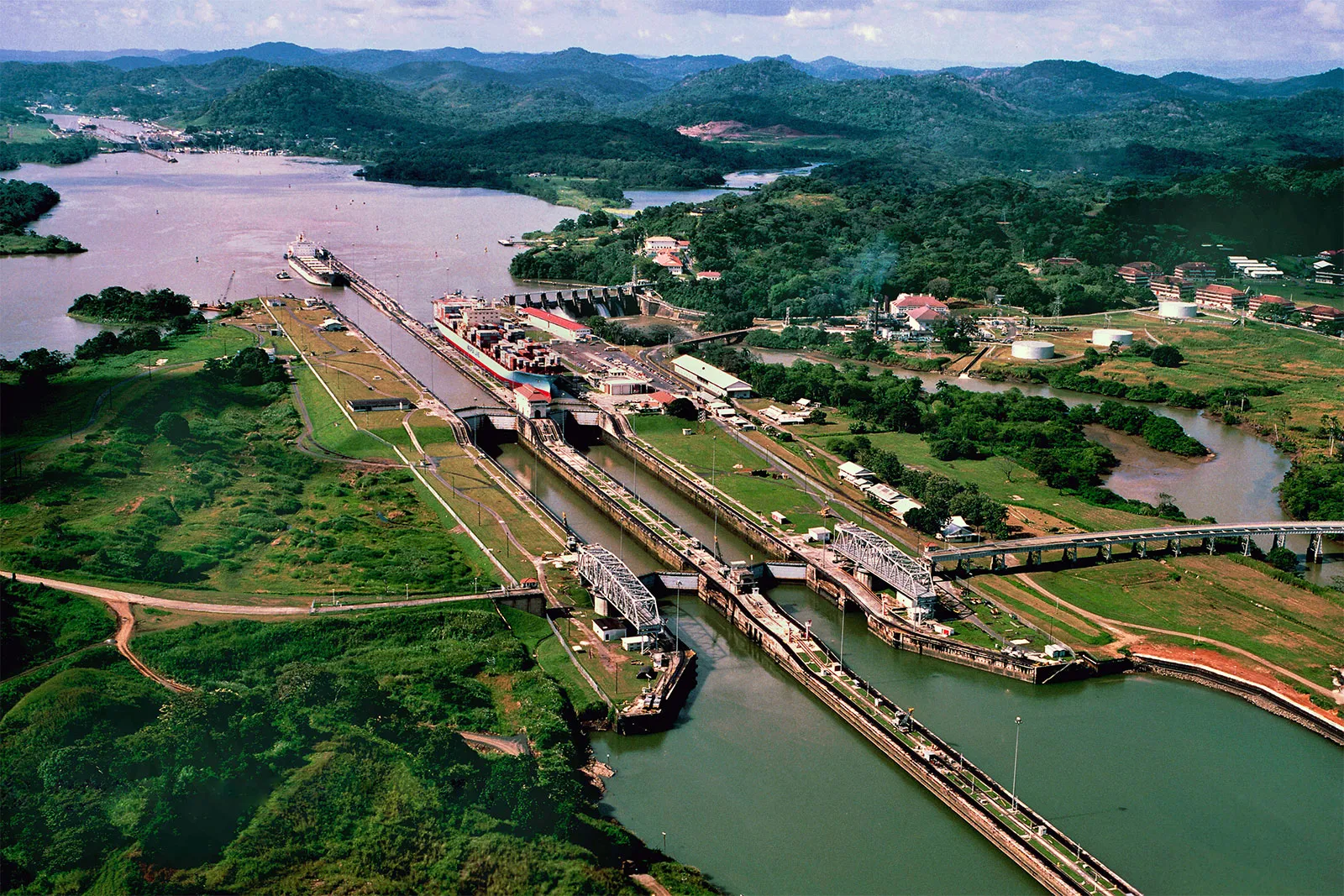
The Panama Canal
The Panama Canal is an artificial waterway joining the two oceans: the Pacific and the Atlantic. It is considered one of the exceptional engineering feats of the 20th century. The canal cuts through the Isthmus of Panama and has reduced travel time and distances for ships between East Coast ports in the United States and Asia.
The canal opened in 1914 and is 50 miles long, and it typically takes ships about 8 to 10 hours to transit. It has been expanded several times since its original construction and can now accommodate large cargo ships known as Panamax vessels.
The Panama Canal is a strategic route for global trade and has been named the “bridge between two continents”. Over 14,000 vessels transit the canal each year, carrying approximately 200 million tons of cargo. This article will give you a complete guide to the Panama Canal, a popular tourist attraction in the nation.
The Panama Canal: A brief history
The Panama Canal is an artificial waterway that traverses the Isthmus of Panama. It is considered one of the engineering feats of the 20th century. The canal built by the United States took ten years to complete in 1914, and Panama Canal Authority currently operates it.
The canal has had an intense impact on maritime commerce and has been the main factor in the development of Panama as a country. This canal also provides a crucial link between the Pacific and Atlantic oceans.
The idea for a canal across Panama dates back to the early 16th century. However, it was not until 1881 that construction on the canal began under French engineer Ferdinand de Lesseps. The project soon faced difficulties due to disease and engineering problems and was eventually abandoned in 1889.
In 1902, the United States took over the project and began work on one of the engineering feats in history. The US completed the construction of the canal in 1914, and it officially opened on August 15th of that year.
Since its opening, the Panama Canal has undergone several expansion projects to accommodate larger vessels. In 2016, a major expansion in the project was completed that doubled the canal's capacity and allowed it to accommodate even larger ships.
How the Panama Canal works
The Panama Canal is one of the most incredible engineering feats of the modern world. Here is a quick guide to knowing the working of the Panama Canal.
Constructed between 1904 and 1914, the Panama Canal is an artificial waterway that stretches 80 kilometers (50 miles) from the Atlantic Ocean to the Pacific Ocean. It allows ships to avoid sailing around South America – a journey that can take up to three weeks.
The canal has three sets of locks, which raise and lower the ships as they pass through. It also has a freshwater lake called Gatun Lake, which provides water to operate the locks.
When a ship enters the canal, it first passes through the Gatun Locks from the Caribbean Sea side. These raise the ship 26 meters (85 feet) above sea level to Gatun Lake. This ship then sails across Gatun Lake – a journey that takes around six hours – before passing through another set of locks called the Pedro Miguel Locks, which lowers it 9 meters (30 feet) into the Pacific Ocean side of the canal. The Panama Canal is one of the busiest waterways in the world, handling around 14,000 vessels each year.
Benefits and Challenges of The Panama Canal
The Panama Canal is an artificial waterway that runs through Panama. It was built to connect the Pacific and Atlantic oceans and is considered the most important engineering feat in history. The canal has had an intense impact on global trade and has played a significant role in the development of Panama.
The canal has many benefits, including reducing travel time and costs for ships traveling between the East Coast of the United States and Asia. It also provides a shortcut for ships traveling between the Atlantic and Pacific oceans. The canal has had a positive impact on the economy. This impact is due to the fact that it is a major source of income in the nation.
Despite its many benefits, the Panama Canal faces some challenges. One challenge is environmental damage. The canal's construction involved dredging a large amount of sediment from its bottom, which can damage marine ecosystems. Additionally, the large ships that use the canal release harmful air pollutants into the environment.
Another challenge facing the Panama Canal is congestion. The number of ships using the canal has increased significantly in recent years, leading to delays and longer wait times for vessels traveling through the waterway. To address this issue, Panama is currently expanding the canal to accommodate larger ships and handle more traffic.
Panama Canal's impact on global trade
The Panama Canal is a major shipping route that connects the Atlantic and Pacific Oceans. It is an important conduit for global trade, with over 14,000 ships passing through the canal each year.
The canal has had a profound impact on global trade patterns. It has facilitated the transport of goods between the East and West coasts of North America and also allowed for the increased movement of goods between Asia and Latin America. The Panama Canal has also been a vital route for transporting crude oil from the Middle East to the United States.
The Panama Canal has had a significant impact on the economy of Panama. The canal accounts for a large portion of Panama's GDP and employs around 10% of the country's workforce. The Panama Canal Authority is one of the largest employers in Panama.
The Panama Canal had an impact on the environment which resulted in the displacement of millions of gallons of water each day. It caused changes in local ecosystems and led to the extinction of some species of fish.
How to Visit the Panama Canal
Assuming you are starting from Panama City, the easiest way to visit the Panama Canal is to take a tour from one of the many operators in the city. This tour will include transportation to and from the canal and a guide. The guide will explain the history and operations of the Panama Canal during your visit.
If you are feeling adventurous, visit the canal yourself. To do this, you will need to take a bus or taxi to any one of its entrances (the Miraflores Visitor Center is the most popular option). Once there, you can explore on your own or take a guided tour. Please note that if you are visiting on your own, purchase a ticket in advance as it is not available at the entrance gates.
Things to do at Panama Canal
The list of the numerous things to do while visiting the Panama Canal is as follows:
· Visit the Panama Canal Museum: The Panama Canal Museum is in the heart of the Panama Canal Zone in Balboa, Panama. The museum tells the story of the canal and its impact on world history.
· Go on a Panama Canal Cruise: A Panama Canal cruise is a great way to see the canal up close and learn about its history and operation. There are many cruises available, so you can choose one that fits your schedule and interests.
· Tour the Miraflores Locks: The Miraflores Locks is one of the most popular tourist attractions at the Panama Canal. Visitors can watch ships pass through the locks from an observation deck. Also, there is a museum and visitor center on-site.
· Watch a Ship Transit Through Gatun Lake: Gatun Lake is one of the largest artificial lakes in the world, and it forms part of the Panama Canal route. Visitors can take a boat tour or watch from shore as ships transit through the lake.
· Explore Panamanian Culture in Colon: Colon city, located at the northern end of the Panama Canal, is known for its Afro-Caribbean culture and architecture, and there are many museums and historical sites to explore in Colon.
Conclusion
The Panama Canal is an artificial waterway that links the Pacific and Atlantic oceans. It is an essential route for ships traveling between North and South America and is one of the most famous engineering feats in history. If you intend to travel via the Panama Canal, our concise guide will explain how it works and what to expect.
00 Comments
No comments yet.
Leave a Comment