

Tiger’s Nest Monastery
Introduction
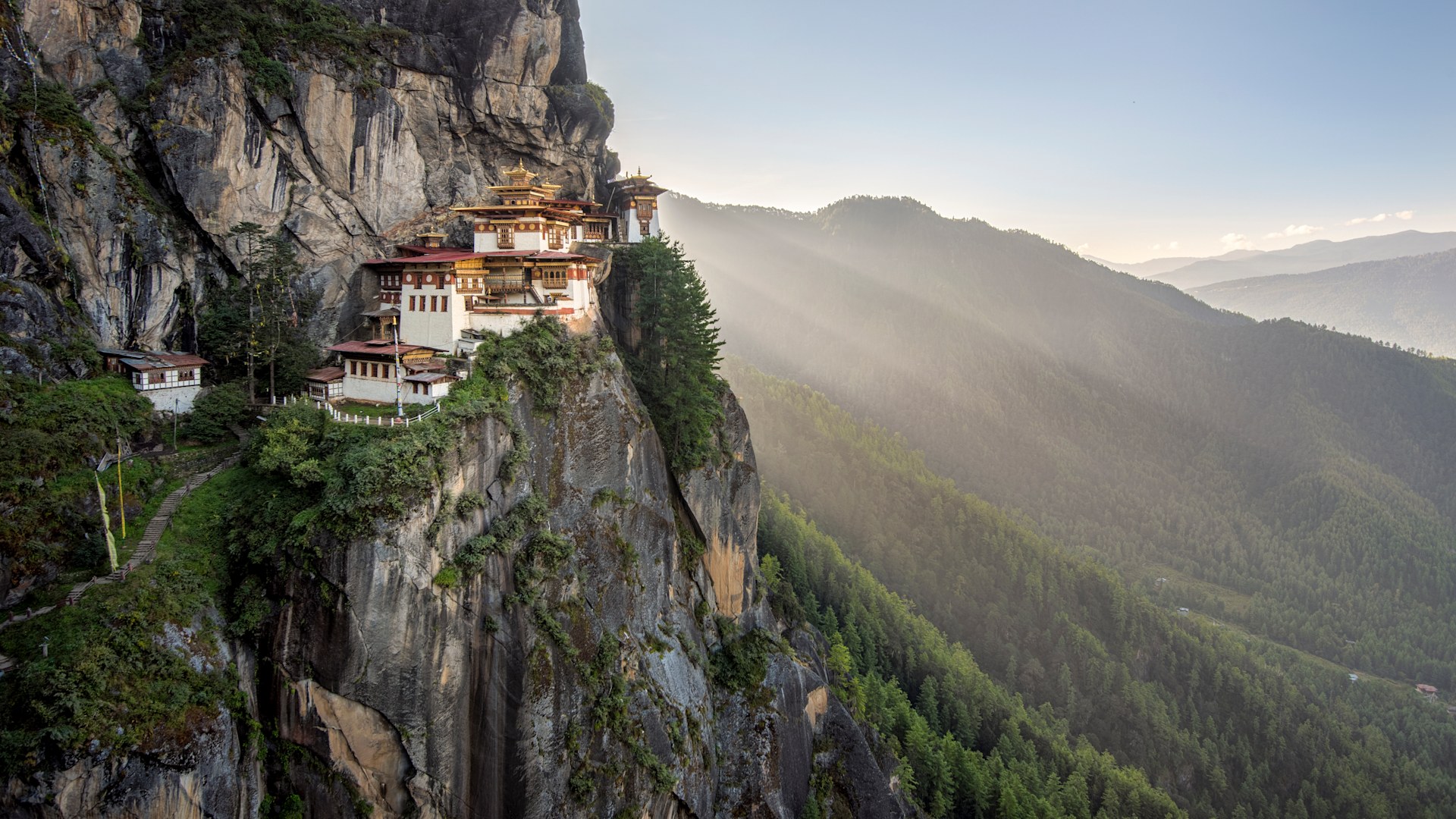
Perched dramatically on the edge of a sheer cliff high above a forested valley, Tiger’s Nest Monastery is one of the most awe-inspiring spiritual landmarks in the world. Suspended seemingly impossibly against the mountainside, this sacred Buddhist monastery has become the defining symbol of Bhutan and one of the most iconic destinations in the Himalayas.
Known locally as Paro Taktsang, Tiger’s Nest Monastery sits approximately 3,120 meters above sea level and clings to a rocky cliff nearly 900 meters above the Paro Valley floor. The monastery is not only an architectural marvel but also one of the most sacred pilgrimage sites in Himalayan Buddhism.
Surrounded by mist-covered mountains, fluttering prayer flags, and dense pine forests, Tiger’s Nest offers visitors a unique combination of spirituality, history, adventure, and breathtaking natural beauty.
For travelers seeking cultural depth, Himalayan landscapes, and unforgettable experiences, Tiger’s Nest Monastery stands among the greatest wonders of Asia.
Geography and Environment
Tiger’s Nest Monastery is located in the beautiful Paro Valley of western Bhutan, a region renowned for its pristine mountain scenery and deep-rooted Buddhist traditions.
The monastery is built into a steep granite cliff overlooking a lush valley filled with forests, rivers, and traditional Bhutanese villages.
The surrounding landscape forms part of the Eastern Himalayas, one of the world's most ecologically diverse mountain regions. Pine forests, rhododendrons, alpine vegetation, and clear mountain streams dominate the area.
The clean mountain air, dramatic scenery, and peaceful environment contribute significantly to the monastery’s spiritual atmosphere.
Throughout the year, changing weather conditions create stunning visual effects as clouds drift around the cliffs and sunlight illuminates the white monastery walls.
The Legend Behind Tiger’s Nest
The monastery’s fascinating legend is one of the reasons it holds such deep spiritual significance.
According to Bhutanese tradition, Guru Padmasambhava, also known as Guru Rinpoche, flew to this cliffside location on the back of a flying tigress during the 8th century.
He is said to have meditated in a cave here for several months, subduing local demons and introducing Buddhism to the region.
The name “Tiger’s Nest” originates from this legendary journey and remains central to Bhutanese religious identity.
The sacred cave where Guru Padmasambhava meditated continues to be one of the monastery’s most revered sites.
This powerful blend of mythology and spirituality gives Tiger’s Nest an aura unlike any other monastery in the Himalayas.
Architecture on the Edge of a Cliff
One of the most remarkable aspects of Tiger’s Nest Monastery is its extraordinary architecture.
The monastery complex appears to defy gravity as it clings to the vertical rock face hundreds of meters above the valley.
Whitewashed buildings with golden roofs, intricately carved wooden balconies, and traditional Bhutanese design elements blend harmoniously into the natural cliffside environment.
Despite its remote and seemingly inaccessible location, the monastery has survived centuries of harsh mountain weather and remains an active center of Buddhist worship.
The architecture reflects Bhutan’s deep respect for nature, spirituality, and traditional craftsmanship.
Every corner of the monastery offers spectacular views of the surrounding mountains and valleys.
Spiritual Importance and Buddhist Heritage
Tiger’s Nest Monastery is among the most sacred sites in Bhutanese Buddhism.
Thousands of pilgrims visit each year to pray, meditate, and pay homage to Guru Padmasambhava.
The monastery contains sacred shrines, meditation chambers, prayer halls, murals, and relics that hold immense religious significance.
Monks continue to live and practice their faith within the monastery, preserving traditions that have been passed down through generations.
Prayer wheels, incense, chanting, and ceremonial rituals create a deeply spiritual atmosphere that resonates throughout the complex.
For many Bhutanese people, visiting Tiger’s Nest at least once in their lifetime is considered an important spiritual journey.
The Famous Hike to Tiger’s Nest
Reaching Tiger’s Nest is an adventure in itself and one of Bhutan’s most rewarding travel experiences.
The hike begins in the Paro Valley and follows a winding mountain trail through forests of pine and rhododendron trees.
As visitors ascend, stunning viewpoints gradually reveal the monastery perched dramatically on the cliffside.
The trek typically takes between four and six hours round-trip, depending on fitness levels and weather conditions.
Although moderately challenging due to the altitude and elevation gain, the trail is accessible to most travelers with reasonable physical fitness.
The final approach includes crossing a bridge beside a waterfall and climbing stone steps that lead directly into the monastery complex.
The breathtaking arrival makes the journey unforgettable.
Himalayan Landscapes and Scenic Beauty
The natural beauty surrounding Tiger’s Nest is equally impressive.
Towering Himalayan peaks frame the monastery, while dense forests and deep valleys stretch across the landscape below.
During spring, blooming rhododendrons add vibrant colors to the mountainsides.
Autumn offers crystal-clear skies and spectacular visibility, making it one of the best times for photography.
Clouds often drift around the monastery, creating dreamlike scenes that enhance its mystical appearance.
The dramatic combination of cliffs, forests, waterfalls, and mountains makes Tiger’s Nest one of the most photogenic locations in Asia.
Bhutanese Culture and Tradition
A visit to Tiger’s Nest provides insight into Bhutan’s unique cultural identity.
Bhutan remains deeply connected to Buddhist values and traditions, which influence daily life, architecture, governance, and social customs.
Traditional clothing, prayer flags, monasteries, and religious festivals remain important aspects of Bhutanese culture.
The monastery embodies the nation’s philosophy of spiritual harmony and respect for nature.
Visitors often find that Bhutan’s peaceful atmosphere and strong cultural preservation make the experience especially meaningful.
Tiger’s Nest serves as both a spiritual symbol and a cultural ambassador for the Kingdom of Bhutan.
Sustainability and Preservation
Bhutan is internationally recognized for its commitment to environmental conservation and sustainable tourism.
Strict tourism policies help protect cultural sites and natural landscapes from overdevelopment.
Tiger’s Nest Monastery benefits from ongoing preservation efforts designed to maintain its structural integrity and spiritual significance.
Visitors are encouraged to follow monastery rules, respect sacred spaces, and minimize environmental impact.
These conservation measures ensure that future generations can continue to experience this remarkable landmark.
Best Time to Visit Tiger’s Nest Monastery
The best time to visit Tiger’s Nest is during spring (March to May) and autumn (September to November).
Spring offers blooming flowers and pleasant hiking conditions, while autumn provides clear skies and exceptional mountain views.
Summer brings lush greenery but also increased rainfall due to the monsoon season.
Winter offers fewer visitors and a peaceful atmosphere, though temperatures can be significantly colder.
Each season presents a unique perspective on the monastery’s beauty and surroundings.
Transport and Accessibility
Tiger’s Nest Monastery is located near Paro, home to Bhutan’s only international airport.
Visitors typically travel to Bhutan through Paro International Airport before continuing to the monastery trailhead by road.
The monastery itself is accessible only on foot, emphasizing its remote and spiritual character.
Guided tours are popular and often provide valuable cultural and historical context during the hike.
Why Visit Tiger’s Nest Monastery?
Tiger’s Nest Monastery offers one of the most extraordinary travel experiences in the world. Its dramatic cliffside setting, spiritual significance, ancient legends, and breathtaking Himalayan scenery create a destination unlike any other.
Visitors can embark on a memorable mountain hike, explore sacred Buddhist heritage, and witness one of humanity’s most remarkable architectural achievements.
For travelers seeking inspiration, adventure, and cultural discovery, Tiger’s Nest Monastery is a true bucket-list destination.
Conclusion
Tiger’s Nest Monastery stands as the spiritual heart of Bhutan and one of the most iconic landmarks in the Himalayas. Suspended high above the Paro Valley, it represents centuries of faith, devotion, and cultural heritage.
From its legendary origins and cliffside architecture to its stunning mountain surroundings, every aspect of Tiger’s Nest inspires wonder and admiration.
For those seeking a journey that combines natural beauty, spirituality, and adventure, Tiger’s Nest Monastery offers an unforgettable experience in one of the world's most remarkable destinations.
00 Comments
No comments yet.
Leave a Comment