

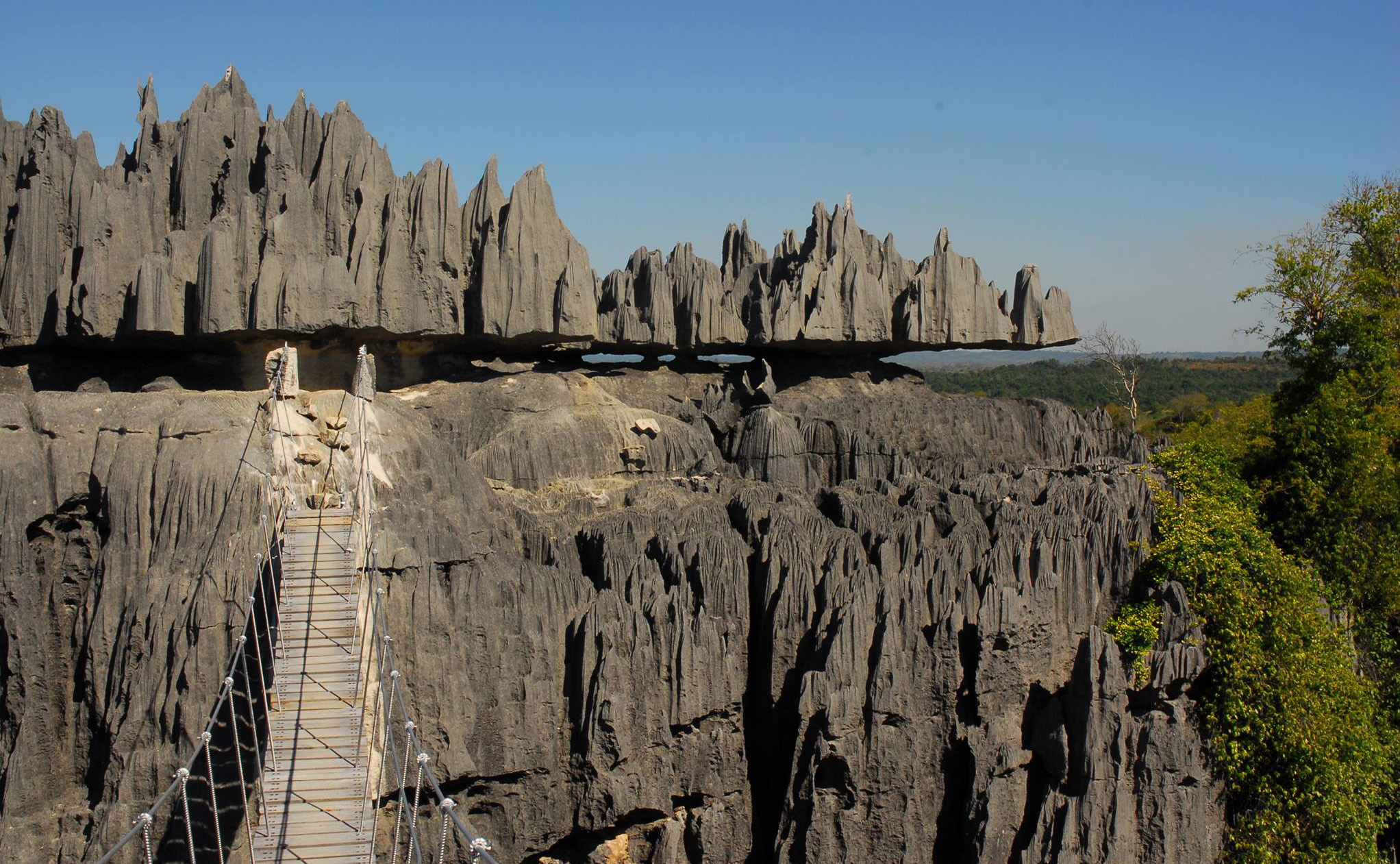
Tsingy de Bemaraha
Introduction
Deep within the remote wilderness of western Madagascar lies one of the most extraordinary and otherworldly landscapes on Earth—the Tsingy de Bemaraha. Often referred to as the “Stone Forest,” this प्राकृतिक wonder is a labyrinth of razor-sharp limestone pinnacles that rise dramatically from the الأرض, creating a landscape unlike anything else in the world.
Protected as a UNESCO World Heritage Site, Tsingy de Bemaraha National Park is a place of extreme beauty and geological uniqueness. The word “tsingy” comes from the Malagasy language, meaning “where one cannot walk barefoot,” a fitting description for this jagged terrain.
For adventurous travelers, nature lovers, and explorers, Tsingy de Bemaraha offers a thrilling and unforgettable experience in one of Africa’s most untouched environments.
Geography and Environment
Tsingy de Bemaraha is located in western Madagascar, within the Melaky region. The park stretches across a vast area of limestone plateau, carved over ملايين years by erosion and geological activity.
The landscape consists of towering الحجر الجيري formations, deep canyons, underground caves, and narrow घाटियाँ that form a complex and dramatic terrain.
The region experiences a tropical climate with a distinct wet and dry season. During the rainy season, parts of the park become inaccessible due to flooding, while the dry season reveals the full extent of the stone forest.
Surrounding the Tsingy are forests, rivers, and savannas, contributing to a diverse and interconnected ecosystem.
The Stone Forest and Geological Formation
The Tsingy formations are the result of millions of years of natural processes. Originally formed as limestone deposits under ancient seas, the الصخور were gradually uplifted and exposed.
Rainwater, slightly acidic in nature, eroded the limestone over time, creating deep fissures, sharp ridges, and needle-like الصخور. This process resulted in a jagged landscape filled with towering spikes, some reaching heights of over 70 meters.
The intricate patterns and formations resemble a forest made entirely of stone, giving the park its nickname.
Walking through the Tsingy is a unique experience, as visitors navigate narrow pathways, suspension bridges, and hidden caves within this प्राकृतिक maze.
Unique Landscapes and Natural Features
Tsingy de Bemaraha is divided into two main sections: the “Great Tsingy” and the “Little Tsingy.” Both areas offer stunning views and अलग-अलग experiences.
One of the most iconic features is the شبكة of suspension bridges that allow visitors to cross deep gorges and explore the أعلى sections of the الحجر formations.
Another highlight is the Manambolo River Gorge, where steep cliffs and caves create a dramatic природal setting.
Hidden within the Tsingy are underground caves, natural tunnels, and shaded valleys that provide contrast to the sharp, exposed pinnacles above.
The combination of height, depth, and intricate التفاصيل makes this landscape one of the most visually and physically engaging природal environments in the world.
Wildlife and Biodiversity
Madagascar is known for its incredible biodiversity, and Tsingy de Bemaraha is no exception. The park is home to many species found nowhere else on Earth.
Among the most प्रसिद्ध animals are lemurs, including the Decken's Sifaka, which can leap effortlessly between الصخور despite the कठिन terrain.
Other wildlife includes reptiles, birds, and छोटे mammals that have adapted to the unique environment.
The vegetation within the park varies from dry deciduous forests to النباتات growing in rock crevices, demonstrating nature’s ability to thrive in extreme conditions.
This rich biodiversity makes Tsingy de Bemaraha an महत्वपूर्ण destination for ecological research and conservation.
Cultural Significance and Local Communities
The region surrounding Tsingy de Bemaraha is inhabited by local Malagasy communities who have lived in harmony with the environment for generations.
These communities rely on traditional practices such as farming, fishing, and gathering resources from the land.
The area also holds cultural and spiritual significance, with certain caves and sites considered sacred.
Visitors can learn about स्थानीय traditions, customs, and ways of life through guided tours and interactions with स्थानीय communities.
This cultural connection adds depth to the experience of exploring the stone forest.
Adventure and Exploration
Tsingy de Bemaraha is a paradise for adventure seekers. Exploring the park involves a combination of hiking, climbing, and navigating through narrow pathways.
Visitors often use safety equipment such as harnesses and ropes to cross suspension bridges and सुरक्षित routes through the jagged terrain.
Guided tours are essential, as the landscape can be challenging and requires expert navigation.
The experience of walking above the stone forest, surrounded by sharp pinnacles and deep gorges, is both thrilling and unforgettable.
Photography is another highlight, with endless opportunities to capture the dramatic shapes and patterns of the Tsingy.
Sustainability and Conservation
Tsingy de Bemaraha is a protected area, and conservation efforts are focused on preserving its unique geology and biodiversity.
Strict guidelines help minimize the impact of tourism, including controlled access and designated paths.
Local communities play an important role in conservation, benefiting from eco-tourism initiatives that support sustainable development.
Efforts are also made to protect endangered species and maintain the delicate balance of the ecosystem.
These measures ensure that the stone forest remains preserved for future generations.
Best Time to Visit Tsingy de Bemaraha
The best time to visit Tsingy de Bemaraha is during the dry season, from May to October.
During this period, weather conditions are more stable, and the park is fully accessible.
The rainy season (November to April) can make travel difficult due to flooded roads and closed sections of the park.
Early morning and late afternoon are the best times to explore, offering cooler temperatures and أفضل lighting for photography.
Transport and Accessibility
Tsingy de Bemaraha is one of Madagascar’s most remote destinations, making الوصول part of the adventure.
The nearest major town is Morondava, from which travelers journey by 4x4 vehicles over rough roads to reach the park.
The trip can take several hours to days, depending on conditions, but offers scenic views of Madagascar’s ग्रामीण landscapes.
Due to the challenging terrain, guided tours are highly recommended for safety and convenience.
Why Visit Tsingy de Bemaraha?
Tsingy de Bemaraha offers an experience unlike any other destination on Earth. Its razor-sharp الصخور, towering formations, and complex terrain create a landscape that feels both alien and awe-inspiring.
Visitors can explore one of the world’s most unique geological wonders, encounter rare wildlife, and تجربة adventure in its purest form.
The combination of природal beauty, biodiversity, and cultural significance makes it a must-visit destination for those seeking something truly extraordinary.
Conclusion
Tsingy de Bemaraha stands as one of the most remarkable природal wonders on the planet. Shaped by millions of years of geological processes, its stone forest offers a landscape that is both dramatic and unforgettable.
From its towering limestone pinnacles to its hidden caves and diverse wildlife, every aspect of the park showcases the शक्ति and creativity of nature.
For travelers willing to venture off the beaten path, Tsingy de Bemaraha provides a once-in-a-lifetime journey into one of Earth’s most unique and captivating environments—a true stone forest unlike any other.
00 Comments
No comments yet.
Leave a Comment