

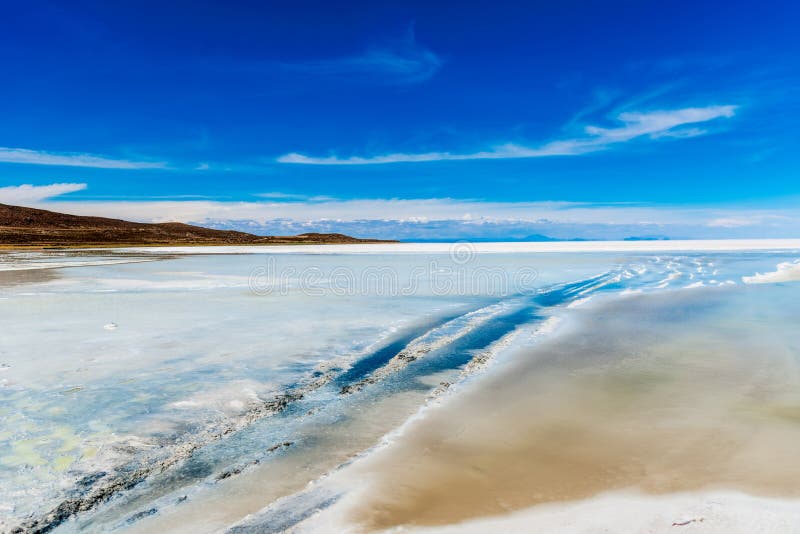
Uyuni Salt Flats
Introduction
Stretching endlessly across the high-altitude plains of Bolivia, the Uyuni Salt Flats are one of the most surreal and mesmerizing landscapes on Earth. Known for their vast white expanse and mirror-like reflections during the rainy season, this natural wonder creates an illusion where sky and land merge into one.
Officially called Salar de Uyuni, the Uyuni Salt Flats are the largest salt flats in the world, covering more than 10,000 square kilometers. This extraordinary destination attracts travelers, photographers, and adventurers seeking a once-in-a-lifetime experience in one of South America’s most unique environments.
Whether covered in a thin layer of water that transforms it into a giant mirror or appearing as an endless white desert under a bright blue sky, the Uyuni Salt Flats offer an unforgettable journey into a landscape that feels almost otherworldly.
Geography and Environment
The Uyuni Salt Flats are located in southwestern Bolivia, near the crest of the Andes Mountains. The region sits at an elevation of approximately 3,650 meters above sea level, making it one of the highest large landscapes of its kind in the world.
The salt flats were formed from prehistoric lakes that evaporated thousands of years ago, leaving behind vast deposits of salt. Today, the flats consist of a thick crust of salt that can reach several meters in depth.
Surrounding the flats are mountains, volcanoes, and desert plains that enhance the dramatic scenery. Nearby regions include the high-altitude deserts of the Altiplano, a vast plateau known for its harsh climate and striking landscapes.
The environment is characterized by extreme conditions, including intense sunlight, cold nights, and minimal rainfall. However, during the rainy season, a thin layer of water covers the salt flats, transforming them into the world’s largest natural mirror.
The Mirror Effect and Unique Landscapes
One of the most famous features of the Uyuni Salt Flats is the mirror effect that occurs during the rainy season. When water covers the flat surface, it creates a perfect reflection of the sky, making it appear as though visitors are walking on clouds.
During the dry season, the landscape transforms into a geometric pattern of hexagonal salt formations. These patterns are created by natural crystallization processes and extend across the entire surface of the flats.
A notable landmark within the salt flats is Incahuasi Island, a rocky outcrop covered with giant cacti. Rising above the white salt surface, the island provides panoramic views of the surrounding landscape.
Another important site is Train Cemetery Uyuni, located near the town of Uyuni. This collection of rusting locomotives offers a glimpse into Bolivia’s industrial past and adds a unique historical element to the journey.
The contrast between the endless white salt, deep blue skies, and occasional islands creates a landscape that feels both minimalistic and breathtaking.
Wildlife and Natural Ecosystems
Despite its harsh environment, the Uyuni region supports a variety of wildlife, particularly in surrounding areas such as high-altitude lagoons.
One of the most iconic animals found in the region is the Flamingo, which can be seen in nearby lakes such as Laguna Colorada and Laguna Verde. These birds thrive in mineral-rich waters and add vibrant color to the otherwise stark landscape.
Other wildlife includes vicuñas, a relative of the llama, as well as foxes and various bird species adapted to high-altitude conditions.
The ecosystem of the salt flats themselves is minimal due to the extreme salinity, but the surrounding Altiplano region supports diverse and unique forms of life.
Cultural Heritage and Local Life
The Uyuni Salt Flats are not only a natural wonder but also an important part of Bolivia’s cultural and economic landscape. Local communities have lived in the region for generations, adapting to its challenging environment.
Salt extraction remains a traditional activity, with workers harvesting and processing salt using methods passed down through generations.
In addition to salt, the region is rich in lithium reserves, making it an important resource for modern technology. Bolivia holds one of the world’s largest lithium deposits beneath the salt flats.
Small villages near the flats offer insight into local life, where traditions, crafts, and community practices reflect a deep connection to the land.
Adventure and Exploration
Exploring the Uyuni Salt Flats is an adventure unlike any other. Most visitors travel across the flats in 4x4 vehicles, covering vast distances and visiting key landmarks.
Photography is one of the main attractions. The flat, reflective surface allows for creative perspective shots that play with scale and distance, making it a favorite destination for photographers.
Sunrise and sunset are particularly spectacular times to visit, as the changing light creates dramatic reflections and colors across the landscape.
Multi-day tours often include visits to nearby deserts, volcanoes, and colored lagoons, providing a comprehensive experience of Bolivia’s high-altitude wilderness.
Stargazing is another highlight, as the remote location and clear skies offer some of the best views of the night sky in the world.
Sustainability and Environmental Considerations
As tourism to the Uyuni Salt Flats continues to grow, efforts are being made to balance economic benefits with environmental protection.
Sustainable tourism practices encourage visitors to respect the fragile environment, avoid leaving waste, and follow designated routes.
Local communities play a key role in managing tourism and ensuring that benefits are shared while preserving cultural traditions.
Environmental concerns related to lithium extraction are also being monitored, as the balance between resource development and ecological preservation remains an ongoing challenge.
Best Time to Visit Uyuni Salt Flats
The Uyuni Salt Flats offer two distinct experiences depending on the time of year.
The rainy season (December to April) is when the famous mirror effect occurs. A thin layer of water creates stunning reflections, making it the most popular time for photography.
The dry season (May to November) reveals the salt crust and geometric patterns, offering easier travel across the flats and access to more areas.
Both seasons provide unique experiences, and the best time to visit depends on whether travelers prefer reflections or classic desert landscapes.
Transport and Accessibility
The main gateway to the salt flats is the town of Uyuni, which is accessible by air, train, and bus from major cities in Bolivia.
From Uyuni, guided tours provide transportation into the salt flats and surrounding مناطق. Due to the vastness and remote nature of the region, independent travel is not recommended.
Tour operators typically offer one-day or multi-day excursions that include accommodation, meals, and guided exploration.
Despite its remote location, Uyuni has become a well-established destination for travelers exploring South America.
Why Visit Uyuni Salt Flats?
The Uyuni Salt Flats offer one of the most unique landscapes on Earth. Its vast white surface, mirror-like reflections, and surreal scenery create an experience that feels almost dreamlike.
Visitors can walk across an endless horizon, capture extraordinary photographs, and witness natural phenomena found nowhere else in the world.
The combination of natural beauty, cultural significance, and adventure opportunities makes the Uyuni Salt Flats a must-visit destination for travelers seeking something truly extraordinary.
Conclusion
The Uyuni Salt Flats stand as one of the most remarkable natural wonders on the planet. Formed from ancient lakes and shaped by time, this vast landscape offers a rare glimpse into the power and beauty of nature.
From the reflective mirror effect during the rainy season to the geometric salt patterns of the dry season, the flats provide ever-changing scenery that captivates all who visit.
For travelers seeking a destination that defies imagination, the Uyuni Salt Flats deliver an unforgettable experience—one where earth and sky merge into a seamless horizon, creating the world’s largest natural mirror.
00 Comments
No comments yet.
Leave a Comment