

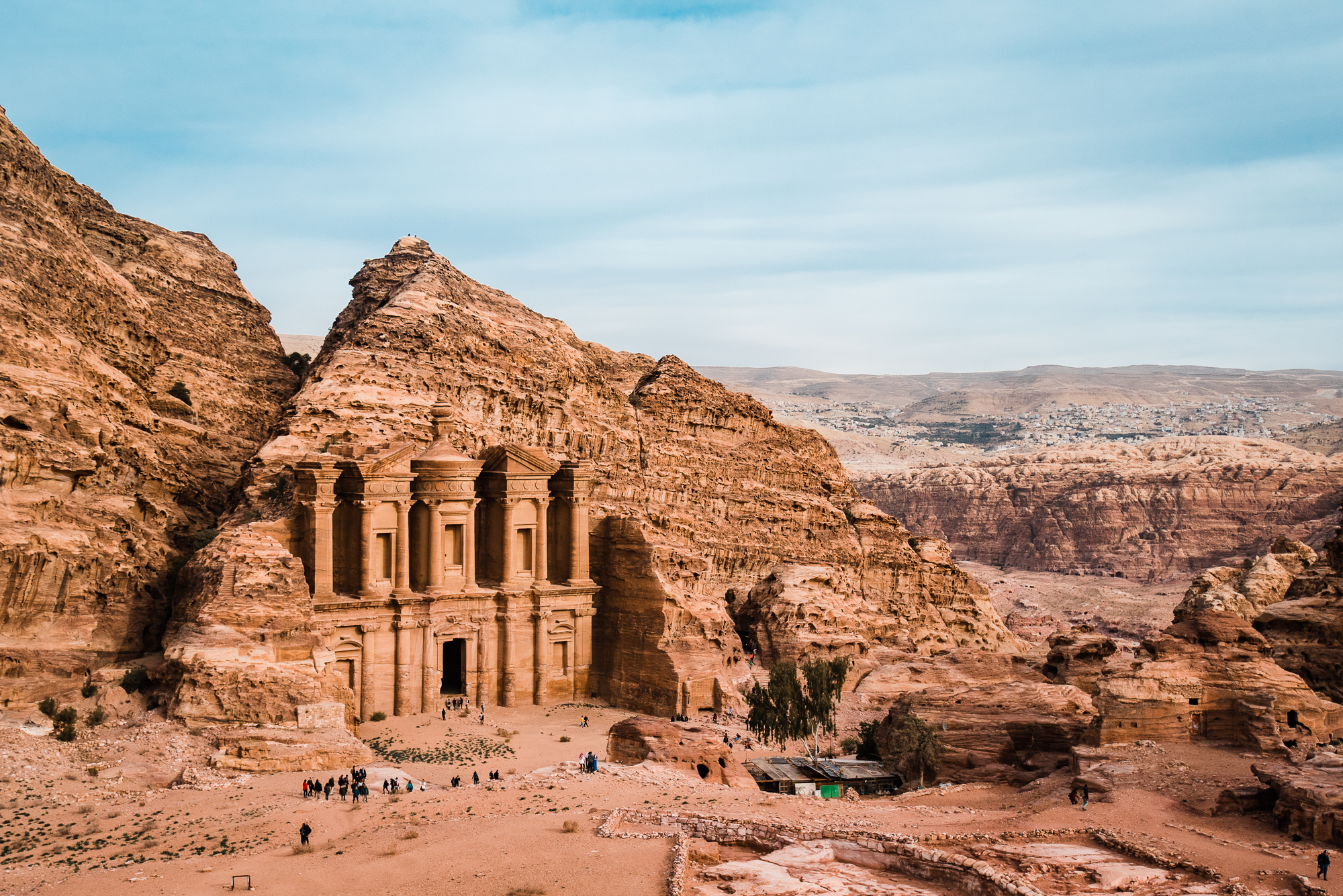
Wadi Rum
Introduction
Rising from the vast desert landscapes of southern Jordan, Wadi Rum is one of the most extraordinary natural destinations in the Middle East. Known for its towering sandstone mountains, sweeping red dunes, and dramatic rock formations, this desert valley has often been compared to the surface of Mars. Its surreal scenery has even served as the filming location for numerous science-fiction movies.
Often called the “Valley of the Moon,” Wadi Rum Protected Area is a UNESCO World Heritage Site celebrated for both its natural beauty and cultural heritage. The landscape features enormous cliffs, narrow canyons, and ancient rock carvings that reveal thousands of years of human history.
Despite its remote location, Wadi Rum has become one of Jordan’s most iconic travel destinations. Visitors come here to experience the silence of the desert, explore vast open landscapes, and witness spectacular star-filled skies.
For travelers seeking adventure, culture, and dramatic desert scenery, Wadi Rum offers an unforgettable journey into one of the world’s most stunning wilderness landscapes.
Geography and Environment
Wadi Rum is located in southern Jordan near the border with Saudi Arabia. The valley lies within the vast desert region known as the Arabian Desert, which stretches across much of the Arabian Peninsula.
The protected area covers more than 700 square kilometers and features towering sandstone and granite mountains rising abruptly from the desert floor. Some of these rock formations reach heights of over 1,700 meters, creating an impressive contrast against the surrounding sand dunes.
The desert’s red color comes from iron oxide present in the sandstone rocks and sand, giving Wadi Rum its distinctive appearance. During sunrise and sunset, the landscape glows in shades of deep red, orange, and gold.
The region’s climate is extremely dry, with hot days and cool nights typical of desert environments. Despite these harsh conditions, Wadi Rum supports a surprising variety of plant and animal life adapted to the desert ecosystem.
Dramatic Desert Landscapes
The scenery of Wadi Rum is among the most dramatic desert landscapes in the world. Vast open valleys are surrounded by massive sandstone mountains shaped by millions of years of wind and erosion.
One of the most famous rock formations in the region is Jebel Rum, the second-highest mountain in Jordan. Its steep cliffs and rugged slopes attract experienced climbers and hikers seeking challenging adventures.
Another iconic landmark is Jebel Khazali, a narrow canyon famous for its ancient petroglyphs carved into the rock walls. These carvings depict animals, human figures, and symbols left by civilizations that once traveled through the desert.
Natural stone arches are also scattered across the landscape, formed by centuries of wind erosion. These arches create striking natural monuments that highlight the unique geological history of the region.
The combination of massive cliffs, red dunes, and open desert plains gives Wadi Rum an otherworldly appearance that continues to captivate visitors from around the globe.
Wildlife and Desert Ecosystem
Although Wadi Rum may appear barren at first glance, the desert ecosystem supports a variety of wildlife that has adapted to the harsh conditions.
Among the most notable animals found in the region is the Arabian Oryx, a graceful desert antelope that was successfully reintroduced into protected areas after nearly disappearing from the wild.
Other animals include desert foxes, sand cats, and several species of reptiles. Birdlife is also surprisingly diverse, with birds of prey such as eagles and falcons soaring above the cliffs.
The desert vegetation consists mainly of hardy shrubs and small plants that can survive with very little water. These plants provide food and shelter for many desert animals.
Despite its harsh environment, Wadi Rum represents a delicate ecosystem that has survived for thousands of years.
Bedouin Culture and Heritage
The cultural heritage of Wadi Rum is deeply connected to the Bedouin tribes who have lived in the desert for generations. These nomadic communities developed traditional ways of life adapted to the challenging desert environment.
Bedouin culture emphasizes hospitality, storytelling, and strong community bonds. Visitors to Wadi Rum often experience traditional Bedouin hospitality through desert camps where guests are welcomed with tea, music, and local cuisine.
One important historical figure associated with Wadi Rum is T. E. Lawrence, a British officer who worked with Arab forces during World War I. His experiences in the region were famously described in the book “Seven Pillars of Wisdom.”
One landmark linked to this history is Lawrence's Spring, a natural spring named after Lawrence that still provides water in the desert landscape.
These cultural and historical connections add depth to the experience of visiting Wadi Rum.
Adventure and Outdoor Activities
Wadi Rum is one of the best destinations in the Middle East for desert adventure. The vast open landscapes offer endless opportunities for exploration and outdoor activities.
One of the most popular experiences is a desert jeep safari, where visitors travel across sand dunes and rocky valleys while discovering hidden canyons and scenic viewpoints.
Camel trekking is another traditional way to explore the desert, allowing travelers to experience the landscape at a slower pace similar to ancient desert caravans.
Rock climbing is also popular due to the region’s towering sandstone cliffs. Many routes have been established by climbers seeking challenging ascents.
At night, the desert becomes a paradise for stargazing. With minimal light pollution, the sky above Wadi Rum reveals thousands of stars and the glowing band of the Milky Way.
Sustainability and Conservation
Because of its ecological and cultural significance, Wadi Rum is carefully protected as a UNESCO World Heritage Site. Conservation efforts focus on preserving both the desert environment and Bedouin cultural traditions.
Tourism activities are managed to reduce environmental impact. Many tours are operated by local Bedouin communities, ensuring that tourism supports the local economy while maintaining cultural heritage.
Eco-friendly desert camps and responsible travel practices help protect the fragile desert ecosystem from damage.
These conservation initiatives help maintain Wadi Rum as one of the world’s most remarkable desert landscapes.
Best Time to Visit Wadi Rum
The best time to visit Wadi Rum is during the cooler months from October to April. During this period, temperatures are comfortable for outdoor exploration and desert activities.
Spring (March to May) brings mild weather and occasional desert blooms, making it an especially pleasant time to visit.
Summer (June to September) can be extremely hot, with daytime temperatures often exceeding 40°C, though early morning and evening activities remain possible.
Winter nights can become quite cold, but the clear skies offer some of the best opportunities for stargazing.
Transport and Accessibility
Wadi Rum is located about 60 kilometers east of Aqaba, making it easily accessible for travelers visiting southern Jordan.
The desert valley is also relatively close to Petra, one of the most famous historical sites in the Middle East. Many travelers combine visits to Petra and Wadi Rum in the same itinerary.
Visitors typically reach Wadi Rum Village by car or tour bus, where they transfer to local guides who provide transportation into the protected desert area.
Guided tours are highly recommended due to the vastness of the desert and the importance of respecting protected areas.
Why Visit Wadi Rum?
Wadi Rum offers a travel experience unlike any other. Its vast desert landscapes, towering rock formations, and rich cultural heritage create a destination that feels both ancient and timeless.
Visitors can explore dramatic canyons, ride camels across golden dunes, and sleep under star-filled desert skies. The sense of peace and isolation found in Wadi Rum is difficult to find elsewhere in the modern world.
For travelers seeking adventure, cultural experiences, and unforgettable natural scenery, Wadi Rum remains one of the most spectacular destinations in the Middle East.
Conclusion
Wadi Rum stands as one of the most extraordinary desert landscapes on Earth. Its red sandstone mountains, sweeping dunes, and ancient cultural history create a destination that is both visually stunning and deeply meaningful.
From thrilling desert adventures to peaceful nights beneath the stars, Wadi Rum offers travelers a rare opportunity to experience the beauty and silence of the desert wilderness.
As a UNESCO World Heritage Site and a symbol of Jordan’s natural heritage, Wadi Rum continues to inspire explorers, photographers, and adventurers who come to witness the magic of this remarkable Martian-like desert landscape.
00 Comments
No comments yet.
Leave a Comment